
It seems simple but good technique with a diving mask is not as easy as it seems. It can give trainees more cause for concern than is necessary, and sometimes inconvenience experienced divers too. John Liddiard has clear views on masks
Mask Clearing Technique
When mask-clearing clicks, it’s simplicity itself. When it doesn’t, it can be frightening. Most trainee divers can pretty much master the standard mask-clearing exercise in 10 minutes. After that, it is just refining the technique and getting out the last bit of water that seems to get stuck in the corners. Unfortunately, the few who have problems can really suffer, particularly if the instructions don’t quite sink in.
The most common misunderstanding is for a diver to lift the bottom of the mask out and try to catch exhaust bubbles, something most instructors have witnessed and look out for. But sometimes it can be more serious and harder to diagnose, like the diver who cleared his mask by snorting the water out of it using his nose, then swallowing. Mask-clearing was difficult, and often caused him to throw up.
The standard exercise is to be upright in the water, holding in the top of the mask while breathing out through the nose and leaning the head back. This fills the mask with exhaled air, forcing water out of the lowest point in the mask. ‘By the book’ is to hold in the top of the mask with a single finger pressed onto the rim, where it bridges the diver’s nose. I prefer to hold the side of the mask and twist it to the same effect, pushing the top of the mask in while easing pressure on the lower skirt without actually breaking the seal. It’s easy to do this while kneeling on the seabed or upright in the water, but that is not how we normally dive.
A good diving position is neutrally buoyant while horizontal in the water. Turning upright or kneeling on the seabed whenever a diver wants to remove water from a mask may not be convenient. The solution is to realise that your angle in the water doesn’t matter. The principle of holding in the upper side of the mask while blowing water out of the lower side will work as long as ‘upper’ is worked out with respect to gravity rather than the diver’s head.
While swimming, twist your head to the right, hold in the upper (right) side of the mask and clear it. Water comes out of the left side, which is now lowest. Twist your head or roll slightly the other way, hold the left side, and water now comes out of the right when you clear it. The same principle even works when upside-down.
How To Stop A Dive Mask Fogging
It’s a fact of diving life; new diving masks fog up, and no amount of spit or proprietary anti-fogging solution makes a difference. The problem stems from residue from the manufacturing process left on the glass. Clean glass will de-fog with the usual spit and rinse, but greasy or dirty glass will not.
So the first thing to do with a new mask is to clean the glass thoroughly inside and out. One trick is to burn off any residue, with a quick flash across a naked flame, but be very careful. Too much heat in any spot carries the risk of weakening tempered glass, and you will never know until it shatters on a dive. Unless the glass can be removed first, there is also the risk of damaging the plastic rim or silicone skirt.
Less dangerous is soaking overnight in detergent or window-cleaner, then scouring with more of the same, or an abrasive compound such as toothpaste. You can even use an old toothbrush to apply it.
Once scrubbed, rinse the mask thoroughly and scrub again with clean water to remove any remaining detergent or cleaning compound. You wouldn’t want it washing around and getting in your eyes on a dive.
During a dive, light fogging can be cleared by letting a little water in, swilling it about and clearing the mask. Persistent fog can usually be cleared by removing the mask under water and scrubbing the problem area of glass with your thumbs before re-fitting and clearing.
How To Fit A Diving Mask With A Hood
Sitting in a boat, a typical new diver puts his hood and gloves on, fits his mask and then asks somebody to make sure that the skirt of the mask is beneath the hood rather than on top. The problem is, he can’t feel whether his mask is fitted properly while he is wearing gloves. Seeking assistance is fine but it doesn’t solve the basic problem of making sure that a mask is properly fitted while wearing the diver is wearing gloves.
Re-fitting a mask under water, a diver cannot rely on help from other people, so learning to be self-sufficient on a boat is an essential stage in being able to do the same under water. The solution is not to worry about whether or not you can feel the mask-skirt with gloved fingers. Simply stuff a finger or two inside the hood and pull it out until the mask pops inside it. Then run the fingers round the face hole so that this process is repeated across the top and down both sides.
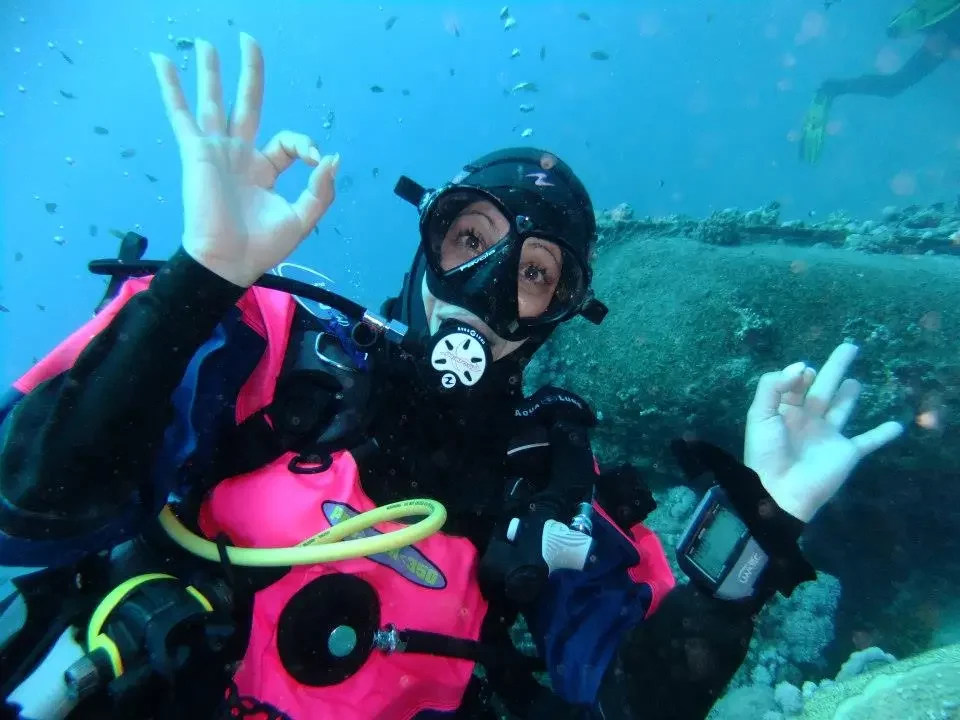
If the skirt is still crinkled and refuses to seal, it’s a matter of putting the fingers back under the hood to pull it clear, while the other hand eases the mask away from the face so that the seal can pop straight. The procedure is the same whether on a boat or under water – it’s only the unpleasant rush of cold water that distinguishes the latter procedure.
“My Hair Gets In The Way”
Hair under a diving mask is less of a problem than some new divers think. A little hair will simply push flat and seal between the skirt of the mask and the face.
Look at the number of stereotypical UK divers with beards, or a moustache. They haven’t suffered through years of perpetually leaky masks. More of an issue is long clumps of hair getting into the upper edge of the mask. The simple answer is to get a haircut like mine. I don’t have problems with hair, although sometimes I wish I did!
Still, friends with copious hair assure me that if it is long enough it can be tied back or, before growing that long, can be pulled back under a hood. So if your hair is at that awkward length that constantly gets caught under a mask, either grow it longer so it will pull or tie back, or get a haircut!
Prescription Diving Mask Options
The optics of eyes-air-mask-water when diving is different to the optics of eyes-air above water. Everything looks bigger and closer, and long-distance vision is limited by water clarity. If you wear glasses or contact lenses, consider whether you actually need any correction to your eyesight when diving. If your problem is with long vision, you may not even notice it.
At the other extreme, divers who have marginal problems with close vision may find the problem exacerbated under water. A watch or dive computer that is perfectly readable in air may appear that bit too close to focus on under water.
Prescription lenses for masks are easily available, either as part of an adaptable lens package from the mask manufacturer, or custom-made and fitted by an optician. You can even get bifocal lenses made. You do, however, need to buy a mask with lenses in mind.
First, take the mask diving in the pool to make sure it fits. There’s no point coughing up for custom optics if it’s the wrong mask for you.
For any standard eyesight prescription, expect to pay ?70-?100 plus the cost of the mask. If you have a more complicated prescription, you don’t always need a perfectly matched set of lenses for diving – underwater optics may make a cheaper compromise good enough.
The main hassle with prescription masks is that you need glasses ready on the boat or beach for when you take the mask off. Some divers even keep an old, indestructible pair of specs in a BC or drysuit pocket. Many divers who wear contact lenses just go on wearing them while diving. They could lose them during a mask flood, but this is a big risk only during training drills.
The way round this is to use disposable contacts, if only just for diving days. Losing a disposable lens doesn’t cost that much. Or save old lenses to use especially for diving.
Those with more complicated prescriptions may be able to compromise on cheaper lenses for diving. Otherwise, save up for laser eye surgery and get rid of prescription lenses altogether.
Many older divers with otherwise good eyesight have eyes hovering on the borderline for reading glasses, and for them a watch or dive computer that’s readable in air may appear that bit too close to focus on under water. The easiest and cheapest solution is to have a +2 or +3 lens glued inside the corner of the mask, costing about ?25 for a kit – a sort of DIY bifocal for divers like me.
Masks On Foreheads
Having a diving mask on your forehead is supposed to be a sign of panic, or so some instructors like to tell their students. I would argue this is rubbish! There are many obvious signs of stress and near-panic, and a mask on a forehead is not one of them.
If mask behaviour has to be analysed, watch for divers who claw at their mask to remove it immediately on surfacing, whether they put it on the forehead, round the neck, or just hold it. The real risk of putting a mask on a forehead is of forgetting about it, then pulling the hood off and catapulting the mask into the sea. It’s all about students losing school or rental equipment.
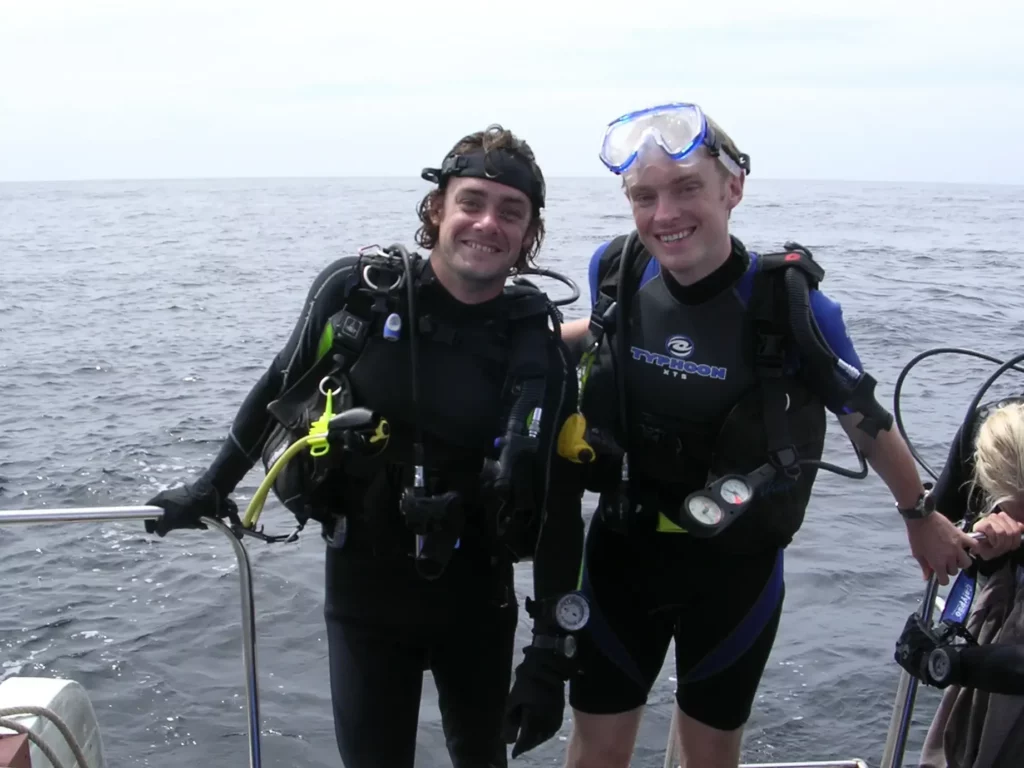
Getting ready to dive, the forehead is just a convenient place to puta mask while sorting out other stuff. Pulling it down and around the neck is secure, but can obstruct other items, such as regulator necklaces, camera straps or rebreather hoses. Back to front on the forehead looks really mean and technical. Borrowed from the military, it keeps the mask out of the way of a gun sight. But if masks on foreheads was good enough for Jacques Cousteau and Hans Hass, it’s good enough for me.
When Are You Most Likely To Lose Your Diving Mask
The vast majority of diving mask losses occur when a diver rolls or jumps into the water. It may not fall off immediately. The impact may just push the strap up and off, leaving the mask temporarily sucked onto a diver’s face. Having dislodged the strap, a subsequent moment’s distraction and the mask will drop off, never to be seen again.
So when jumping or rolling in, use one hand to hold your mask in place. Then, once the bubbles have settled, check that the strap is still on the back of your head.
If your mask strap is always coming loose, try a different strap. I went through a phase of my mask continually coming loose if I entered the water with a backward roll, and eventually I traced the problem to a neoprene strap. I swapped it for a silicone strap and the problem all but disappeared.
For some divers it works the other way round, and neoprene straps stay in place better.
Frequently Asked Questions
How do you clear a scuba diving mask underwater?
Why does a new diving mask keep fogging?
New diving masks fog due to manufacturing residue on the glass. Clean with toothpaste or detergent before first use to stop fogging.
Can I wear a diving mask with glasses or contact lenses?
Yes, divers can use prescription dive masks, contact lenses, or stick-on bifocals to see clearly underwater. Disposable contacts are safest for training.
How do I fit a diving mask under a hood?
Pull the hood slightly away from your face and tuck the mask skirt inside. Run your fingers around the seal to ensure no folds or leaks.
What is the best way to stop losing a diving mask when entering the water?
Hold your mask firmly when rolling or jumping in. Check the strap placement after entry to prevent it slipping off.
