“The visibility is consistently pretty low in the Cape Fear River,” says University of East Carolina (ECU) maritime studies graduate student Cory van Hees who, with dive-buddy Evan Olinger, had been trying to measure the width of an 18th-century wharf.
“Evan attempted to find the northern extent of the wharf but had become disoriented due to the conditions. We switched roles, and the same happened to me on my attempt.
“While lost, I came across several wooden frames barely sticking out of the clay mud, with evidence of planking just barely visible on the surface. I didn’t understand what I was looking at in that moment, but I knew I should relay the wooden structure to faculty.”
Later that day, Dr Jason Raupp was able to confirm that what van Hees had seen was part of a shipwreck, thought likely to be that of the Spanish privateer La Fortuna from 1748. “It was kind of overwhelming,” says van Hees.
He and Olinger had been working earlier this summer on the remains of the colonial waterfront at North Carolina’s Brunswick Town / Fort Anderson State Historic Site, known as BTFA.
A major colonial port in the 18th century, Brunswick Town would be burnt down by British forces during the American War of Independence and never rebuilt. In the following century, during the Civil War, much of the abandoned settlement had been covered by earthworks as Fort Anderson was constructed.

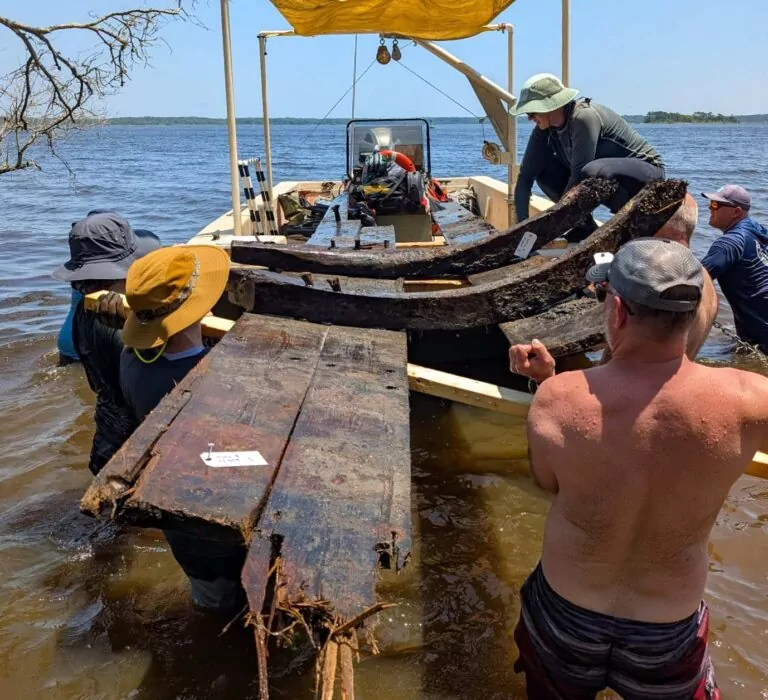
The likely remains of La Fortuna were among four shipwrecks discovered and recorded along the BTFA shoreline this summer during fieldwork by researchers and students from ECU’s Program in Maritime Studies. A start was also made on recovering some of the exposed and consequently at-risk ships’ timbers for conservation.
On 28 September, 1748, towards the end of the War of Jenkins’ Ear (known as King George’s War in America) La Fortuna and another ship, La Loretta, had arrived from Cuba to attack Brunswick Town.
A local militia had driven the Spanish back to their ships and, during the retreat, fire is thought to have broken out in La Fortuna’s powder magazine, causing the ship to explode near the colonial wharves. The British victory was the final engagement of the war.

Cypress clue
Timber samples collected from the wreck have been identified as cypress from southern California or central America, suggesting that the ship had been built in the 18th-century Spanish Caribbean colonies.
La Fortuna was the only historically reported Spanish shipwreck in the area, and the wreck lies close to where a diver recovered an 18th-century cannon 40 years ago.
Of the other three wrecks, preliminary analysis suggests that one was likely used for land reclamation at the waterfront and another is potentially a colonial flatboat of a type used to transport people and goods between the port and nearby plantations.
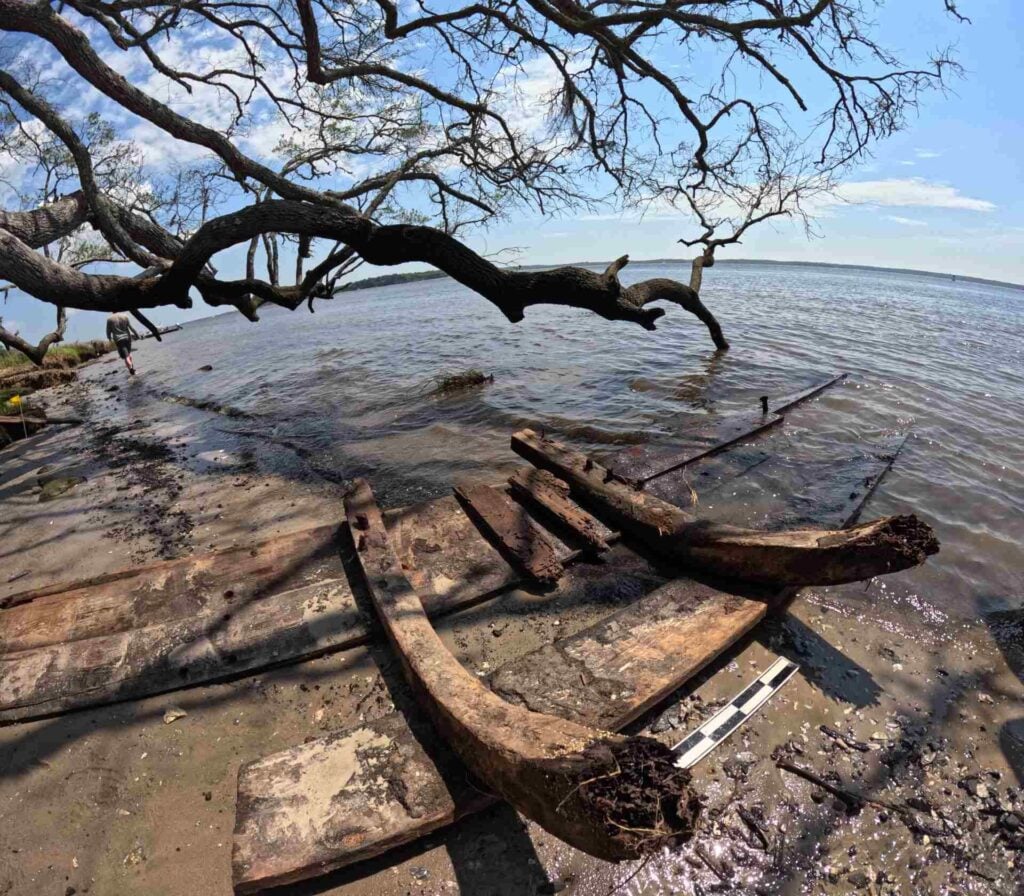
The fourth wreck was barely exposed and has not as yet been identified. Port infrastructure that was identified includes two timber crib wharves and a causeway over what was once marshland, along with a number of individual artefacts.
“We are extremely excited about these important sites, as each one will help us to better understand the role of BTFA as one of the state’s earliest colonial port towns,” says team-leader Dr Raupp, assistant professor in ECU’s department of history & maritime studies. “These submerged colonial waterfront features are incredibly well-preserved.”
Risk factors
The remains are however at risk from shoreline erosion caused by channel-dredging, waves and storms, with only the northern half of BTFA currently protected.

What has been found had survived so well because it was covered by marsh but the remains are becoming exposed and eroded. This was why the team’s divers undertook emergency recovery of more than 40 timbers from the supposed La Fortuna site for storage and conservation.
Preserved to “a remarkable degree”, some of the timbers still display the shipwrights’ tool markings. Analysis of the construction of each of the four shipwrecks is continuing.
Divernet has reported in the past on the University of East Carolina’s work on the wreck of the pirate Blackbeard’s flagship the Queen Anne’s Revenge.