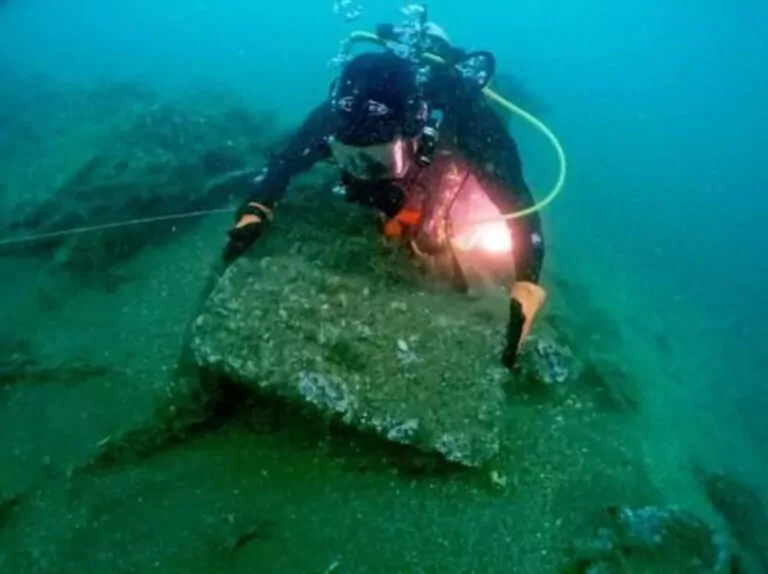
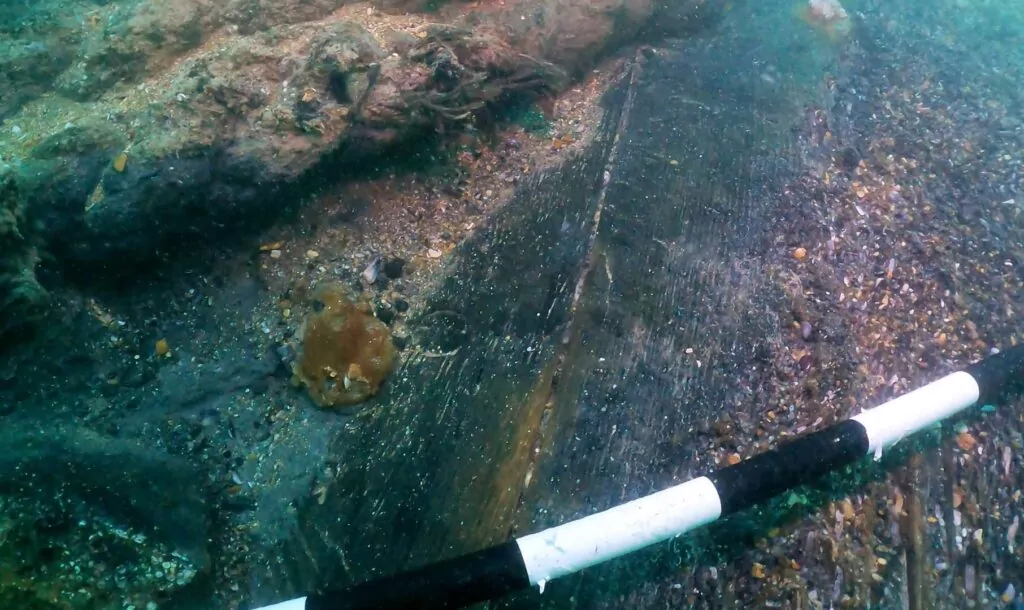
A diving survey of the 18th-century English warship Northumberland has revealed that features such as its timber decks, chests containing musket balls, and coiled rope have survived ‘remarkably’ well – thanks to being covered by sediment for many of their 320 years under water off the Kent coast.
The dives, the first in two years, were undertaken by licensee Dan Pascoe and contractor MSDS Marine in July 2024 but the findings are now being shared to promote a new documentary about the ship.
The Northumberland has been a Protected Wreck Site since 1981, with diving subject to the authority of Historic England (HE), which put it on its Heritage at Risk Register in 2017.
The third-rate 70-gun warship was built in Bristol in 1679 as part of Samuel Pepys’ regeneration of the English Navy, but sank during the Great Storm of 26 November, 1703 on Goodwin Sands.
She was lost with three other warships, the Restoration, Stirling Castle and the still-missing Mary, from the fleet of the last Stuart monarch, Queen Anne.


High risk
Despite the surprisingly good condition of organic materials on the wreck, shifting sands, strong currents and wood-boring sea creatures put the site at high risk of deterioration, says HE.
The ship’s remains cover a large area at depths of 15-20m and are heavily concreted, but more of its extensive hull structure is becoming exposed by the day, causing HE marine team-leader Paul Jeffery to describe the custodians’ work as “a race against time”.
The Northumberland is thought to be lying on its port side. Far more of the deck planks and frame remain than had previously been thought, and there is evidence of multiple decks. One of a number of chests remains sealed, its contents unknown.


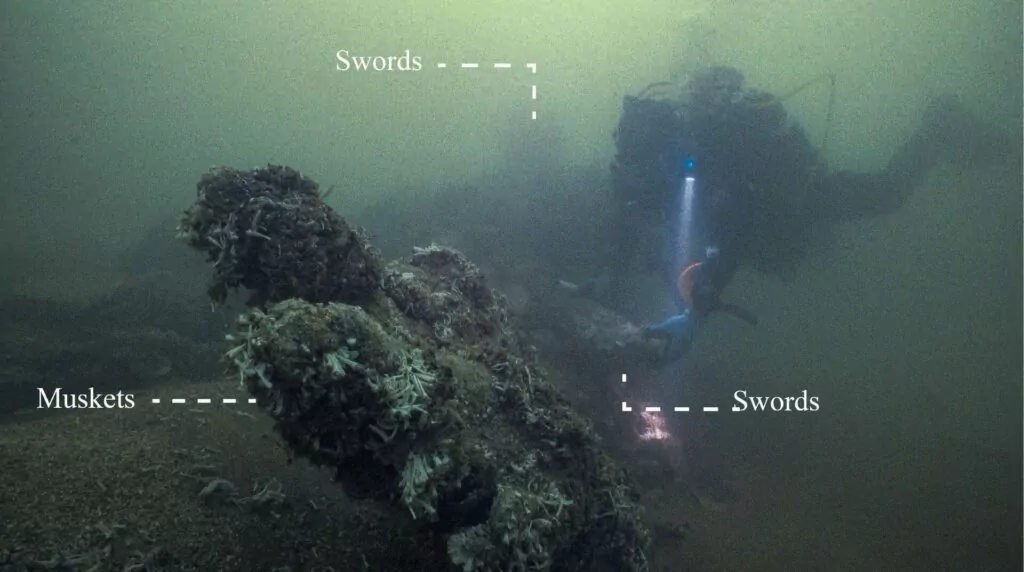
Seven iron cannon have been confirmed at the south-east end of the wreck-site, with six more to the north. Also present is part of a timber gun-carriage, swords, muskets and copper cauldrons.

Pivotal moment
“The Northumberland has the potential to be one of the best-preserved wooden warships in the UK,” says licensee Pascoe, a maritime archaeologist specialising in Royal Navy shipwrecks. “However, at 20m under water and nine miles offshore it is out of sight and mind to most people.”


“Northumberland is the missing link,” says Snow. “Built roughly halfway between the Mary Rose and HMS Victory, this wreck can fill in crucial details of shipbuilding and life at sea at that pivotal moment in our history.
“We have the Mary Rose, the ‘Tudor time-capsule’ – well, here’s a Stuart time-capsule to sit alongside it.” Shipwreck! Northumberland And The Great Storm airs tonight (31 July) to History Hit subscribers (£7.99 a month but with a 14-day free trial) and is to be distributed more widely later.
Future work on the wreck-site could include dendrochronological sampling to learn more about the ship’s construction and help to confirm its identity.
Also on Divernet: SPOTLIT: ENGLAND’S HISTORIC SHIPWRECK SITES, LONDON DIVERS DISCOVER 1650S BRONZE CANNON, VOLUNTEER WRECK-DIVERS ‘UNSUNG HEROES’ – BUT NEW BLOOD NEEDED, DIVERS FIND RUDDER THAT SANK HMS INVINCIBLE