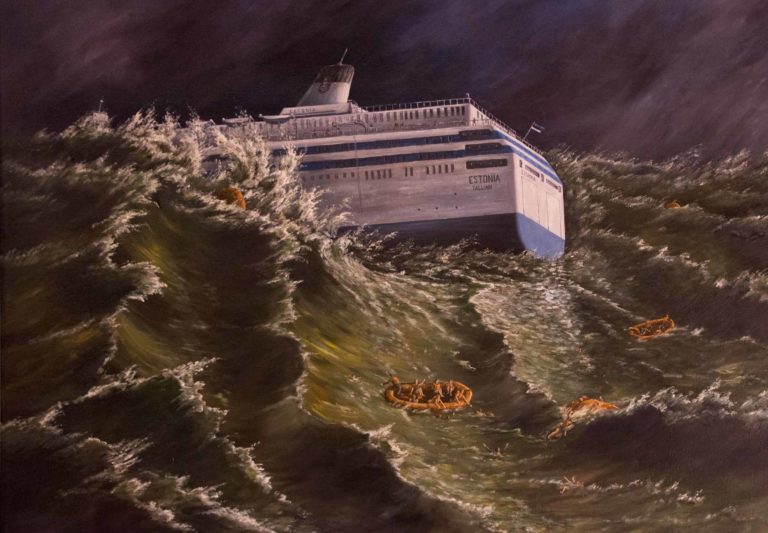
Diving is strictly prohibited on the Estonia, as two underwater film-makers who visited the tragic Baltic ferry wreck found to their cost in 2021. But the ban has not deterred Russia from allegedly using the grave site as cover for spying against NATO countries, according to a new report.
A total of 825 people died when the Tallinn-Stockholm ferry was caught in a storm 35km from the Finnish island of Utö in 1994 and sank rapidly to a depth of 80m. The calamity was blamed on the bow door coming open and letting water rush onto the car deck.
Few of the bodies were recovered, so the wreck is regarded as a final resting place. In 1995 an official exclusion zone was imposed around it by Finland, Sweden and Estonia under what they termed the “Estonia Law”.
Following a joint investigation, the German news outlets WDR, NDR and Süddeutsche Zeitung have now claimed that NATO has been informed of Russia’s use of the wreck as a training ground for underwater operations. They say it is possible that it has cached apparatus there to enable high-precision navigation by underwater drones.
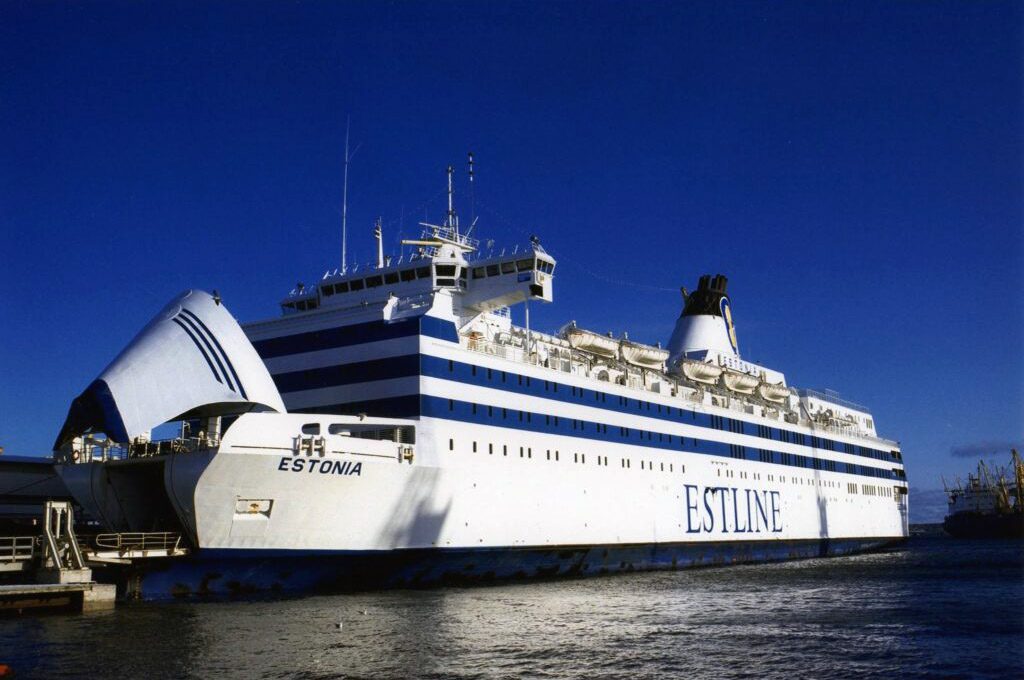
Russia could also be using the exclusion zone to conceal military sensors used to track NATO warships and submarines, according to the news report. They believe it has been free to operate there undisturbed because of the diving ban, with any permanently attached equipment likely to prove difficult to detect on the wreck.
Spy sensors
GUGI, the Main Directorate for Deep-Sea Research, is said to be responsible for Russia’s underwater espionage and sabotage operations, reporting to the defence ministry and operating a fleet of “research vessels” equipped with sonar scanners, mini-submarines and underwater robots. Deploying underwater sensors such as hydrophones to monitor NATO shipping movements is said to be one of its prime functions.
The reporters say they have been informed by security sources that underwater sensors were discovered elsewhere in the Baltic Sea years ago, with indications of entire systems with sensors and control points installed both there and in the Barents Sea. Earlier this year a report emerged that suspected Russian spy sensors had been detected off the UK coast.
Neither Russia nor Finland had responded to requests for comment on the Estonia allegations, though Estonia’s foreign ministry replied that it was “closely monitoring developments” in the Baltic Sea as Russia had grown more aggressive since the start of its attempted invasion of Ukraine.
2020 documentary
The 2019 dives that brought prosecutions for Swedish film-makers Henrik Evertsson and Linus Andersson also resulted in their 2020 Discovery documentary series Estonia – A Find That Changes Everything, which revealed for the first time a 4 x 1.2m hole in the hull.
This called into question the initial inquiry findings that a defective lock had allowed the ferry’s bow vizor to be wrenched open by the sea.
Following the documentary, the Estonia Law was temporarily suspended to allow the ferry wreck to be dived for a new investigation and photogrammetric survey in 2021. Preliminary conclusions issued in 2023 were that the vessel had not been seaworthy when it set out for the last time.