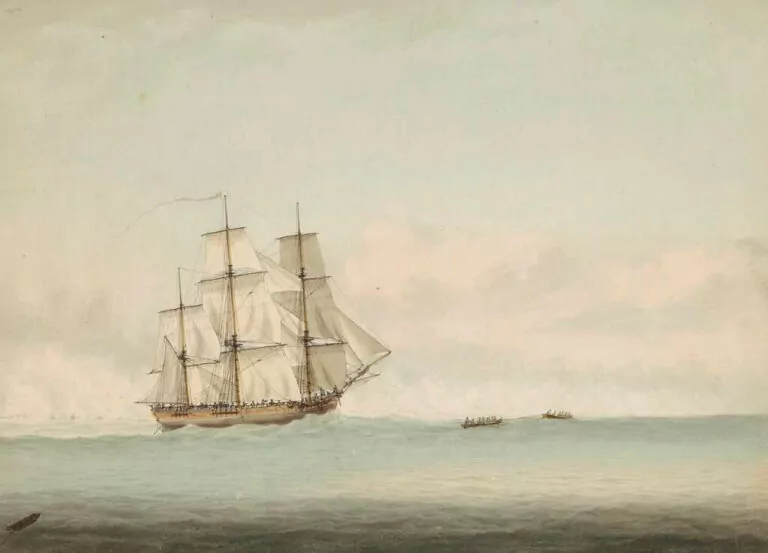
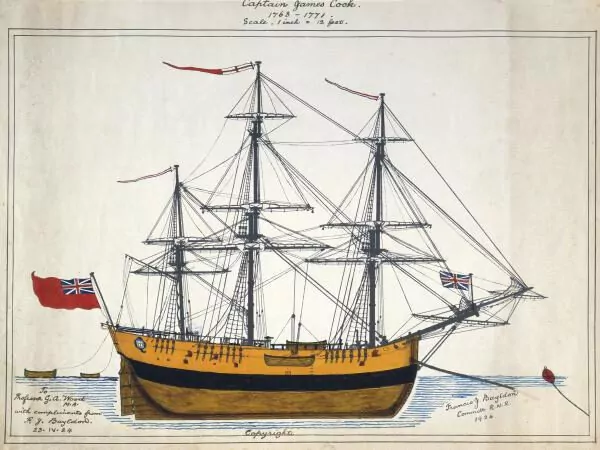
The final verdict on the identity of a shipwreck in Newport Harbor, Rhode Island, USA has been announced by the Australian National Maritime Museum (ANMM) – confirming on a “preponderance of evidence” that it was originally Captain James Cook’s famed expedition ship HM Bark Endeavour.
The confirmation is the climax of an ultimately controversial project that has taken some 26 years, and comes in a report containing new historical and archaeological evidence to identify the site formerly known as RI 2394. The ANMM now wants to ensure that the wreck receives full protection.
“Given Endeavour’s historical and cultural significance to Australia, Aotearoa New Zealand, England, the USA and First Nations peoples throughout the Pacific Ocean, positive identification of its shipwreck site requires securing the highest possible level of legislative and physical protection for RI 2394,” says the museum.
As the report also points out, HMB Endeavour has not been a universally celebrated vessel. While the British naval officer and explorer Cook used it for his 1768-71 Pacific voyage of discovery, for First Nations people it symbolised the start of colonisation.
After the bark returned to England it was sold on to private owners and, renamed Lord Sandwich, used to carry troops to the American colonies in support of British campaigns. By 1778 the vessel was in poor condition and kept in Newport Harbor to house prisoners of war.
When American and French forces besieged the British-held town, Lord Sandwich was one of 13 vessels scuttled to form a submerged blockade, and there were no records of it being salvaged or moved.
Collaborative study
In 1998 Australian historians Mike Connell and Des Liddy and US maritime archaeologist Kathy Abbass of the Rhode Island Marine Archaeology Project (RIMAP) started looking into the wreck-site.
The following year the state of Rhode Island’s claim to own all the scuttled vessels was upheld in a federal court, leaving the Rhode Island Historical Preservation & Heritage Commission (RIHPHC) responsible for protecting and licensing any archaeological work on the wrecks.
At the time, and again in 2019, RIMAP and the ANMM agreed on a set of criteria that, if satisfied, would permit identification of RI 2394 as Lord Sandwich – and enough of these criteria are now said by the ANMM to have been met.
The two bodies collaborated on a series of five archaeological expeditions through to 2004, carrying out underwater scuba surveys, remote seabed sensing and analysis of stone, coal, timber and sediment samples, but none of the wreck-sites could be identified as that of the Lord Sandwich.
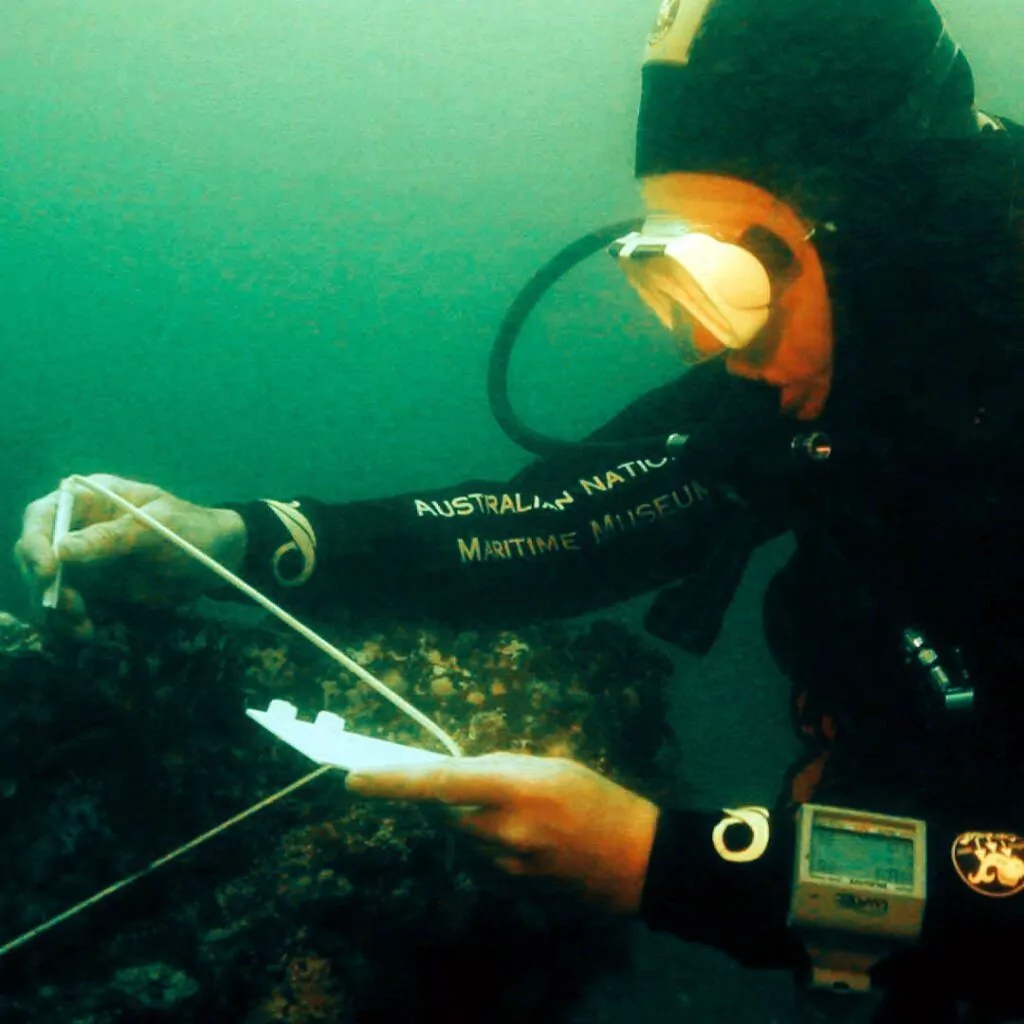
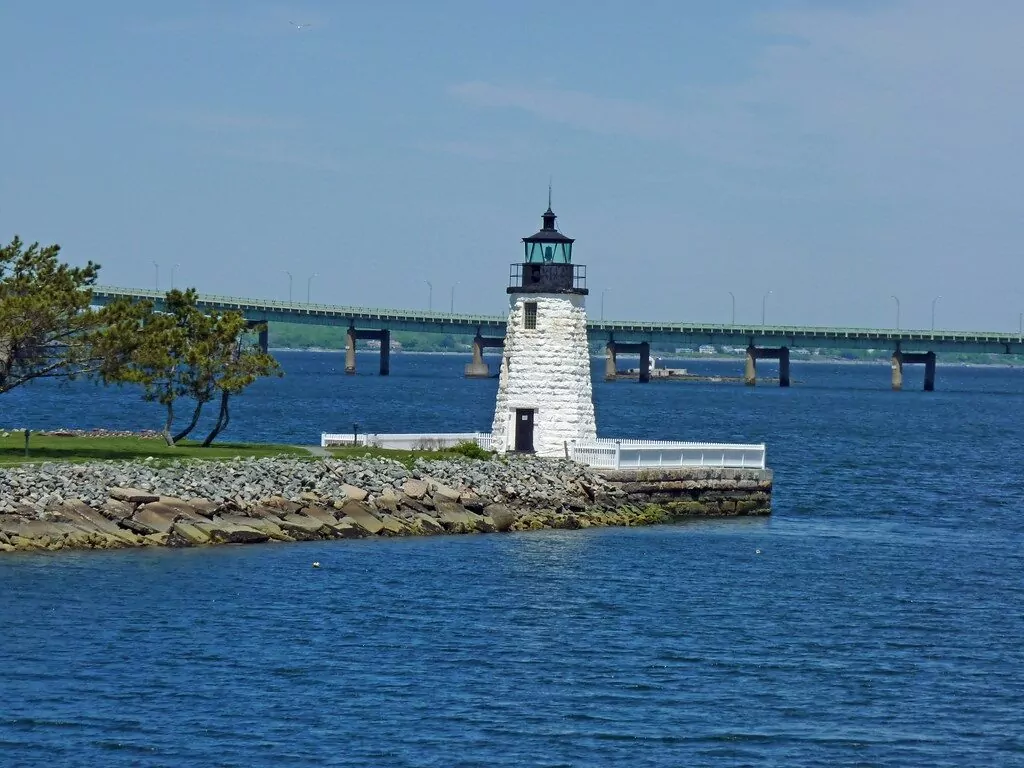
The RIMAP-ANMM project resumed in 2015, and the following year new archival research by the museum’s Nigel Erskine substantially narrowed the study area to one north of Goat Island, known to contain the Lord Sandwich and four smaller wrecks.
These were investigated between 2017 and 2021, narrowing the search further still to the two biggest wrecks.
RI 2394 was a substantially bigger site than the other, with visible remains covering an 18 x 7m area. This contained a pile of stone ballast, a line of large exposed, articulated timber ribs, four iron cannon and a lead scupper (drain).
Samples of hull timbers, ballast and artefacts were collected, and timber analysis indicated that the bow had undergone significant repairs using European wood later in the ship’s life – which had been the case in 1776.
Armed with RIHPHC excavation permits, between 2019 and 2021 the team conducted a more detailed investigation, exposing the hull and features such as the bilge-pump well, keel and keelson and bow assembly.
The dimensions of a range of structural timbers closely matched measurements taken during a Royal Navy survey of Endeavour in 1768. The surviving hull, from bilge pump to bow, corresponded closely with the ship’s measurements, while the placing of paired and tripled floor timbers corresponded exactly with the locations of Endeavour’s main- and foremasts.
An unusual joint connecting the stempost and forward end of the keel also matched surviving descriptions.
Fall-out
What had been a collaborative relationship between the RIMAP and ANMM took a turn in early 2022 when the museum first reported that the Endeavour had been identified.
Abbass shot back by asserting that RIMAP was the lead organisation for the study, that the museum’s announcement had been both premature and a breach of contract, and that questions remained to be answered before a definitive conclusion could be drawn.
“When the study is done, RIMAP will post the legitimate report on its website,” she said – though nothing has been posted there about Endeavour recently. Divernet has approached RIMAP for comment.
The museum’s final report can be downloaded here.
Also on Divernet: UNEARTHING ENDEAVOUR – HIS MAJESTY’S BARK (HMB), COULD A BRICK SOLVE COOK SHIPWRECK DISPUTE?