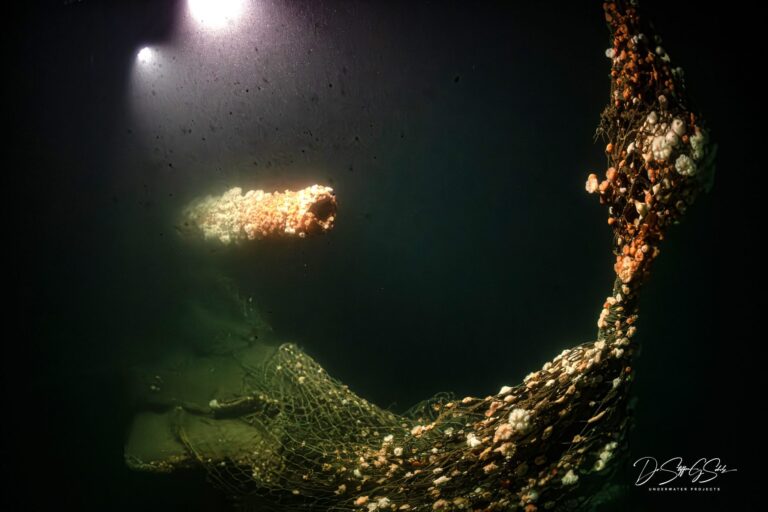
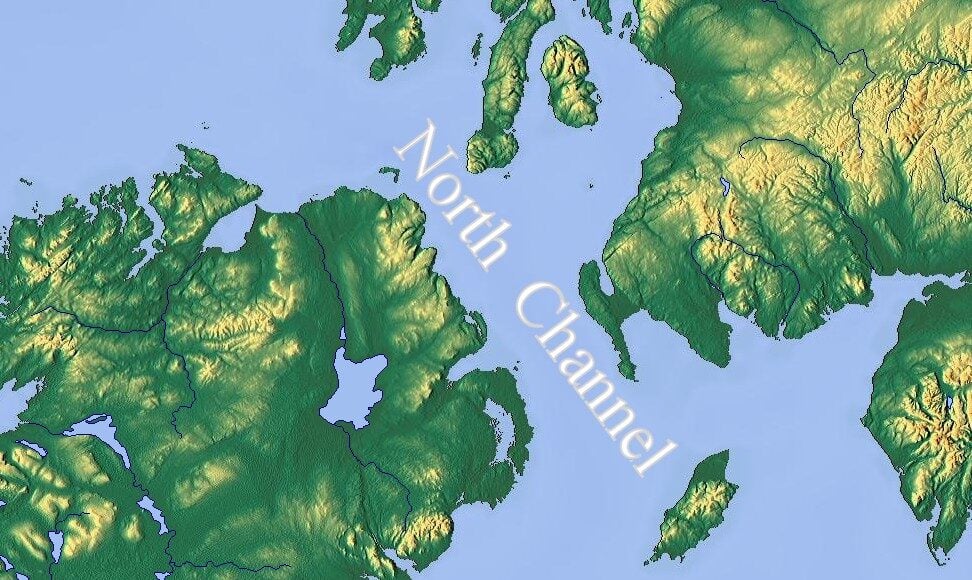
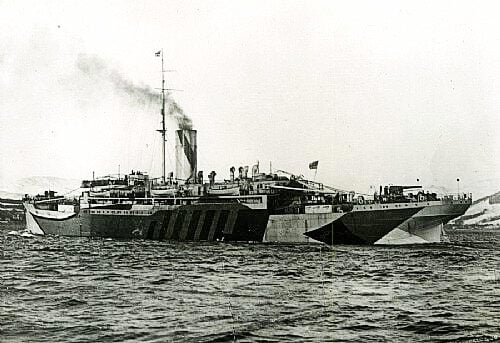
The 106m-deep wreck of the WW1 armed merchant cruiser HMS Bayano, sunk by the German submarine U-27 in the strait between Scotland and Northern Ireland, has been conclusively identified by a technical-diving team.
The divers from community-led initiative ProjectXplore have just published a detailed report on the result of their recent dives on Bayano, which went down with the loss of 198 men on 11 March, 1915.
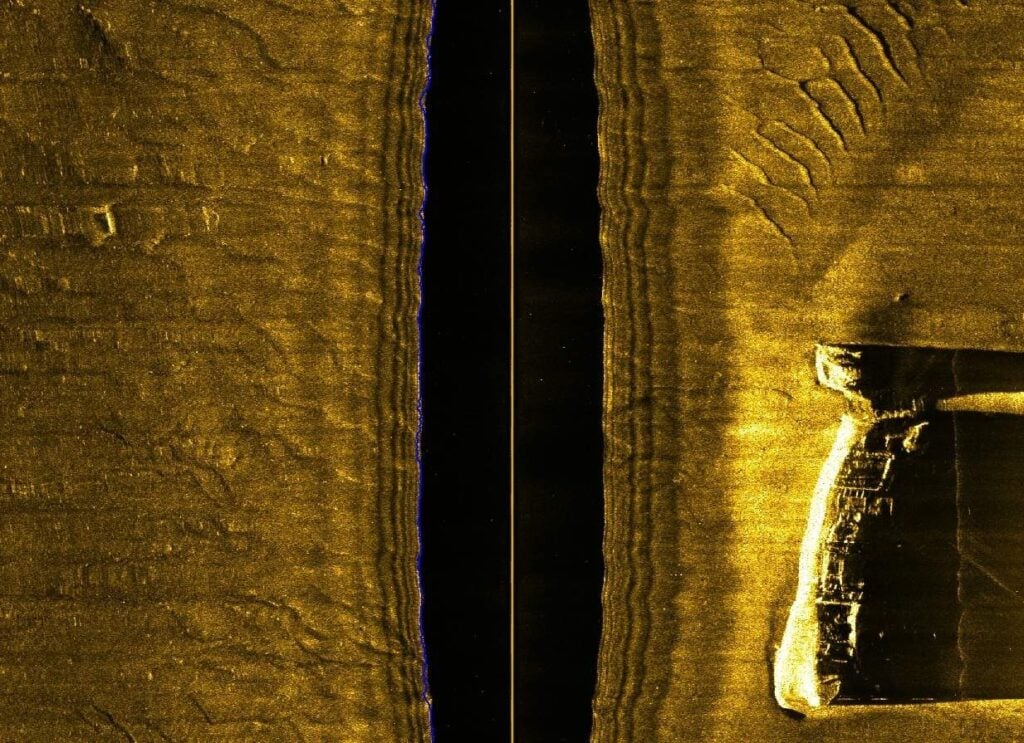
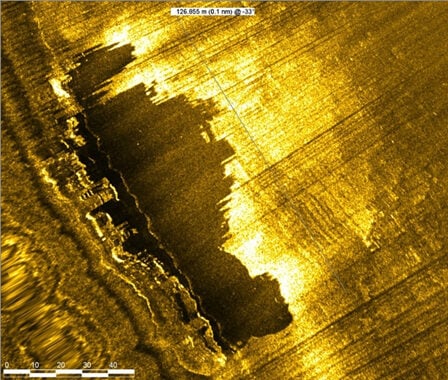
Following extensive research at the UK National Archives in London and Glasgow City Archives through September and into October, the team carried out an offshore sonar survey and dive operation on 12-13 October from the Aquaholics 5 dive-boat, skippered by Richard Lafferty out of Stranraer.
Starboard list
The wreck was found in the North Channel with its bow facing north-north-west and a 20° list to starboard. It rose more than 15m above the seabed in places, with its shallowest point at 84m. Initially assessed using sidescan sonar, the dimensions matched HMS Bayano‘s 126m length and 16m beam.
The ship lay only 1.7 nautical miles from the position indicated in contemporary press reports by surviving Royal Marine Private Arthur Craze, who reckoned it had been torpedoed about 18 miles south-west of Ailsa Craig. It was 2.4nm from the position indicated in U-27 Kapitänleutnant Bernd Wegener’s war log.
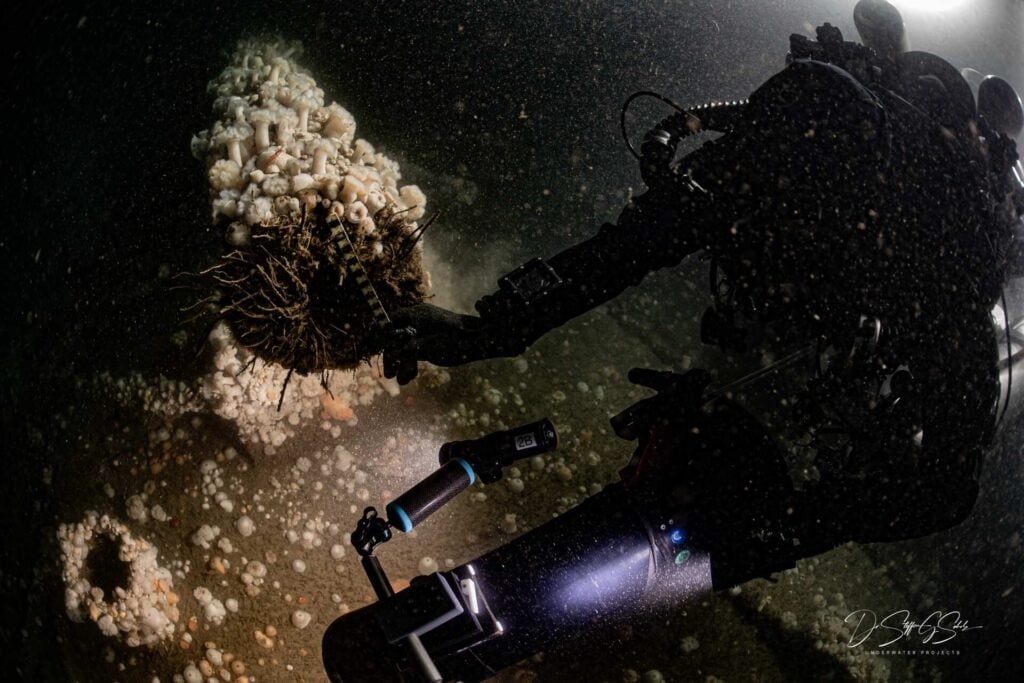
HMS Bayano was the only British armed merchant cruiser sunk during WW1 to carry six 6in naval guns, “and the wreck shows them in the expected positions” – fore and aft – according to ProjectXplore’s diving co-organiser Leo Fielding. The ship also carried two three-pounder guns.
Converted banana boat
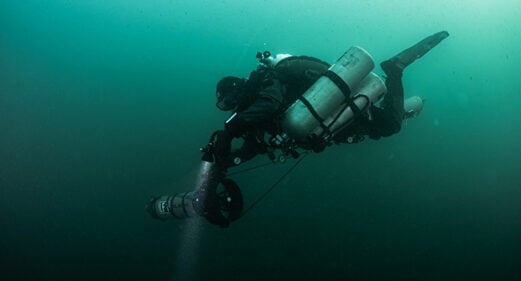
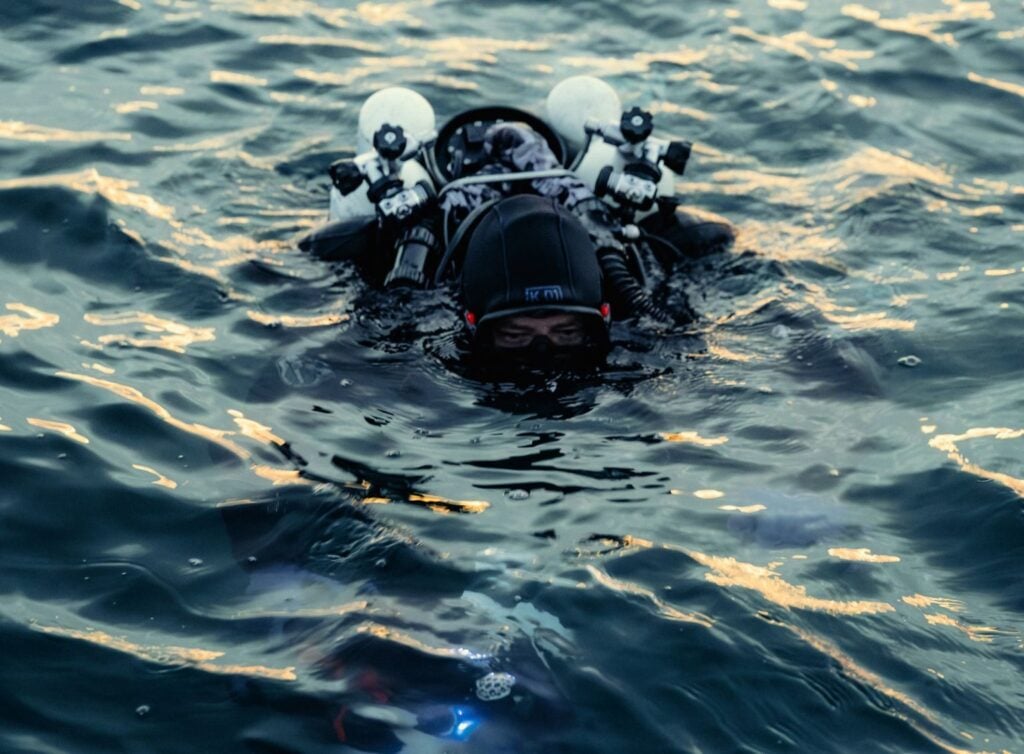
Diving on closed-circuit rebreathers, the team photographed and measured the guns and many other features that turned out to be consistent with the refrigerated fruit-carrier that banana importer Elders & Fyffes had in mind for its fleet when the ship was built in 1913.
She had been commandeered by the Royal Navy in November 1914 for conversion into an armed merchant cruiser.
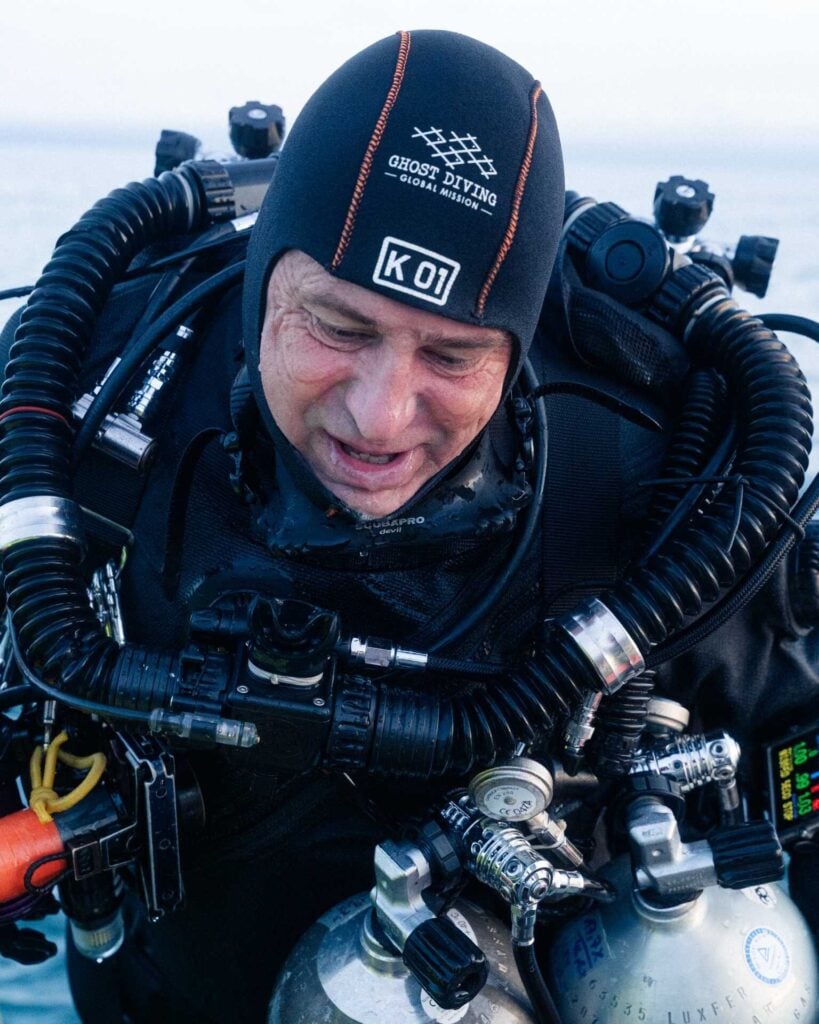
HMS Bayano “was arguably the first major British casualty of Germany’s policy of unrestricted submarine warfare, declared on 2 February, 1915, just over one month before her sinking,” said underwater photographer Steffen Scholz.
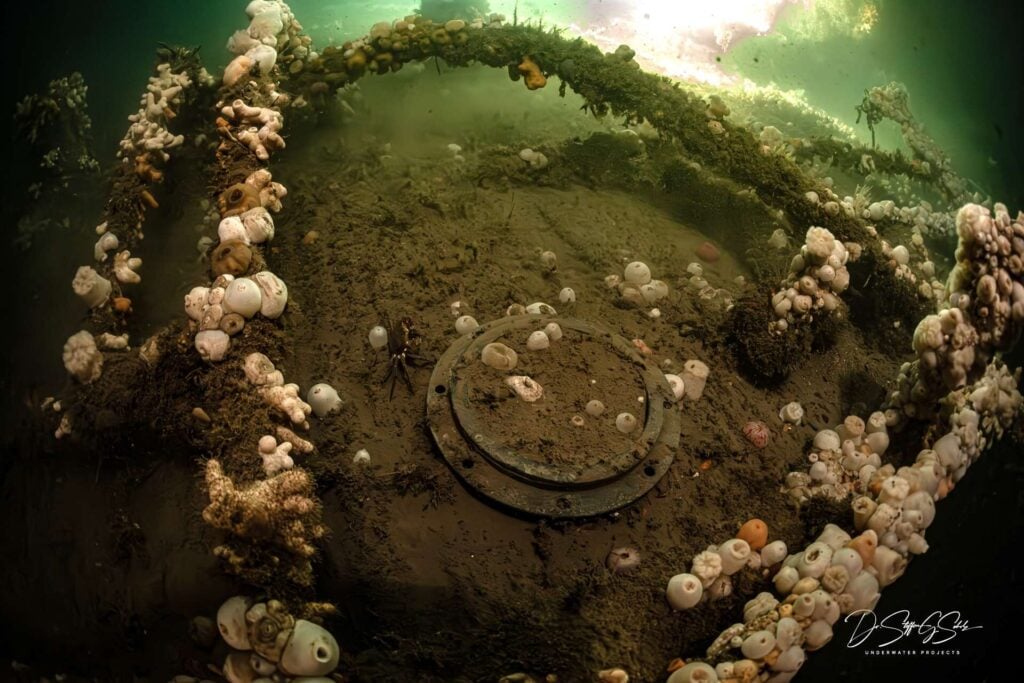
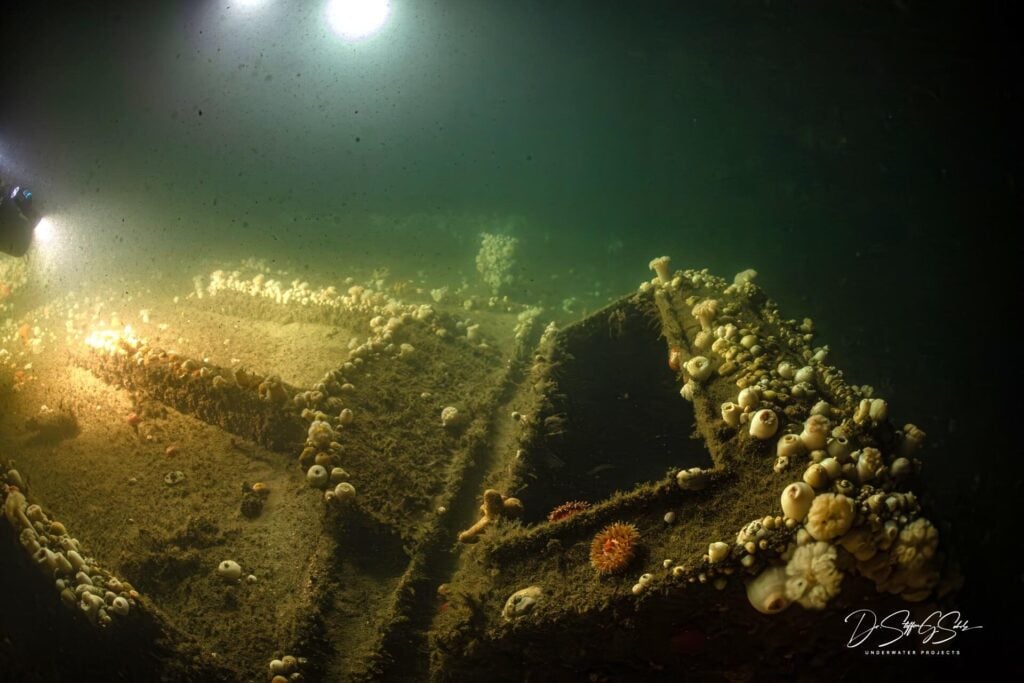
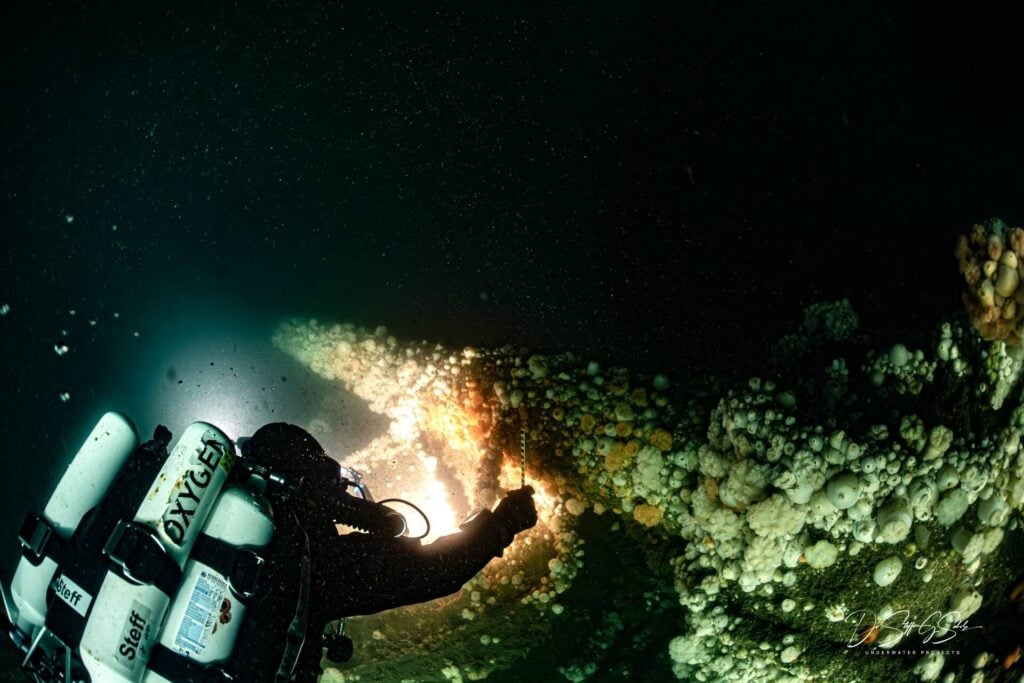
The dive-team found the masts collapsed; insulated piping and compressor remnants consistent with early 20th-century refrigeration systems; and the five-bar safety railings on the promenade deck and elliptical transom profile also to be expected from the vessel’s specification.
“The identification is not based on one photograph but on a series of mutually reinforcing indicators like the gun size, location, the dimensions, the single-funnel merchant layout, the refrigeration plant, the railing pattern, the stern form and the historical positions,” noted Scholz.

“Every detail such as the guns, railings and engineering speaks of a working warship and of the men who served aboard her. This was a moment of discovery and of remembrance,” said diver and co-organiser of the expedition Daniel McMullen.
“At that depth, conditions are demanding and time on the bottom is short, but the site is remarkably intact, which makes it an exceptional piece of underwater heritage,” added team-member Alexandra Pischyna.

Earlier this year a ProjectXplore international team found HMS Nottingham, the last undiscovered Royal Navy cruiser of WW1, at a depth of 82m in the North Sea, again following a period of extensive research. The story is told on Divernet.
More information about ProjectXplore can be found here and the team also has a GoFundMe site. Its HMS Bayano report can be downloaded here.
‘Orderly and quiet’: An eye-witness account
Royal Marine Pte Arthur Craze had been asleep on the promenade deck of HMS Bayano when he heard the explosion resulting from U-27‘s torpedo strike directly beneath the bridge on the starboard side.
He rushed to the hurricane deck to help launch the lifeboats, but the ship was going down too rapidly by the bows.
“Those below could have had no chance, and must have been drowned like rats in a trap, for the water was rushing in with a fearful roar,” Pte Craze reported.
The captain, who would not be among the 26 survivors, was telling the crew to save themselves.
“I could never have believed that under such circumstances everything could have been so very orderly and quiet,” observed Pte Craze. “Men were moving about as unconcerned as if nothing had happened and they were just doing their ordinary duty.”
He remained on board until the water overwhelmed him. “I can remember quite plainly the sea coming right over me and covering me up. I pushed out with my legs, swimming on my back.
“The life-collar, we call them Zeppelins, was in my pocket deflated, but I did not trouble about that, as I am a very strong swimmer. The last thing I saw of the ship was the propellers up in the air, perfectly still.”