
Scuba Diver Deutschland editor Daniel Brinckmann takes his epic 1,250km Pearls of Banda and Misool journey aboard the luxurious three-masted Amira liveaboard to its conclusion in southern Raja Ampat.
Read part one of this spectacular journey
The Gateway Between Banda and Raja Ampat
Too Many Fish is a dive site name that should say it all. Still, it is not easy to blow up divers’ wetskirts halfway into a 13-night cruise, and even less to get self-confessing Asiaholics giddy for the next dive site. However, Amira GM Nora Nigg knows exactly how to pull off the job when the splendid three-master reaches the stepping stone between Banda Sea and southern Raja Ampat in the four-digits-deep ocean.
“Pulau Koon is neither Banda nor Raja”, she vows during her briefing in the cozy open stern lounge. “The huge resident school of batfish might be the most-reliable attraction, but this place is so diverse one can easily spend five days here, both for corals and any kind of pelagics and fish that can show up, including rare leopard sharks.”
The submerged whirlwind that takes us along the reef edge past giant trevallies and dogtooth tuna, leads us below an elusive mobula ray and a both curious and reasonably sized school of chevron barracuda rushing in between us. There is not too much time to gaze at the beautiful soft corals or the hawksbill turtles munching on them. No matter the close shoreline of Koon Island, this is clearly oceanic territory, and while the deep drop is seemingly whispering to us, the sheltered sandy patch in the inshore fish kindergarten is where easily more than 150 batfish gather like cows on a meadow.
Unexpected Giants in the Banda Sea
After two dives and lunch by the two large tables on the shaded main deck, the relaxing day at sea on the sunbeds was cut short when the certain regulars in the open ocean bottleneck we were just passing indeed breached the surface. “Whaaaaale!!”, screamed a voice from the sundeck, awakening every living soul from their daydreams. In the distance no less than four giants, presumably blue whales judging from the look through the binoculars, one after another showed their flukes and dived down into the Indo-Pacific abyss. What a prelude to the top deck gathering for the full moon rise with cocktails in hand.

Did You Know ?
Southern Raja Ampat offers unique diving opportunities, particularly for those seeking remote and secluded locations. You can explore stunning underwater landscapes and encounter a wide array of marine life, including manta rays and even sharks!
Nights Under Open Skies in Raja Ampat
As the fellow divers made their way to the cabins one by one, I could not help but sneak out of mine with sheet and pillow in tow for a pelagic pole position in a huge, but softly swinging cradle called Amira to give in to the memories under the light of a thousand stars and the moon reflecting in the waves of the open ocean. After all, I vividly remembered my first press trip to Raja Ampat in early 2009 and how the patchwork of limestone cliffs and turquoise lagoons and the mind-blowing marine diversity on the wild frontier of Misool enchanted 28-year-old me from the get-go. Yet, ten years later, my last trip to northern Raja made me feel it was time for a break, given the amounts of divers and boats from many resorts and homestays that have mushroomed ever since the old days. So how would it be now?


Misool’s Reefs – Even Better Than Before
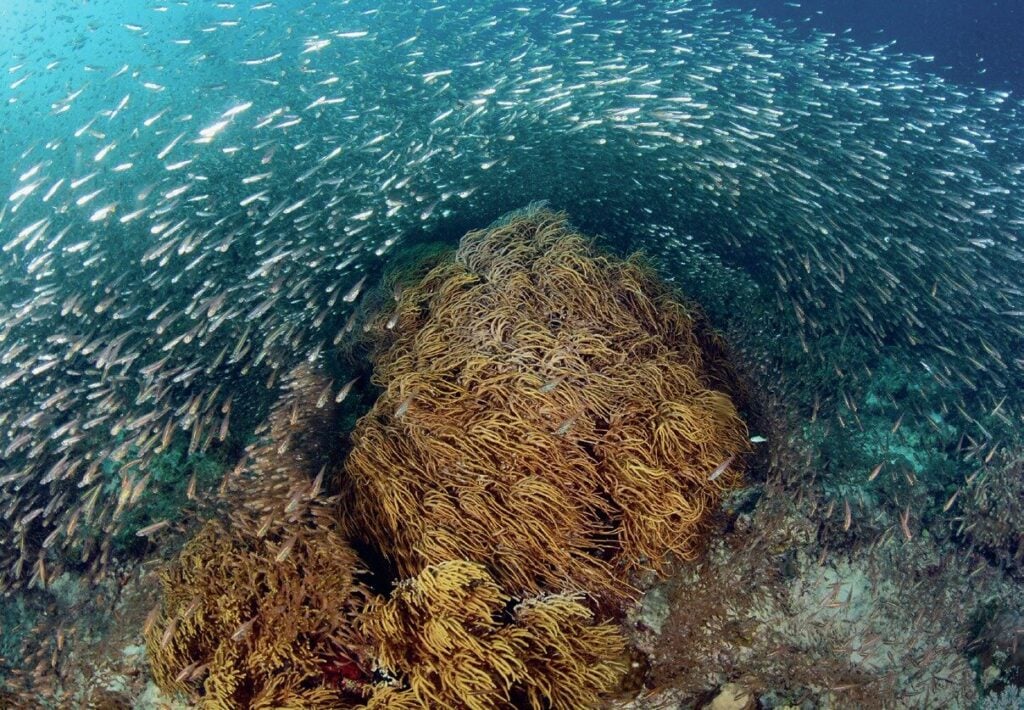
Well, it turned out our beloved silent world speaks louder than any bragging advertising. Even the first two appetisers, Misool’s classic spots Tank Rock and Nudi Rock in Fiabacet area, boasted with life and colours wherever one would look, in true Raja fashion from the deep up to the very shallows. Despite recent bleaching in Raja Ampat’s North, the presumably most spectacular flower gardens of the area – ranking among the best in the world – are still to be found in Misool: just like 15 years ago, the large coral pillars are covered in a multitude of sea fans, whip and leather corals of diverse colours with the odd anemone carpet and tube sponge thrown in for good measure. Small groups of sweetlips, coral grouper and solitary snapper spend their day peaking from overhangs as they always did, and just when I rejoiced at the perfect blast from the past, two grey reef sharks appeared and started circling the pinnacles. The same minute I waved at the first grey suits I ever got to see in Raja Ampat in the aftermath of once-rampant shark fishing, rearview mirror confusion sets in: have these reefs always been drowning in layers of glassfish, Napoleon wrasse been so numerous, coral grouper and angelfish that big?


Marine Life Recovery and Protection in Action
Truth is, after spending the safety stop plus some ‘highly required’ extra minutes inside a tornado of fusiliers – the dedicated dive guides were happy to let us roam free and kill our strobe batteries – the answer to that question became pretty obvious: in terms of fish life, Misool is one of not even a handful places I have seen in two decades of diving journalism that is so much better shape than years ago.
“Over many years, the pioneers from the local eco resort have done a tremendous job protecting the reefs from illegal fishing and convincing locals to protect their resources”, acknowledges Nora. “I would say the biomass has at least tripled in this area within the last ten years.” Thus, it is easy to be fine with the Misool Eco Foundation deciding the daily dive sites for liveaboard guests, who compared to the areas closer to the coastal city and airport hub Sorong are far and in between. Unlike the Banda Sea’s diffused chainof-pearls dive sites, everything in Misool is close-by and the underwater kingdom below the limestone mushrooms is more predictable. Be it Fiabacet’s namesake soft coral wall Orange Peel with its massive glassfish coating (September/ October is the build-up season with the predators following ensuite) or Boo’s Gorgonian wall Fan Club and Boo Windows, which kind of crumbled at one point, but still is a blissful coral garden with tons of life. However: good luck topping oldie-but-goldy hotspot Magic Mountain is home to snapper schools, a wobbegong shark hangout and a cleaning station for both reef and oceanic mantas (the former usually in winter season.)

Life Onboard the Amira – Comfort Without Pretence
The quality of a staff never reveals itself better than in time of need. When a midtrip bout of coughing and sneezing set in with more than a handful of the guests affected, the attentive kitchen crew quietly served a magic potion of powerful ginger tea that kept everybody from missing a diving day. A la carte brekkie from pancakes and omelettes to mie goreng was just as delicious as varying buffets for lunch and dinner that catered to Western palates and yet offered authentic Asian cuisine, vegan choices and any special dietary wishes as long as mentioned in the pre-trip online questionnaire. And this is a spot-on description why the Amira (Arabic for princess) with a ratio of 24 of staff to 20 guests, nine spacious double and two large single cabins (cleaned twice a day), is an exceptional safari ship. It really is simple: masterful Balinese woodcarvings and handicrafts don’t contradict an Indonesian trademark Bintang beer fridge in the saloon, and neither does daydreaming below frigate birds and Starlink internet for those who’d like it.
While others still had the superpowers to grab a kayak, paddleboard or a yoga mat, most of us photographers were already anxiously flipping through the results
Luxury and down-to-earth go hand in hand. Yet, the most-remarkable feature of this 54 per 10 metres long labour of love of diving industry friends is that every aspect has been thought through to the very end: both the four dive groups and their guides rotate daily and the three solid fibreglass tenders, which were only acquired last year, offer actual space between your own and your buddy on the opposite’s fin tips. ENOS diver rescue units are available just as complimentary 32% nitrox – same goes for laundry service and satellite phone (both at a fee) – and dives are limited to one hour/50 bar at safety stop and 50 minutes for night dives.
Banda vs Misool – Which Reigns Supreme?

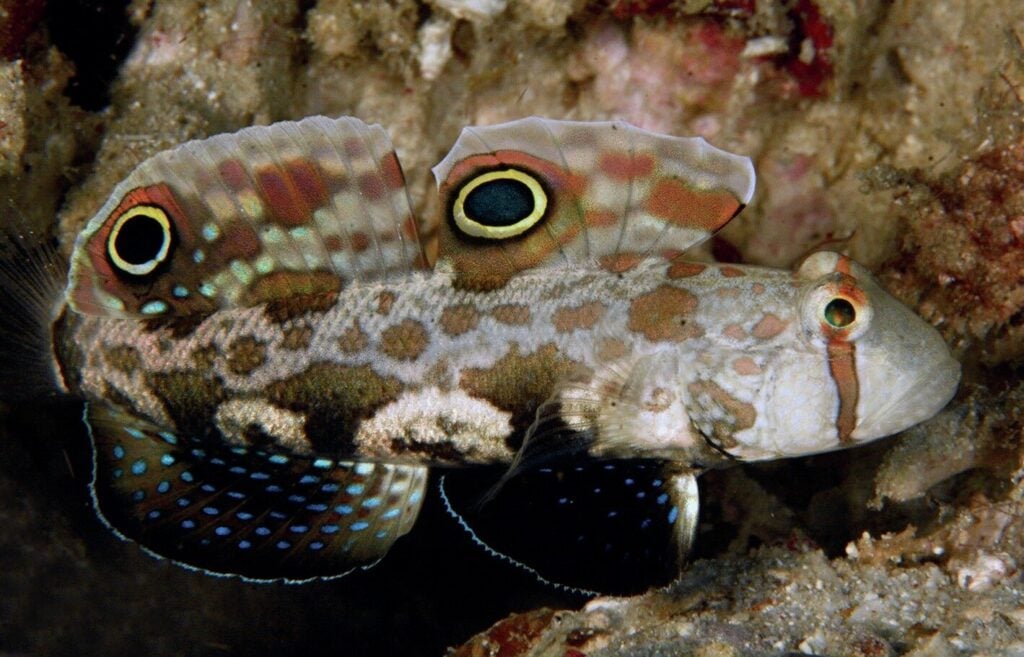
While others still had the superpowers to grab a kayak, paddleboard or a yoga mat, most of us photographers were already anxiously flipping through the results. At the sight of others macro and supermacro shots of skeleton shrimps, pygmy seahorses and nudis, I found myself wondering why I’ve always had my fisheye on other than for three night dives during 12 days of diving. It was simply because unlike in Lembeh Strait and major parts of Bali and Komodo, the Banda-Misool-transit makes you feel like the unexpected is possibly lurking around every corner.
Amira Liveaboard Pricing and Booking Details
Price example for Forgotten Islands itinerary (11 nights): lower deck double / twin cabin: US$6,490, harbour fee & tax: US$170, national park & local fee: US$140, distance surcharge: US$620.
More info and booking: www.amira-liveaboard.com
So, what is better – the remote and dramatic Banda Sea sites, where sea snakes and pelagics reach shore at deep walls or gather over giant sponges and lava sand, or the huge shallow and sheltered rainbow coral plateau that is Misool, plus its mantas? Guess what: both are at an eye-level and will at times even make your wetsuit smell like the fish; their attractions, landscapes and coral compositions are so remarkably different they simply complement each other like mask and snorkel.


The Amira covers Indonesia’s top ten routes on usually 11-night-cruises – from macro heaven to explorer territory – and as of June 2025, Nora has digitalized more than 400 dive sites for public consumption when the briefing bell rings. So if you are familiar with Asia’s finest diving (or not) and site names like Duisburgh Atoll or Pulau Moa don’t ring a bell, maybe it is high time you take a look on the company website. If you like elegant, yet unpretentious, professional and yet unforgettable, it’s for you.
Frequently Asked Questions
What makes Pulau Koon special for divers?
It’s a transitional hotspot between Banda Sea and Raja Ampat, home to batfish schools, pelagics, leopard sharks and fast-paced oceanic drift dives.
How healthy are Misool’s reefs today?
Better than ever. Years of protection have dramatically boosted biomass, with abundant sharks, sweetlips, Napoleon wrasse and thriving coral gardens.
What wildlife can divers expect on this route?
Everything from manta rays, mobulas and wobbegongs to barracuda, fusiliers, turtles and even occasional blue whales during crossings.
What makes the Amira a standout liveaboard?
A huge staff-to-guest ratio, excellent food, thoughtful dive ops, strong safety standards and comfort without the pretentious “luxury veneer.”
How does the Banda–Misool itinerary compare to classic Raja Ampat trips?
It’s more varied, more remote, and more unpredictable—combining pelagic-rich deep walls with Misool’s world-class coral plateaus.
This article was originally published in Scuba Diver Magazine
Subscribe today with promo code DIVE1 — enjoy 12 months for just £1!
