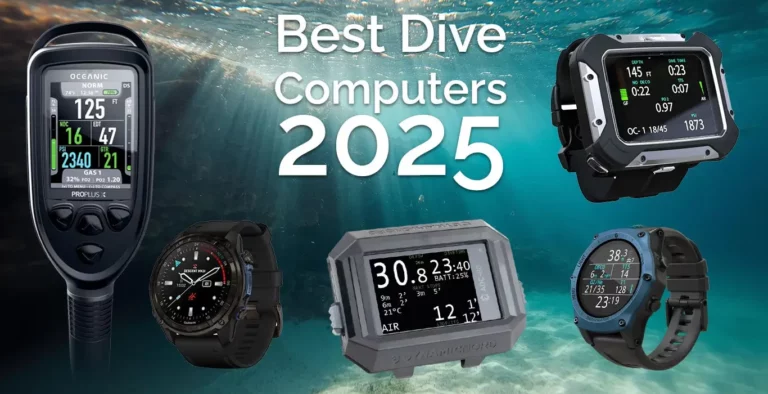
In our last ‘best dive computer’ article we focused on the best computer under £500. That article was aimed at divers who want safety and convenience without a big hit to the wallet. Maybe even relatively new divers who are looking for a computer that could cover some extra functionality without a four figure price tag. This guide, however, is for those already ready to step things up.
Maybe you want multi-gas trimix support, a full-colour AMOLED screen, air integration, or advanced planning tools for decompression dives. Maybe you just want a dive computer that looks good enough to wear every day, or one that can double up and save you having to have a separate fitness watch. Well, scuba diving computers have come a long way since their clunky beginnings in the 1980s and so all this is possible. In 2025, dive computers are sleek, powerful, and often more than capable of holding their own outside the water.
Our Top Ten Dive Computers
Here, we’ve put together a top 10 list of the best dive computers of 2025, covering a broad range of budgets but always feature-rich. Prices are shown in both GBP and USD, and the selection covers everything from affordable yet clever wrist units through to high end models suited for technical divers (although we’ll look at that market another day). Whether you’re after the best overall performer, a travel-friendly workhorse, or a daily wearable, you’ll find it in this list.
Shearwater Teric – £1,144 / $1,195
Arguably the best looking on the list, the Shearwater Teric is one of the most complete wrist-mounted dive computers on the market, loved equally by recreational divers and hardcore technical explorers alike. Its vibrant AMOLED colour screen is one of the clearest displays available, customisable to show precisely the data you want mid-dive. The Teric handles multiple gases including Trimix, open-circuit and closed-circuit rebreather (CCR) support, and offers wireless air integration with up to four transmitters.
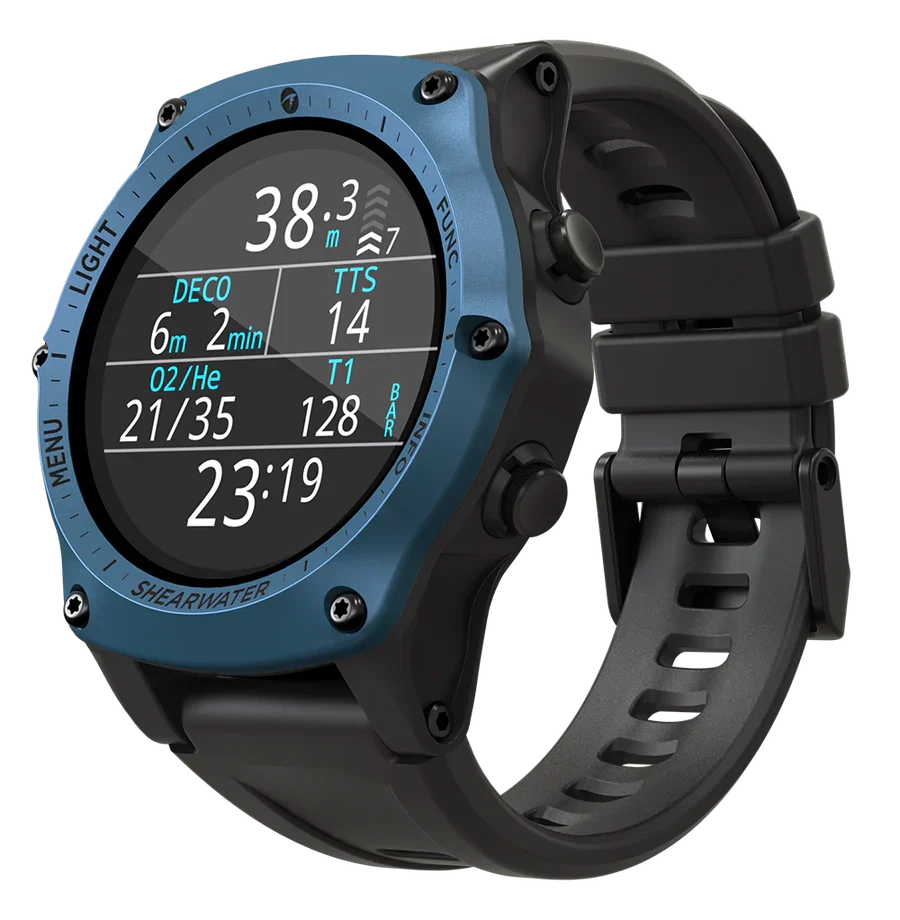
With all that, it’s still compact enough to wear daily as a wristwatch and comes with activity tracking, alarms, and a slick design that wouldn’t look out of place at the office. Shearwater’s interfaces are famous for being intuitive and despite the Teric’s advanced capability, firmware updates continue to add value long after purchase. This is the “if money’s no object” choice. It simply does it all, whether you’re a cave diver or a reef cruiser.
Pros:
Stunning AMOLED display with customisable layouts
Full tech support (multi-gas, Trimix, CCR)
Comfortable, everyday wear design
Cons:
Premium price tag
Learning curve if you only want basic features
Garmin Descent Mk3i – £1,249.99 / $1,399
Garmin’s Descent Mk3i continues the brand’s march into dive tech territory, blending the depth of a full dive computer with the convenience of a smartwatch. The Mk3i boasts a bright AMOLED touchscreen, supports air, Nitrox, Trimix, and CCR diving, and introduces Garmin’s SubWave sonar technology, enabling diver-to-diver communication and tank pressure sharing within a group.
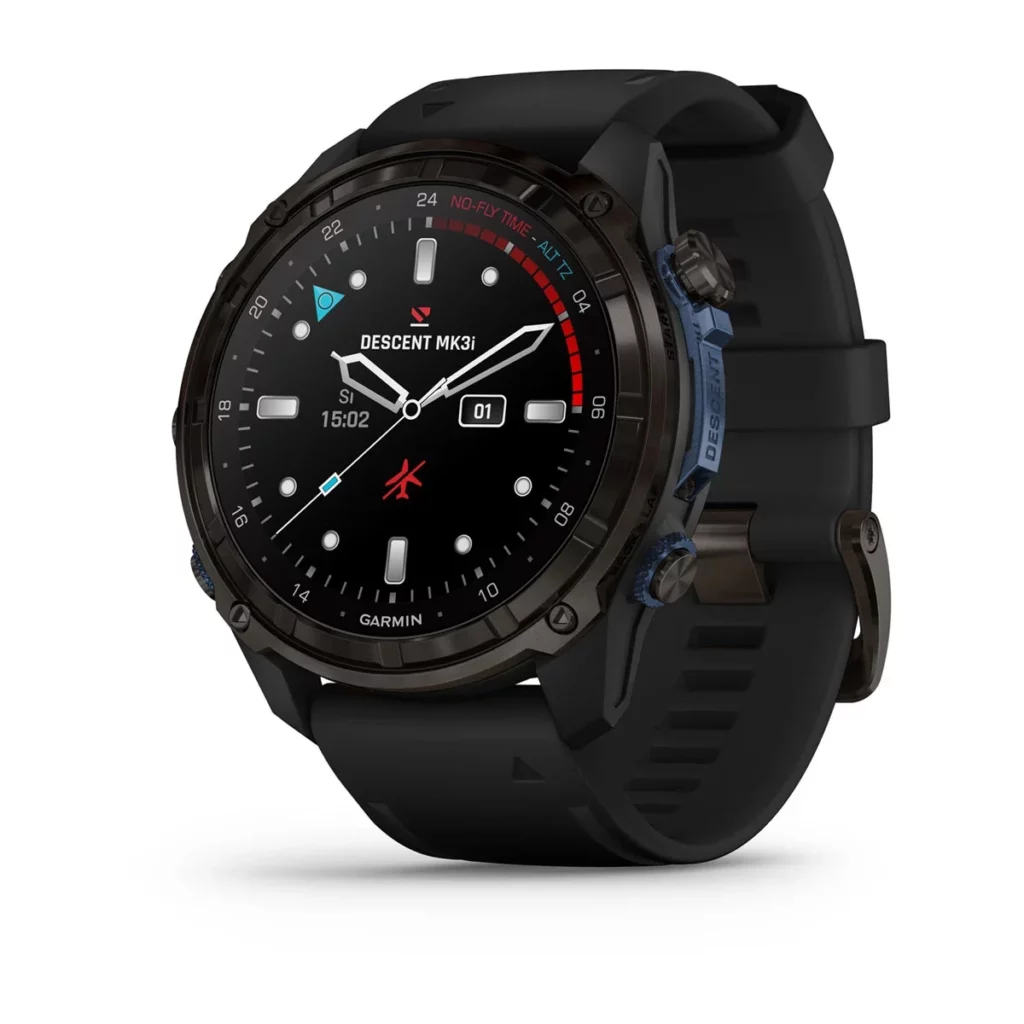
It’s equally at home topside, with full multisport training modes, GPS mapping, music storage, and health tracking. Battery life is excellent, offering around 66 hours in dive mode and weeks in smartwatch use. For those who are sport types outside diving, the Mk3i is the ideal two-in-one: one watch to track your fitness, plan your dives, and keep you connected when dry. It’s not the cheapest option, but for divers who want an all-rounder that never leaves the wrist, it’s hard to beat. It even comes in two sizes.
Pros:
Combines dive computer and smartwatch seamlessly
SubWave diver-to-diver communication
Packed with fitness and GPS features
Cons:
Expensive compared to dive-only models
May overwhelm divers who only want core functions
Apeks DSX – £880 / $1,199
Moving now to a dedicated dive computer, the Apeks DSX is built with technical diving in mind and brings Apeks’ engineering pedigree to a top-tier dive computer. Housed in a rugged case with a full-colour TFT display, the DSX supports air, Nitrox, Trimix, CCR, and sidemount configurations right out of the box. It has a USB-C rechargeable battery plus integrated GPS for surface positioning and dive site logging.
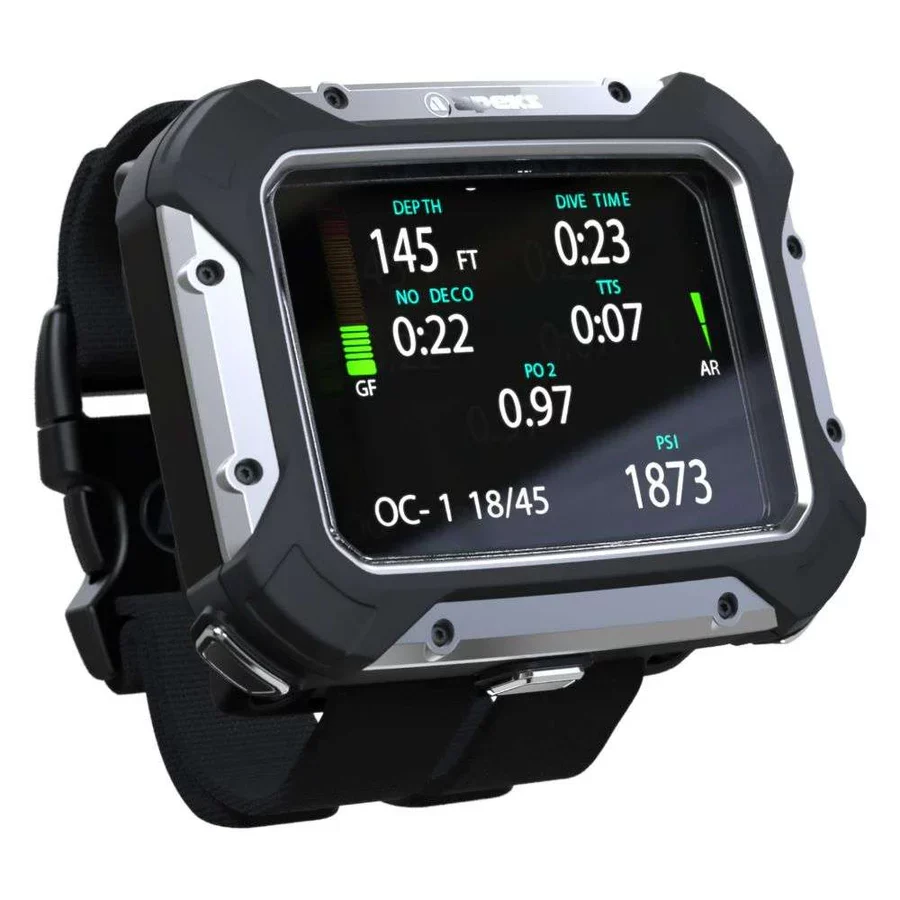
Technical divers will appreciate the DSX’s decompression planning tools, Bluetooth connectivity, and downloadable dive profiles for post-dive analysis. The unit is depth-rated to 200 metres, making it more than capable of serious exploration. This is not an everyday “smartwatch substitute”, it’s unapologetically a diver’s tool, built tough, and focused on giving you uncompromising control over your dive plans.
Pros:
GPS surface positioning and logging
Fully tech-ready: Trimix, CCR, sidemount
USB-C rechargeable battery
Cons:
Heavier, bulkier than casual wrist computers
Pricey for recreational-only divers
Aqualung i770R – £616 / $849
The Aqualung i770R is a high-performance wrist computer that’s popular with divers who want strong features in a compact package. Its colour TFT screen is crisp and easy to read in low light, and the i770R supports multiple gases (air, Nitrox, and Trimix). Bluetooth Smart allows wireless syncing to Aqualung’s DiverLog+ app, making dive logging seamless. Optional wireless air integration adds tank pressure monitoring directly to your display, while a rechargeable battery helps maintenance down.

Aqualung’s interface is streamlined with simple push-button navigation, and the build quality feels robust yet stylish. Positioned slightly below the most expensive flagship models, the i770R is a strong pick for divers who want a colour screen, wireless connectivity, and future-ready features without stretching into four-figure budgets.
Pros:
Bright TFT colour display
Bluetooth and app connectivity
Rechargeable battery with long life
Cons:
No smartwatch crossover features
Interface less customisable than many rivals
Dynamic Nord ADC-80 – £799 / $1080
The Dynamic Nord ADC-80 is a newcomer shaking up the market with a focus on simplicity and value. Don’t let its relatively modest price fool you, the ADC-80 offers strong air and Nitrox support, a clear backlit display, and Bluetooth connectivity for quick logbook syncing. Its bulletproof and streamlined design makes it great for travel, and the straightforward menu system means you won’t spend half the dive scrolling through settings.

While it lacks advanced tech features like Trimix or CCR support, for recreational divers and those with a penchant for well planned deco convenience at a fair price, this German-designed unit ticks the boxes. The ADC-80 also has an impressive depth rating of 120 meters, ensuring reliability as your dives progress deeper. It’s a strong pick for divers who want to step up from basic consoles into a dedicated diving computer that will take them deeper without complexity.
Pros:
Affordable but feature-packed
Bluetooth dive log syncing
Lightweight and travel-ready
Cons:
No Trimix or CCR support
Basic display compared to premium units
Scubapro Aladin A2 – £400 / $480
The Scubapro Aladin A2 proves that mid-priced dive computers can deliver high-end functionality. This was the reason we chose it as the Best Dive Computer under £500. This compact wrist unit offers six dive modes, supporting everything from recreational air dives to Trimix, sidemount, and even CCR. Its ZH-L16 ADT MB decompression algorithm ensures accurate planning, and optional wireless air integration provides real-time tank data.

A standout feature is biometric tracking (heart rate and skin temperature) when paired with Scubapro’s transmitter, giving you a unique physiological edge in dive safety. Its digital 3D compass is tilt-compensated and intuitive, while the high-resolution dot-matrix screen remains readable even in poor visibility. Depth-rated to 120 m, the Aladin A2 is versatile enough for ambitious recreational divers and entry-level tech setups. Compact, reliable, and feature-rich, it’s the budget pick of the year without feeling “budget” at all.
Pros:
Multi-gas and CCR support at mid-price
Compact, lightweight, great for travel
Biometric integration adds safety
Cons:
Monochrome display less flashy than premium models
Not as customisable as Shearwater or Garmin
Suunto Ocean – £725 / $899
The Suunto Ocean is Suunto’s answer to the Apple Watch Ultra 2… or rather, its more eco-friendly, dive-ready cousin. It boasts a bright 1.43-inch AMOLED display housed under sapphire crystal and a stainless steel bezel, delivering superb underwater readability with toughness to match. This hybrid beast supports air, Nitrox, and up to five gas mixes, plus freedive and snorkel modes, though it skips Trimix and rebreather functions.
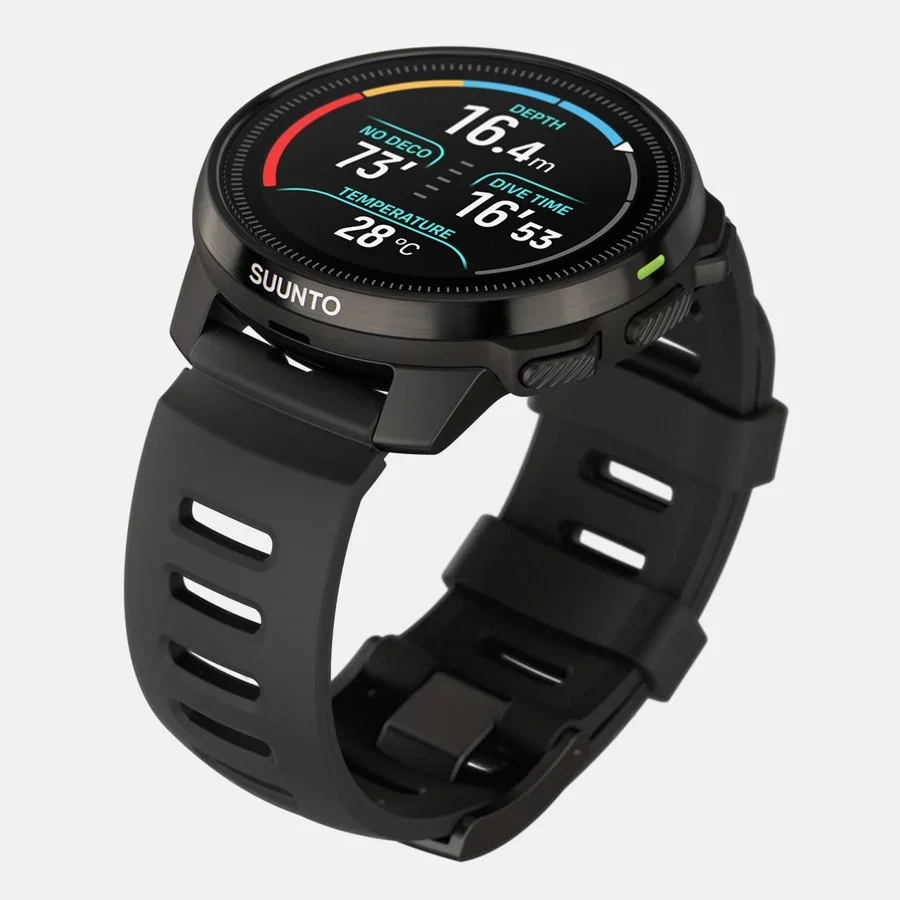
A stand-out feature is underwater 3D route mapping, using GNSS and sensors like the gyroscope that let you visualise your path post-dive.Battery life ranges from 40 to 60 hours in dive mode to up to 16 days in smartwatch mode, making it one of the longest-lasting smart dive devices around. The Ocean also leans into activity tracking, offering more than 95 sport modes, sleep and recovery metrics, offline maps, and weather/altitude tools for topside adventures.
Pros:
Gorgeous AMOLED display with route-mapping and long battery life
Deep multisport tracking plus dive functionality in one eco-minded package
Strong durability with sustainable design
Cons:
Lacks technical diving features like Trimix and CCR support
Dive strap may be short for drysuits
Charger still uses USB-A, not USB-C
Mares Quad Ci – £472 / $570
The Mares Quad Ci elevates the Quad series with air-integration, bringing wireless tank pressure data to a rugged, easy to read platform. It’s powered by the customisable Bühlmann ZH-L16C algorithm, complete with alternative gradient factors and ceiling decompression for safer, tailored dives. The 8-colour high-resolution MIP display shows jumbo info at a glance, while a fully tilt-compensated digital compass includes bearing memory for confident navigation. You get air-time monitoring, Time-to-Reserve (TTR), and colour-coded pressure/saturation visuals from up to five paired transmitters.

Battery-wise, it’s a Li-Po system delivering up to 30 hours of dive time per charge (or 20 h with transmitters active) and holds about 100 hours of log data at five second intervals. Bluetooth connectivity lets you sync dives and update firmware via the Mares app, and safety perks like runaway deco alarms and altitude auto-adjustment (via ambient pressure every 20 sec) round out the package.
Pros:
Large, legible colour display with integrated air monitoring
Custom gradient control plus multi-gas support
Long log memory and convenient Bluetooth/firmware tools
Cons:
Bulky, it may feel oversized on smaller wrists
No CCR capabilities
Oceanic ProPlus X – £1,269.95 / $1,199.95
The Oceanic ProPlus X brings a console-style powerhouse to a wrist computer fan’s attention. Featuring a massive, ultra-legible TFT colour display with the biggest digits on the market, this unit ensures you’ll never squint at crucial dive info again. It supports Air, Nitrox, and Gauge modes, offers air integration, and displays Air Time Remaining as well as Dive Time Remaining with intuitive colour-coded bar graphs.
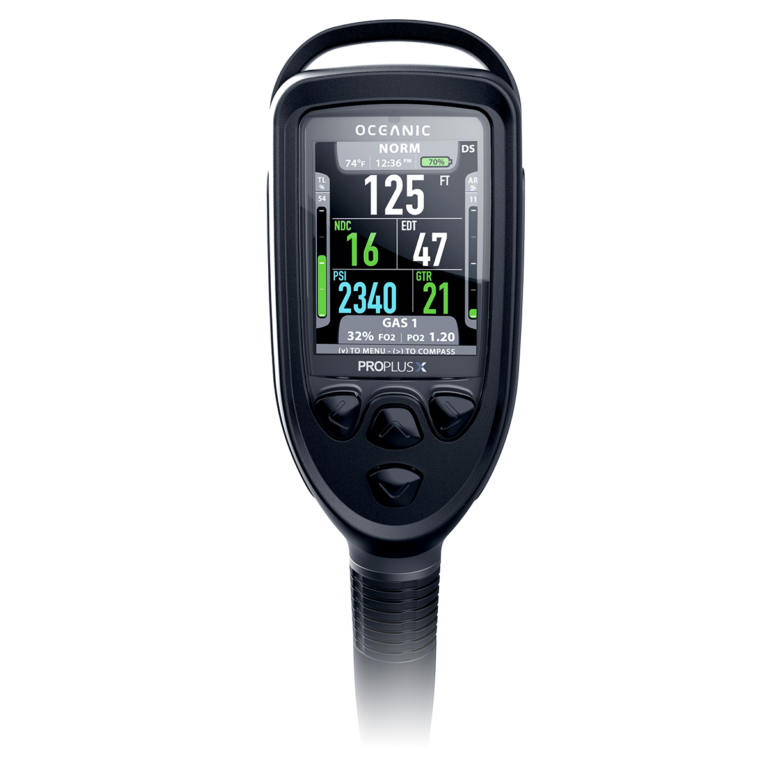
The built-in 3D digital compass has three modes (did you know they had modes?), and the interface is very logical with its four-button setup. Bluetooth 4.0 gives you wireless log syncing via the DiverLog app so there’s no need for awkward cables mid-trip. Dual algorithm support (Pelagic DSAT or Pelagic Z+) lets you mirror your buddy’s conservatism, and the rechargeable lithium-ion battery delivers around 35 to 60 hours per charge. It’s chunky, sure, but this is a dive computer that shouts clarity and reliability and already has a reputation as the best console computer out there.
Pros:
Unbelievably readable TFT screen with colour-coded ATR/DTR graphs
Integrated air time tracking and colour wayfinding make real-time decisions easier
Dual algorithm choice and Bluetooth log uploads add flexibility and convenience
Cons:
Console-style bulk is not everyone’s choice
No touchscreen and four buttons can feel archaic to some
Cressi Raffaello – £399.99 / $449.95
The Cressi Raffaello offers a surprising amount of capability at its modest price point. Designed for recreational divers, it supports air and Nitrox up to 99% O₂, with an intuitive menu navigated by two push buttons. The display is segmented but backlit for clarity, and alarms can be set for depth, ascent rate, and maximum dive time. With four operating modes (Air, Nitrox, Gauge, and Freedive), the Raffaello provides enough versatility for entry-level and intermediate divers alike.

Its slim profile and lightweight design make it an excellent travel companion, and battery replacement is simple. While it won’t appeal to tech divers, it’s one of the most accessible ways to get a reliable, fully featured dive computer without a hefty investment.
Pros:
Very affordable price
Supports Nitrox up to 99% O₂
Lightweight and easy to travel with
Cons:
No air integration or Trimix
Segmented display feels dated
Summary
- Best Overall 2025: Shearwater Teric. If diving comes first then the Teric has an unmatched combination of tech capability and everyday wearability.
- Best for Technical Diving: Apeks DSX. Rugged, GPS-enabled, and tech-focused with Trimix/CCR support. Built for diving… just diving, of any kind.
- Best for Travellers: Aqualung i770R. If you’re not interested in a unit that does anything that’s not diving, but you don’t need full bore tech then the i770R is compact, capable, and flexible..
- Best on Budget: Scubapro Aladin A2. As we said in the under £500 article, the A2 has a great feature set at a mid-tier price. Hard to beat for the price. Honourable mention to the Cressi Rafaello though, if you just want a pure dive computer.
- Best for Daily Wear and Fitness Tracking: Garmin Descent Mk3i. Garmin unashamedly wave the Descent Mk3i’s smart watch features as part of the package, and rightly so, they are a leader in the field. But they have managed to build in dive functionality that can seriously mix it with the best.
Final Word
Choosing the right dive computer is less about chasing the latest flashy gadget and more about matching a tool to your diving ambitions. A seasoned technical diver pushing 100 meters on Trimix will not have the same needs as someone logging 20 warm-water dives a year on holiday. That’s why understanding your priorities, from gas support and air integration to portability and display readability, is critical before making a purchase.
The good news in 2025 is that no matter your budget, you’ll find a model with professional-grade reliability. Even the “budget” computers on this list, like the Cressi Raffaello or Scubapro Aladin A2, offer functionality that would have been considered top-tier a only decade ago. At the other end, flagship models like the Shearwater Teric and Garmin Descent Mk3i blur the line between dive tech and lifestyle wearables, giving you tools that extend way beyond the water. And to a strong degree, your computer can now keep up with the times. Regular firmware updates and ever improving battery life means your electronic buddy can keep going for years.
Most importantly, remember that a dive computer is there to support good judgment, not replace it. Always keep your manual handy, and read it from time to time when you have dives coming up. No diver ever regretted knowing their computer inside out before submerging. Dive safe, dive smart, and choose the computer that enhances your style of diving rather than complicating it.
Frequently Asked Questions
1. What’s the main difference between a recreational and technical dive computer?
Recreational computers focus on air and Nitrox with straightforward decompression tracking. Technical units add Trimix, CCR, and advanced planning tools for deeper, more complex dives.
2. Do I really need air integration?
Not necessarily. Air integration adds tank pressure data to your display, which is convenient and accurate, but standard SPGs remain perfectly safe and reliable. As id often the case, preference is king here.
3. How long do dive computer batteries last?
Rechargeable models often last 20–40 hours in dive mode, while replaceable batteries in bigger units may last a year or more depending on usage. Always check before a big trip… and AFTER every dive, nobody wants to realise their computer won’t make the next dive before it even starts.

Where does the dedicated X50i from garmin stand? Similar price to the watch so why isn’t it part of the list?
Garmin is amazing above and below the water. I wear mine 24/7.
You can get the right computer, in your budget, from one company. It’s unfair to show only the premium model from Shearwater and not the lower priced versions. Nobody needs a computer from a brand besides Shearwater. Nothings else compares.
We covered budget computers here https://divernet.com/scuba-gear/top-10-dive-computers-under-500-650-in-2025. Many divers like a broad overview of the market, not just a single company, although they do make good products.