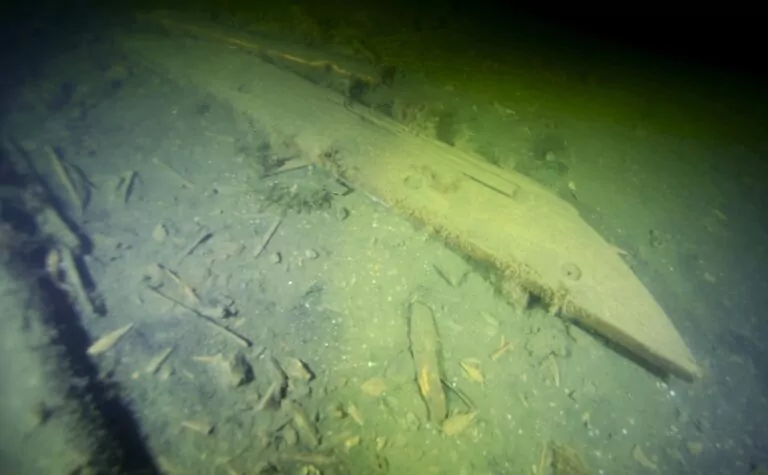
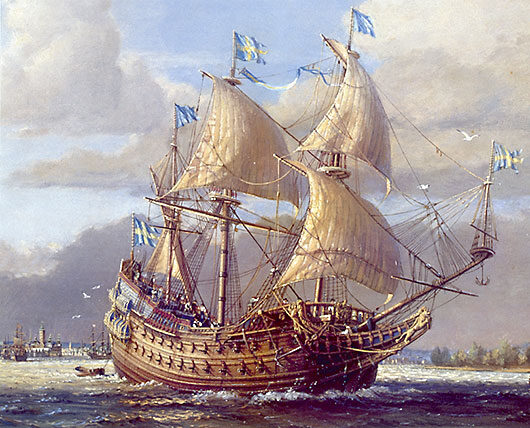
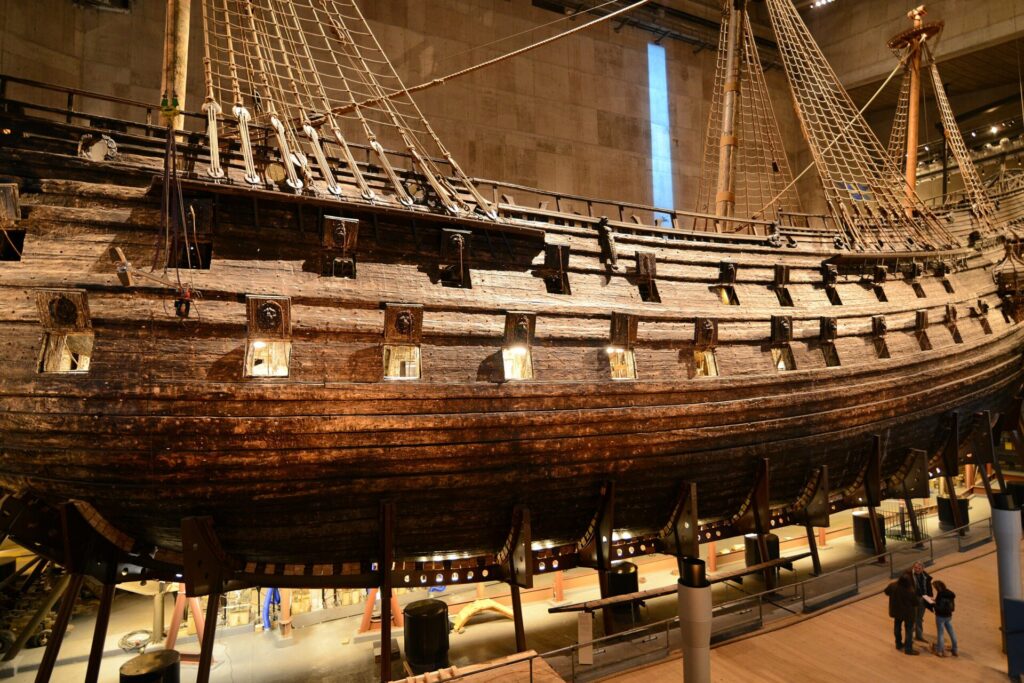
Since the early 17th-century shipwreck Vasa was salvaged almost intact from the Stockholm river 60 years ago it has become one of Sweden’s biggest tourist attractions – but some items were suspected to have been left behind at the “Vasa Grotto” wreck-site.
Now a number of significant discoveries have been made during extended investigations led by marine archaeologists from the Vasa Museum’s sister-museum Vrak – the Museum of Wrecks.
New finds include log anchors, parts of barrels, a processed piece of timber believed to be part of a märskorg or crow’s nest that would have been mounted on the ship’s bowsprit – and an as-yet unidentified round object with a rounded edge and mouth.

Few dives were carried out in the years following the raising of the 64-gun warship in 1961. The new round of investigations began in 2018 and took advantage of technological developments, with 3D seabed-mapping and sub-bottom profiling carried out using advanced sonar equipment, led by Prof Martin Jakobsson at Stockholm University.
This was followed by ROV surveys carried out by the Swedish Navy from HMS Belos before Vrak’s marine-archaeological divers took over. They completed their work last year and a report based on the findings has just been published.
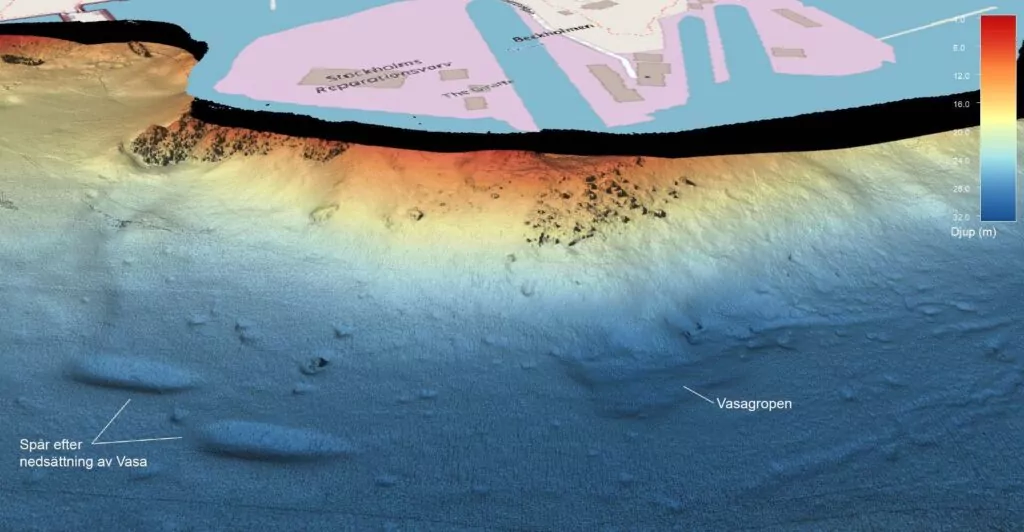
For the time being the leftover items remain at a depth of about 30m in the Baltic Sea, where cold, brackish waters provide high levels of preservation over centuries, even for ship’s timbers.
The crow’s nest
“Now we would like to find out more about these objects and examine them further,” says Vrak marine archaeologist Jim Hansson, project manager for the Vasa Grotto investigations. “We want to raise the ship part that might be part of a crow’s nest from the bottom to analyse it.”
The bowsprit itself has remained missing, but it is hoped that the crow’s nest section can provide new insights into its overall design.

“When we dive, we can discover what technology cannot see,” says Hansson. “In addition, a human eye and hand are needed to be able to verify the findings, examine them and understand what they were used for.
“But all technologies are needed to understand the whole. Thanks to these investigations, we now have a more comprehensive picture of the Vasa wreck-site than had existed before.
“All the lifting that was done by Vasa before she could be salvaged is visible in the 3D images but cannot be detected by the naked eye. These are literally footprints left by Vasa!”
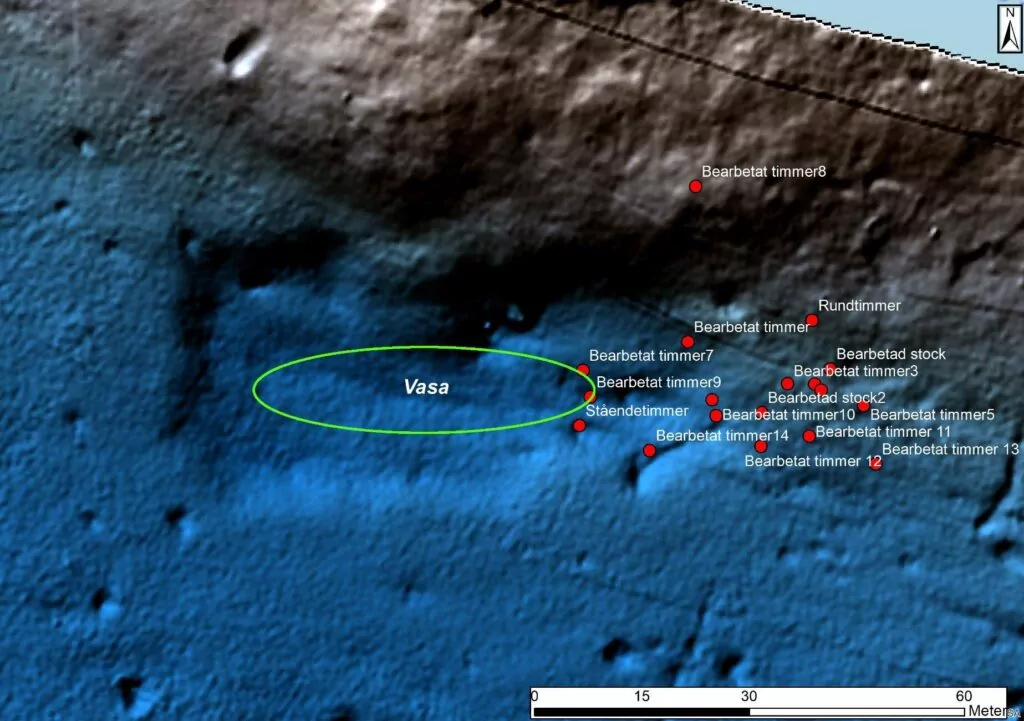
“Now we will find out if we can investigate the area further and find more ship parts that are still missing,” says Vasa Museum director Jenny Lind. “Ahead of the commemorative year of 2028, when Vasa turns 400, it would be nice to have located more of the missing objects.”
Vasa had only a brief history as a sea-going vessel because she sank on her maiden voyage, but today her remains continue to attract around a million visitors annually.
For anyone visiting Stockholm, a 72hr combo ticket to experience the Vasa Museum and also enjoy virtual dives at Vrak is available for 349 krona (£27), with admission free for 18s and under.
Also on Divernet: SKELETON FROM VASA SHIPWRECK WAS FEMALE, DIVERS EXPLORE OLDEST NORDIC CARVEL-BUILT SHIP, BARRELFUL OF IRON RAISED FROM 16TH-CENTURY WRECK, 2 LIONS WITH APPLE: 17TH-CENTURY CARVINGS STUN DIVERS

Visited the Stockholm wreck Vas , was unbelieveble , am interrested in the artikel , missing piece