In the second half of our deep dive into the most challenging dive sites, Claudio Di Manao explores the final three entries of our list. If you missed the first half, catch up on The Top 6 Dive Sites That Demand Extra Caution – Part 1.

#4 Haven
Arenzano, Liguria, Italy – Wreck dive

Amoco’s 344-metre-long supertanker caught fire in April 1991 in Genoa harbour. It contained 144,000 tonnes of crude oil and 12,000 tonnes of fuel. After breaking its moorings, it drifted and burned, then sank one mile off the coast of Arenzano on a 90m seabed. The oil spilled from the Haven caused the worst environmental disaster in the Mediterranean Sea. It is the largest visitable wreck in the Mediterranean. Following some serious accidents involving recreational divers, diving activity is now strictly regulated and monitored. Critical issues:
- Depth.
- Possible disorientation in the blue, even while holding a line.
- Square profile.
- Divers’ failing to perform their equipment checks.
- Dive planning errors.
- Currents.
- Long distances between points of interest.
Surviving the dive – Community notes by Niccolò Crespi, Tech Instructor, Commercial Diver, Italy.
The wreck doesn’t have any specific critical issues, the visibility is often excellent, fishing nets or other entanglements are not present, and the engine room itself is very large. Technical divers typically rely on a line for penetration attempts and typically stay hydrated.
The biggest issue about the MT Haven (and why it is one of the most challenging dive sites), in my opinion, is in the heads of some divers. Despite local operators insistently repeat to perform pre-dive rebreather checks and remember to open their oxygen valves, there have been a number of cases of hypoxia in the very first minutes of the dive. Always use the mooring lines for ascents and descents. For those wishing to take an external tour of the wreck, the use of a scooter/DPV is recommended.
#5 Garda Lake
Lombardia/Veneto/Trentino-Alto Adige, Italy

The largest of the Italian lakes, whose shores bath three Italian regions, is a well-known destination for divers from northern Europe, who can find more exciting depths and a nicer climate in Garda than in the Baltic Sea or the winterly frozen Alpine lakes.
In addition to the typical freshwater life, Garda Lake is home to wrecks dating back to World War Two. Diving conditions may vary in the presence of winds. Critical issues:
- Depth.
- Square profiles.
- Divers venturing beyond the limits of their training.
- Failure on assessing one’s own limits.
- Bad dive planning.
- Dehydration.
- Bets between divers.
Surviving the dive – Community notes by Davide De Lorenzi, Dive Centre Manager, DAN Instructor, Italy.
Lake Garda hosts almost vertical walls plunging even beyond 200m. Many of the available dive sites are accessible from the shore, so divers don’t feel the need for the support of a diving centre or boat.
A trained, organised and competent diver will find everything he or she wants. The factors that predispose to diving accidents are often the following: dehydration, cold, fatigue, breathing gas density, and dive planning. The first piece of advice is to use common sense. Understand whether to dive or abort the dive. Listen to your inner voice before engaging in the dive.
#6 El Hierro
Canary Islands, Spain
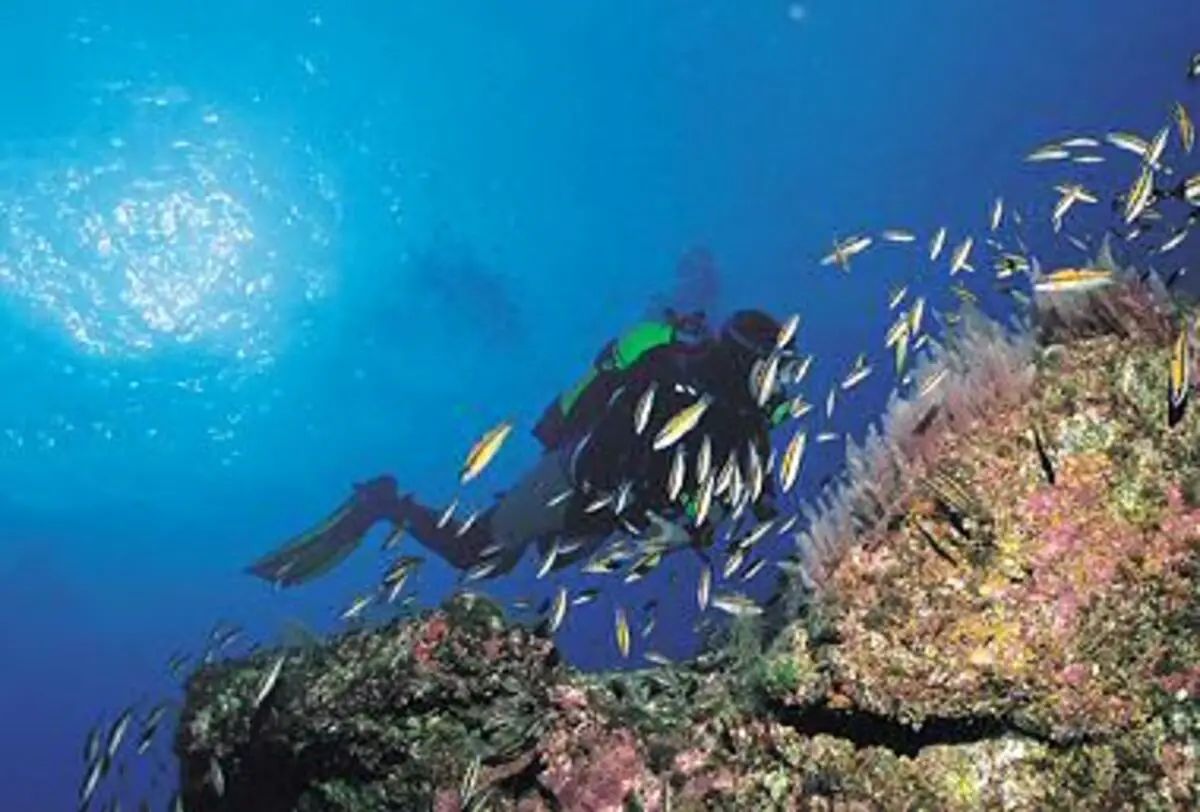
Among the Canary Islands, El Hierro is one of the wildest. Local fishing around the island is artisanal only, and the volcanic walls are home to marine life treasures and deep canyons. Out of the whole list, it is the only destination with a peculiar critical side – getting to altitude after diving. This is also the main cause of requests for assistance to DAN Europe from El Hierro. It seems that many divers choose to stay in resorts or holiday homes sited at altitude. Notably the main town, Valverde, is situated at 571 metres above the sea level. And that is why El Hierro is one of the most challening dive sites!
Surviving the dive
After diving, it is never a good idea to go to altitude – let alone flying – for the next 24-48 hours, depending on the repetitiveness and depth of performed dives. For sea level diving, the limit set by DAN and the most respected research institutes is 300 metres above sea level.
“Out of the whole list, it is the only destination with a peculiar critical side -getting to altitude after diving. This is also the main cause of requests for assistance to DAN Europe from El Hierro“
Conclusions
For the most part, there are no inherently dangerous dives, only dives that require more attention, training, proper planning, fitness, and awareness about one’s own limits.
This applies to all dives with similar characteristics to those listed above. If other dive sites are not in the Top 6 list, there is one simple reason – fewer divers go there.
One last thing we’ll never stop repeating: dehydration is one of the main contributing factors to decompression illness (DCI). It is especially true where temperatures are high, and the air is dry. Dehydration can be as well a consequence of alcohol drinking, consumption of theine and caffeine (contained in many colas and energy drinks) and sweetened soft drinks. It is always good to start hydrating a few days before the beginning of the diving week by drinking water and taking hydrating salts.
Acknowledgements: Chris Demetriou, Davide De Lorenzi, Niccolo Crespi.
DAN Membership
Before taking the plunge make sure your DAN membership is still active. If it isn’t, join DAN or renew your membership at: www.daneurope.org Your DAN membership ensures the services of the biggest international network for assisting divers anywhere, during any emergency.
Related: Read Part 1: Sites #1 – #3
About the author
DAN Member since 1997, Claudio Di Manao is a PADI and IANTD diving instructor. He’s the author of a series of books and novels about diving, including Shamandura Generation, an exhilarating portrait of Sharm el Sheikh’s diving community. He collaborates with magazines, radios and newspapers, talking and writing about diving safety, marine life and travels.
FAQs
Why is the Haven wreck in Italy considered a high-risk dive?
The Haven is a massive supertanker wreck sitting at 90m. The primary risks include its extreme depth, the potential for disorientation in open blue water, and the physical distance between points of interest, which requires meticulous gas planning.
Can I dive Lake Garda without a local guide?
While many Lake Garda sites are shore-accessible, it is highly discouraged for those unfamiliar with the area. Cold water, vertical walls dropping beyond 200m, and gas density issues make local expert knowledge essential for safety.
What is the biggest safety concern when diving in El Hierro?
Unlike many coastal spots, the primary risk at El Hierro is “post-dive altitude exposure.” Many accommodations, including the main town of Valverde, are above the 300m safety threshold, significantly increasing the risk of Decompression Sickness (DCS).
How long should I wait before driving to altitude after a dive?
DAN recommends waiting at least 24 hours (and up to 48 hours for repetitive or technical dives) before ascending above 300 metres or flying, to allow for proper off-gassing.
How does dehydration affect diving safety?
Dehydration is a major contributing factor to Decompression Illness (DCI). It thickens the blood and impairs circulation, making it harder for the body to eliminate nitrogen. Divers should avoid alcohol and caffeine, opting for water and electrolytes instead.
This article was originally published in Scuba Diver Magazine
Subscribe today with promo code DIVE1 — enjoy 12 months for just £1!
