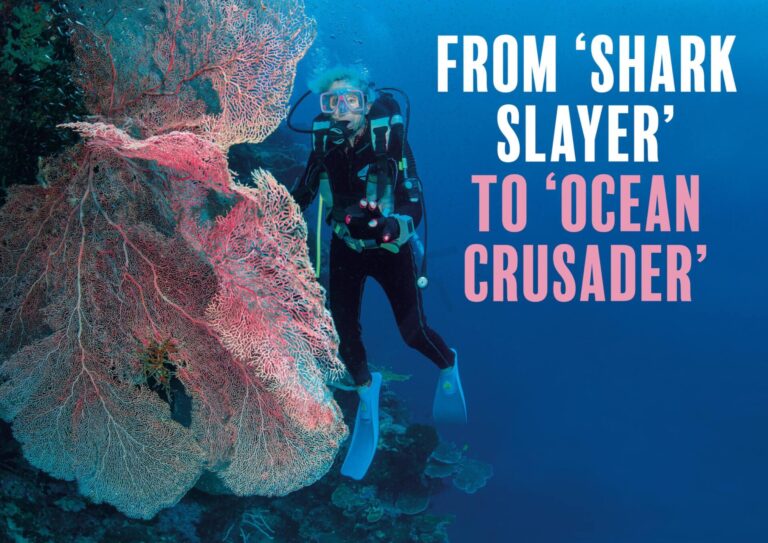
PT Hirschfield explores the rich living legacies of one diving’s most-beloved ocean conservation pioneers, the Australian marine activist Valerie Taylor OAM
Photography as credited
Introducing Valerie Taylor
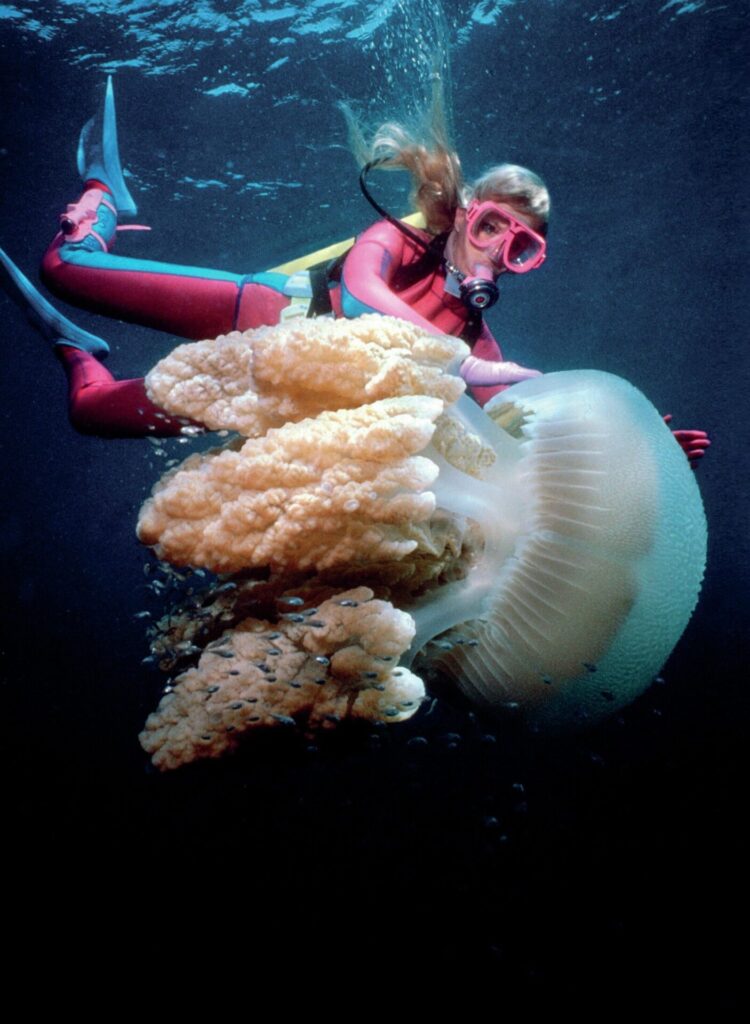
I first heard of Valerie Taylor as ‘The Shark Lady’ who’d played a hands-on role in the making of the 1975 monster movie Jaws. Her slaughter of one grey nurse shark, in an era when it was believed ‘the only good shark is a dead shark’, is an act for which she’s publicly expressed regret.
Valerie campaigned for the protection of the grey nurse – the first shark to ever be granted protection – 40 years ago. At 88, her work to safeguard the still critically endangered species is ongoing. Despite having mutual acquaintances, until recently we’d never met. But I’d been diving in Valerie’s shadow for years, fascinated by the grey nurses.
Occasionally I take images of their unique dot patterns, uploading them to the ‘Spot a Shark’ database. So far I’ve helped identify around 100 individuals. As a diver, it’s one small contribution I can make towards the much-greater cause of their conservation.
“Valerie campaigned for the protection of the grey nurse – the first shark to ever be granted protection – 40 years ago. At 88, her work to safeguard the still critically endangered species is ongoing”
Inspiring Changemakers
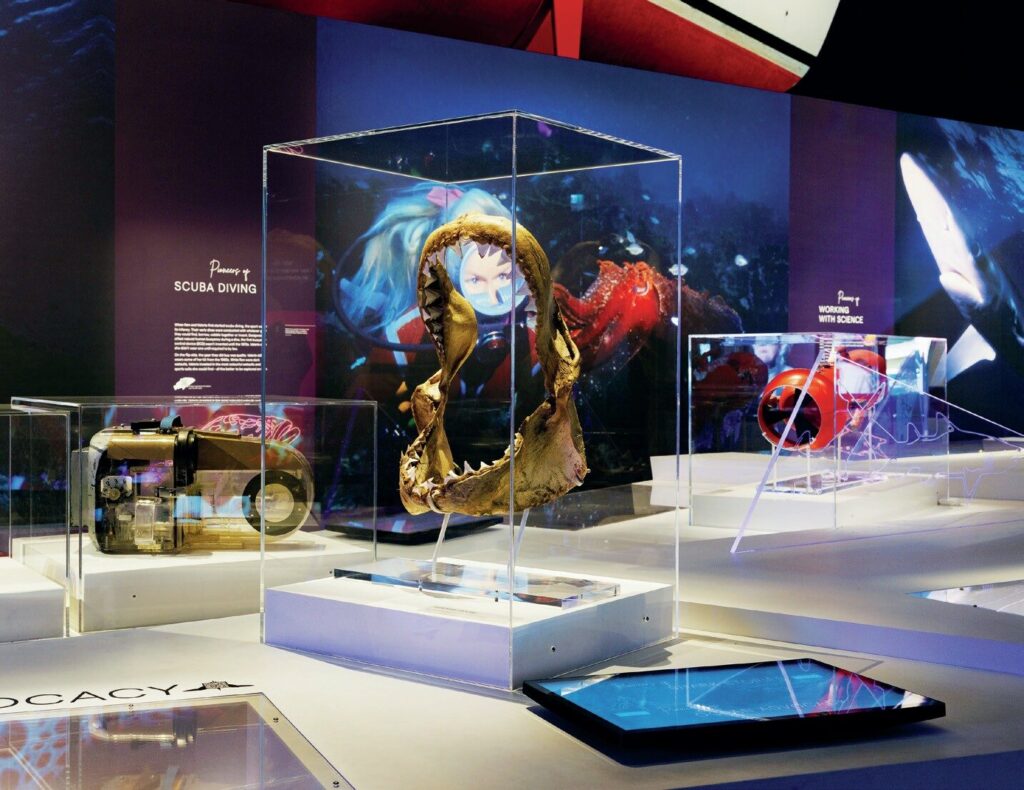
It’s March 2024 and I’m visiting the National Maritime Museum’s exhibition titled ‘Valerie Taylor: An Underwater Life’. In prime position at the exhibit’s entrance, a long wall showcases ‘Ocean Changemakers’ who’ve been directly inspired and empowered by Valerie’s work to play more-significant roles in ocean conservation. Though the exhibition is a time capsule of one woman’s extraordinary life, its challenge is directed to every person who walks through these doors: ‘How will you use your power to be an ocean changemaker?’
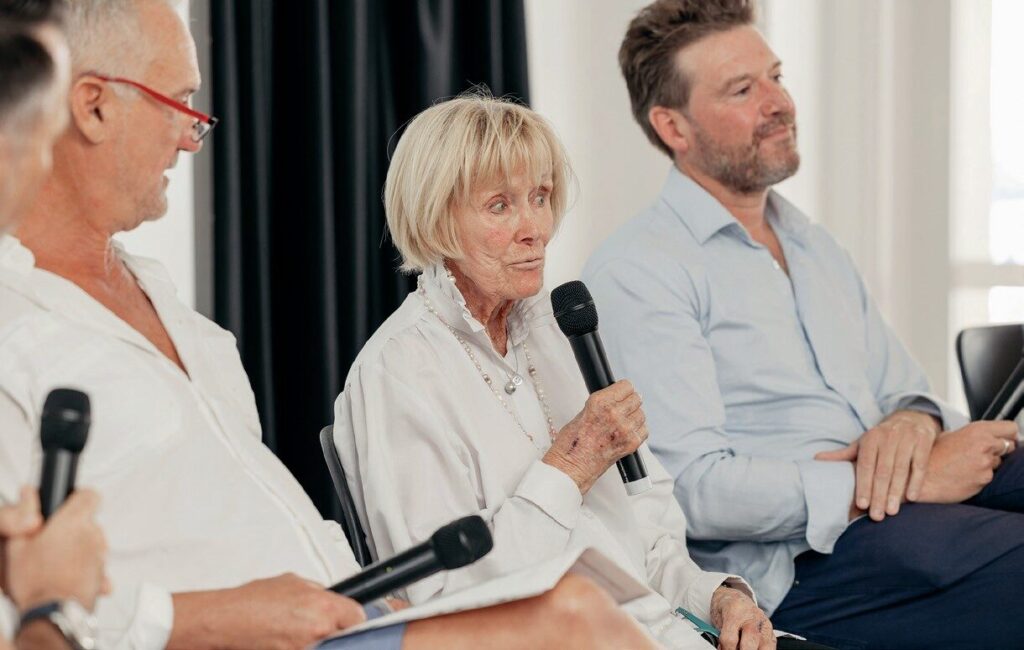
The following week, I’ll attend the Ocean Lovers Festival in Bondi. There Valerie will present as part of a panel on the proposed removal of ‘shark nets’. They’re proven to do abundant harm and zero good. She’ll also champion her ‘String of Pearls’ vision. She’s campaigning to protect 30 grey nurse habitat sites – each less than two football fields in size – as ‘no take zone’s. Valerie has declared that this will be her final crusade.
Valerie’s protege, Taylor
Attending most of the Ocean Lovers Festival’s presentations, I sit quietly, unseen in the back of the room. I’m inspired by so many champions shining light on frontline efforts in increasingly urgent conservation causes. But any forum featuring Valerie Taylor OAM will pack out quickly. For one of the first times in my life, I choose a seat near the front.
I find myself chatting to 15-yearold diver Taylor Ladd-Hudson. She’s flown from Queensland to attend the shark net forum. When whales become tangled in shark nets at Noosa, Taylor records drone footage, forwarding it to Sea Shepherd.
She’s joined the campaign for the nets to be removed: at least through whale season, but ultimately altogether. It’s a campaign that’s been running since Taylor was a toddler. She presents lectures at local schools, educating students about the issue.
I start following Taylor’s Instagram (@taylor_x_ocean). One post teases her major role in the upcoming documentary ‘How to Save a Shark’. The film unpacks Valerie’s ‘String of Pearls’ campaign. She’s working closely with Taylor and two other shark advocates to see the vision come to fruition.
Nets Out Now
Most in the audience of the ‘Nets Out Now’ forum are just keen to catch a glimpse of the real life ‘Shark Barbie’, still strong in conviction and public appeal after so many decades. Many likely believe that only those on the stage- those with titles and recognisable faces – are qualified to save the ocean. But if figureheads could achieve all that needs to be done, forums like this wouldn’t still be needed. They’re designed to help those in the audience to find and add their voices.
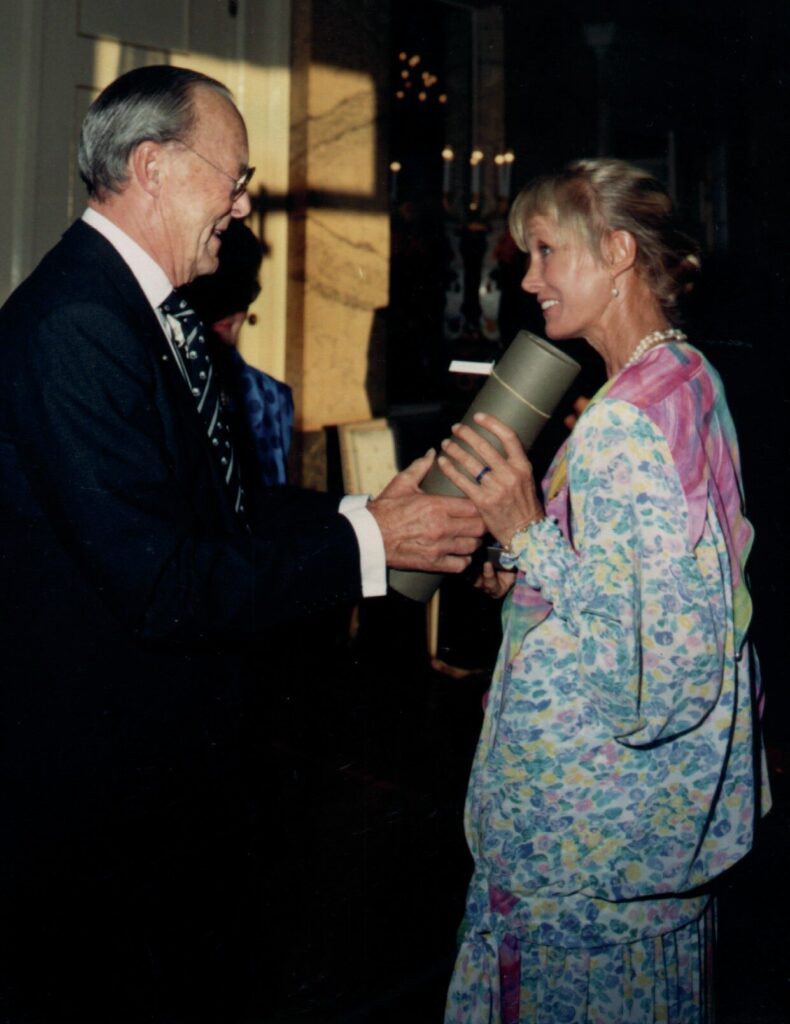
The forum’s MC notes that there are two ‘Spot a Shark Champions’ in the audience who contribute data to the grey nurse database. I’m surprised to be called to the stage, where Valerie presents me with an inscribed copy of her memoir ‘An Adventurous Life’. Somehow my tiny contribution is helping to make a difference.
When the panel presentation ends, I approach Valerie again, asking if I might ask a few questions. She’s clearly tired, but invites me to forward my questions.
Is it too late?
When my email lands in her inbox, Valerie’s rushing out the door on her way somewhere north, but she makes time to reply. Her answers are brief and less ‘Disneyfied’ than I might have imagined. She cites her greatest concerns for the ocean today as ‘Pollution and indiscriminate over-harvesting.’
I’m baffled that fisheries are always so eager to ‘smash the piggy bank to spend the final coins’ so to speak, rather than investing in the ocean’s longevity, living off the compound interest.
I ask Valerie, ‘With humankind having already tolerated so much devastation, what’s the likelihood at this point that the ocean can still be saved?’ Her reply is sobering: ‘ None, if we don’t rectify the above.’ When I ask how vital marine protected sanctuaries are as part of the overall solution, she’s adamant this is where the solution lies: ‘At the moment, they’re barely a scratch on the surface; very small specks in a vast ocean.’

“It’s a win for the Taylors, and for all who’ve campaigned on this issue across the decades”
‘I feel it is already too late. We have to push our politicians into understanding the importance of totally protected marine areas to the future of a healthy vibrant ocean.’
‘They proclaim areas a ‘marine park’ – two useless words. The Australian Spearfishing Championships were held in the Barrier Reef marine park. They have to be national marine parks to be protected from indiscriminate harvesting.’
Changes Unfolding
On 7 July, a video appears on Taylor Ladd-Hudson’s Instagram. Valerie’s sitting in an office, having recently attended a meeting advocating for shark net removal.
She’s advised of the NSW minister’s decision. After the nets are removed to protect passing whales in winter, they won’t be going back in.
Similar promises have been made and broken in the past, but once again it’s a step in the desired direction. Whether the directive is carried out remains to be seen, but there’s reason to be cautiously hopeful.
It’s a win for the Taylors, and for all who’ve campaigned on this issue across the decades. It’s a win for marine life and for common sense, if only at state level.
The Conversation
To complete our interview, Valerie kindly invites me to her seaside Sydney home. I sit on the couch beside her, in a sunny room surrounded by her paintings. Having been an artist early in her professional life, Valerie’s still creating art, drawing from oceanic and other themes, still filling those drawings with paint.
Though she describes herself today as a ‘little old lady sitting here with a bad back’, mentally Valerie may well be as fierce as she ever was. While she still snorkels where it’s warm, she quit scuba after dropping her weight belt in Bali: ‘If there was someone underneath me, I could’ve killed them. I thought I mustn’t do this anymore.’
But she’s unperturbed by being out of the water: ‘I don’t care. There’s nothing new that I can see. There’s probably a whole lot less. The Barrier Reef in my opinion has had it. My husband and I swam the length underwater in 1967. It took over six months. It’s not like that anymore.’
We discuss the state of the ocean, how depleted it is now and what it would take to fix it. There’s endless universal fear, greed, apathy, despair – and the mindset that ‘fixing the ocean’ is impossible, or someone else’s job.
Reflecting on her decades of ocean advocacy, including seven major wins in local, national and international marine conservation, Valerie says, ‘I’ve had my day. I’ve done the best I can. It will have to be the younger generation. I’m sure they might look at the ocean a bit differently to my generation. However, they might be a bit too late.’
But there’s hope in her eyes when she talks of Taylor Ladd-Hudson: ‘She’s going to go places, that girl. She’s got it all. She’s intelligent, she’s keen and she’s out there. I hope she ends up running the country or something.’
When the Answer is Obvious…
We speculate why Fisheries themselves don’t insist on marine protected sanctuaries, before the oceans are voids with nothing left to catch. I can’t fathom how all fisherfolk don’t have the same epiphany as Valerie and her late-husband Ron did as National Spearfishing Champions: that the ocean has far greater value alive than dead.
Marine protected sanctuaries are continuously misconstrued and quashed as a threat against current liberties, rather than embraced as the ocean’s only chance of future abundance, the essential lynchpin of sustainability. Many readers have just tuned out. This problem’s too big. It’s Valerie Taylor’s problem. It’s Taylor Ladd-Hudson’s problem. It’s the government’s problem. Someone else who isn’t us commonfolk who are just trying to float beneath the surface every now and then, trying to briefly escape all the problems. Having been so generous with her time and energy, Valerie indicates that it’s time for her to rest and time for me to move.
Living Legacies
Valerie Taylor’s living legacy has eclipsed the dubious, double-edged impact of ‘Jaws’ on global shark perceptions. It’s far surpassed inspiring a spirit of ocean-loving adventure. And it’s way beyond campaigns for habitat conservation, the marine species she’s managed to protect, and her calls for practices like shark finning to be abolished.
And while Valerie’s championing of the ocean might seem to have been a marathon, it’s a relay. She’s passing the baton to every person who cares about the future of this planet. Don’t assume you’re exempt if your name’s not Taylor. Ocean Lovers, it’s time to start running.
Who is Valerie Taylor?
Valerie Taylor OAM is an Australian ocean conservationist, filmmaker, and shark advocate known globally as “The Shark Lady” for her pioneering underwater work and lifelong dedication to marine protection.
What is Valerie Taylor known for?
She gained fame for filming real shark footage for Jaws (1975) but later became a leading voice for shark conservation, campaigning to protect grey nurse sharks and other threatened species.
What is the ‘String of Pearls’ campaign?
Valerie Taylor’s String of Pearls vision seeks to protect 30 critical grey nurse shark habitats across Australia as permanent no-take marine sanctuaries.
How is Valerie Taylor inspiring the next generation?
Valerie mentors young ocean advocates like Taylor Ladd-Hudson, encouraging new generations to lead campaigns for shark protection and sustainable marine management.
Why are marine protected areas so important?
According to Valerie Taylor, marine sanctuaries are essential to restoring ocean health, preventing overfishing, and ensuring future biodiversity in our seas.
This article was originally published in Scuba Diver Magazine
Subscribe today with promo code DIVE1 — enjoy 12 months for just £1!
