The recreational diving industry could be missing a big trick, as spectacular superyachts repeatedly put to sea but without its professionals onboard. Is a growing desire for real underwater experiences among the wealthy overcoming the nervousness of the past? It’s all down to the divers now, says man on a mission JOHN KEAN
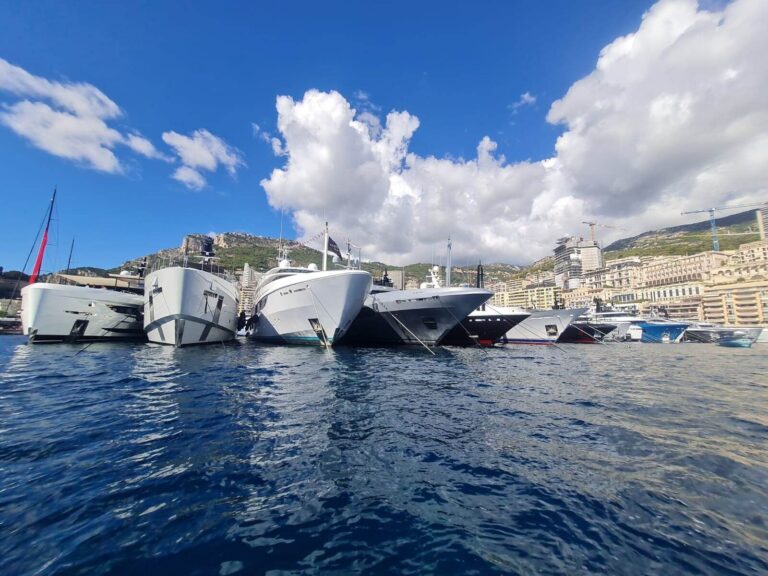
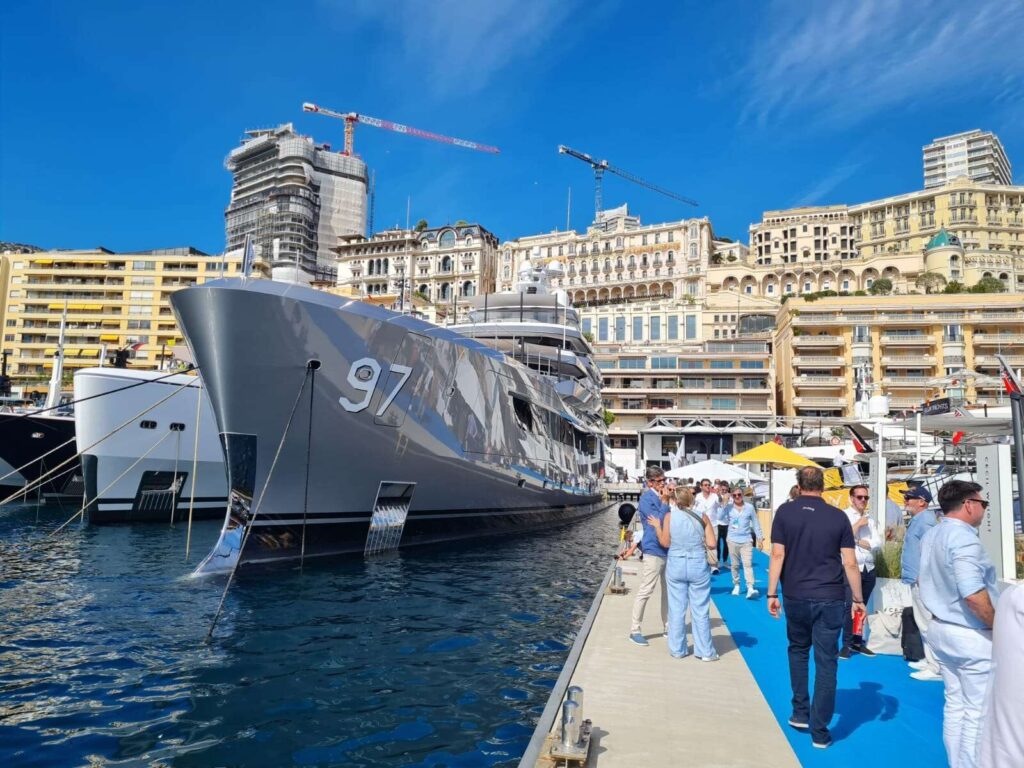
Last month I took a trip to the Monaco Boat Show, an annual event to showcase the finest and most expensive vessels on water and the many service-providers that design, build, charter, maintain and operate them. You might think that scuba diving would feature somewhere in the line-up, but reality told a very different story.
The words lingered in my head long after I’d heard them – it’s not often that one hears the quiet part said out loud: “Some superyacht owners are afraid of offering scuba diving. It’s too risky for them.”
Of course, nothing could be further from the truth.
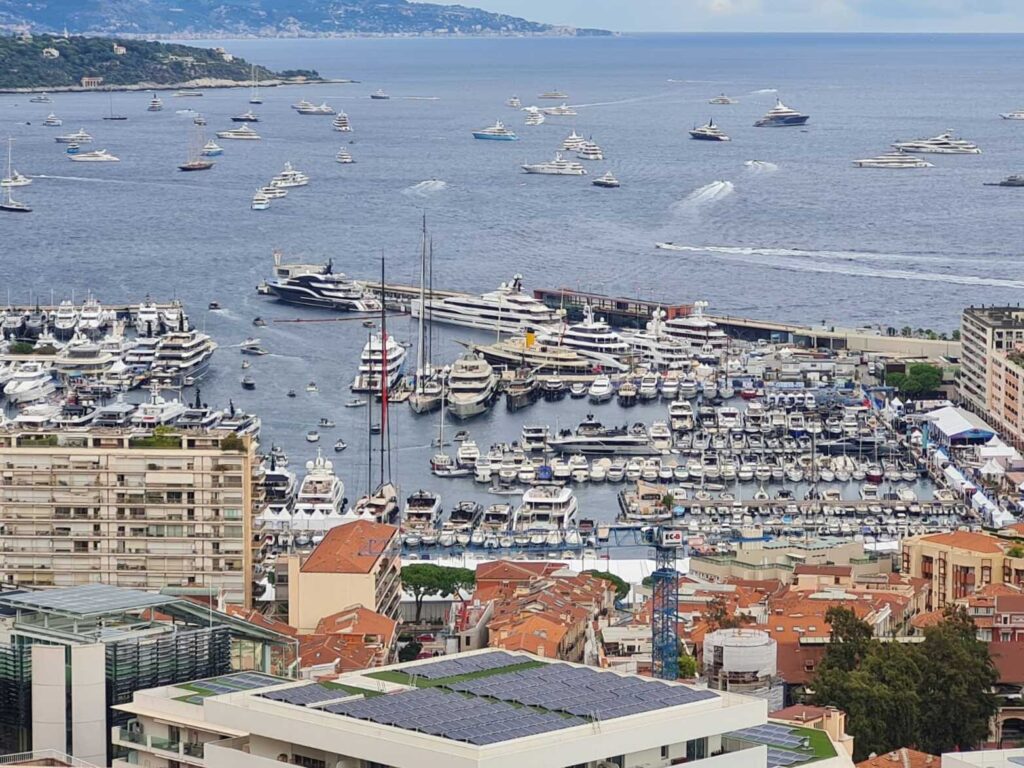
Such current perceptions by superyacht owners, charter companies and designers represent a massive failure. Experienced divers aren’t accommodated, and charter companies turn down perfectly good business. At upwards of half a million euros a week in charter fees a boat might well sit in the marina while potential diving guests go elsewhere or, worse… nowhere.
If that occurs just once a month, they’re a minimum of six million euros down annually. Now roll that sum out across the industry and the potential loss is colossal.
Myths and misconceptions
So, whose fault is it that the superyacht community and the scuba-diving industry have not communicated with each other with the goal of removing these myths and misconceptions?
It’s largely that of the divers, I’m afraid.
Two years ago, I started a one-man mission to correct this glaring anomaly between the two industries by talking, as a diving professional, directly to the different parties involved in the superyacht community.
Firstly, let’s take a brief look at the diving industry’s constituent parts. Manufacturers of scuba equipment make wetsuits, tanks, breathing regulators, buoyancy control devices and accessories.
Scuba training agencies create training programmes, provide course standards, sell materials and regulate professionals through membership and compliance procedures.
Dive-centres, scuba-travel operators, guides and instructors offer and conduct diving activities such as learning to dive and exploring dive-sites.
It is the latter group that have collectively failed to introduce their wares and expertise in an impactful manner to what is possibly one of the greatest diving-compatible communities on the planet. The outcome? Stalemate.

Superyachts wait to be discovered by an industry that has historically ignored them. Business has been reactive instead of proactive. Those myths, misconceptions and defensive stances prevail.
By default, boat- and deck-crew have taken up the mantle by becoming qualified as diving instructors and, in some quarters, have made a pretty good job of it. But then, it shouldn’t really be their job… they have the boat to look after.
Other visiting professionals such as celebrity DJs or Michelin-starred chefs are brought on board to cater for a specific event or trip. It wouldn’t fall to the boat-crew to cover these specialist roles in addition to carrying out their regular duties, so why are scuba-diving activities fair game?
Submarine operators
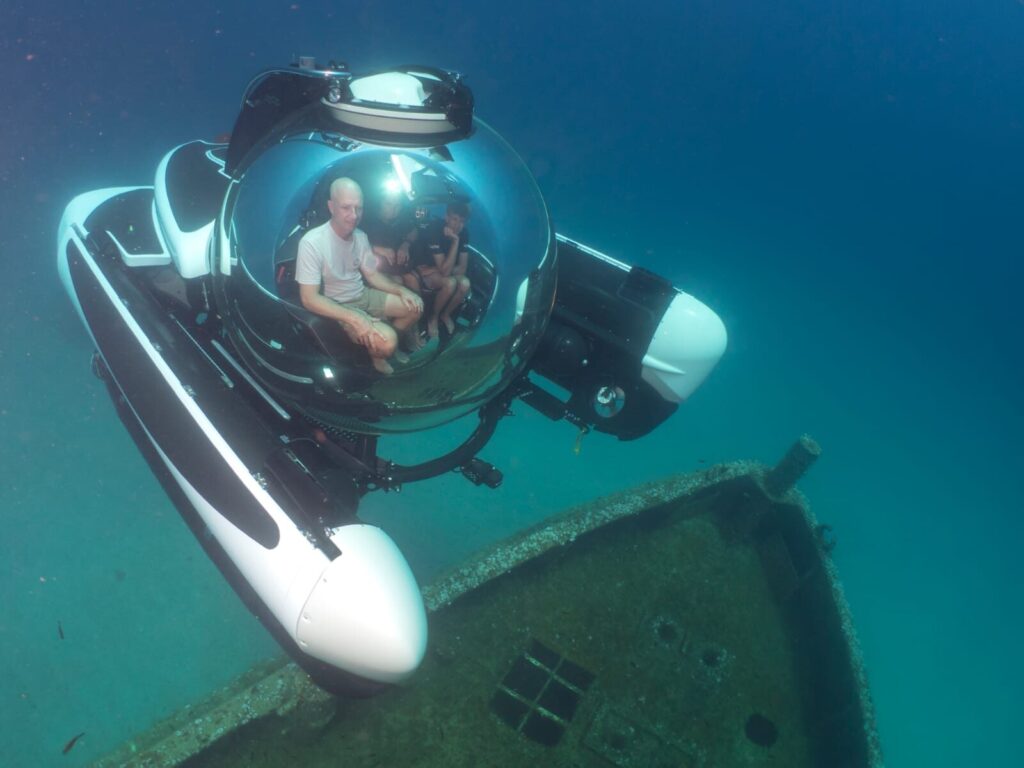
As in nature, all voids get filled and at this year’s Monaco Boat Show the only companies offering underwater exploration were… submarine operators! Which, in the wake of the 2023 Titan submarine disaster, was quite an achievement. And they say normal scuba diving is too risky.
Why is that?
Quite simply, the submarine operator companies had meetings, gave presentations, sat down and explained how it all works. Myth and misconception-removal sessions, perhaps?
As fee-paying guests, mini-submarine passengers need no scuba training or lengthy decompression stops. With marketing images showing couples submerging in their everyday clothes, they don’t even need wetsuits. Thus they achieve a complete bypass of the scuba industry.
But are the two comparable?
I asked Linda Peute, sales manager of Uboat Worx, a few questions about the full-sized model the company had on display at the show.
“It reaches depths of 100m and dive durations of up to eight hours,” she said. “The cabin area is pressurised to just one atmosphere – the same as on the surface.”
Of course, that’s music to an advanced trimix instructor’s ears. Less musical, however, to the ears of a helium salesman!
“Jump in and take a look,” said Linda.
I sat in the C-Researcher model with its bulbous, dome-fronted viewing glass. Other Uboat Worx models reach 3,000m deep. This one offered over 300° of peripheral vision – the biggest scuba mask you’ll ever look through.
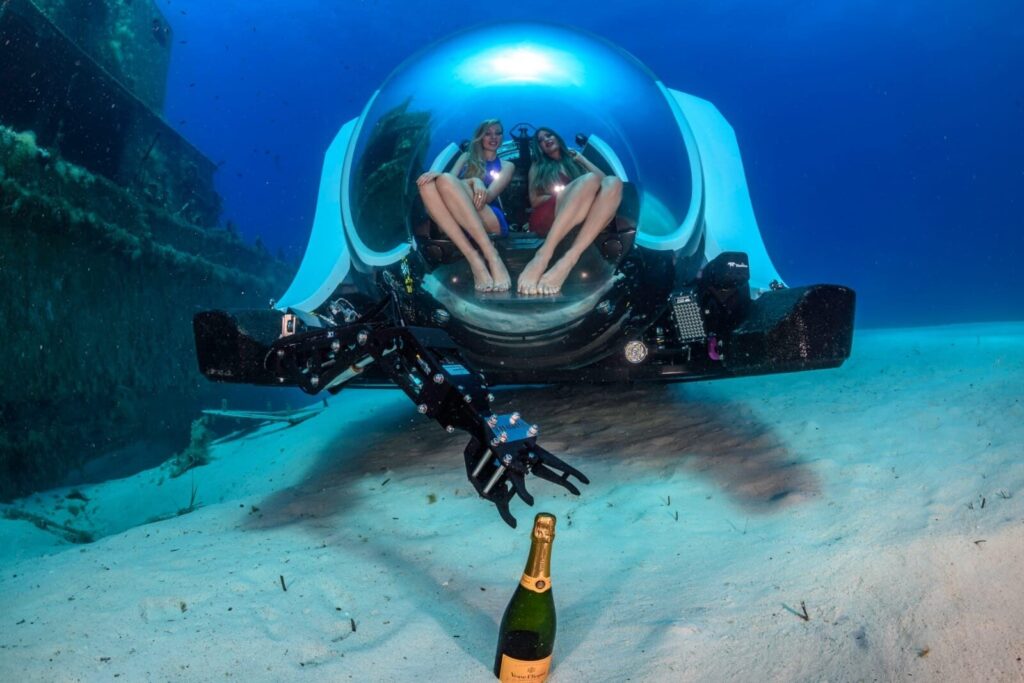
Triton Subs was taking things much deeper, promoting commercial models some of which can reach the floor of the Mariana Trench. Craig Barnett, Triton’s director of sales, highlighted its mind-numbing range rated down to 11,000m deep.
“10,928 meters, to be precise,” he said. “The deepest dive in history… in one of our subs.”
Shipwreck-hunting
Superyachts are equipped with resources and facilities that are a diver’s dream. They can travel and explore almost anywhere, opening undersea riches far beyond the well-trodden daily diving attractions found in popular scuba-diving resorts around the world.
They possess international licences, several high-performance tenders and RIBs, lifting winches and rising platforms for exiting the water.
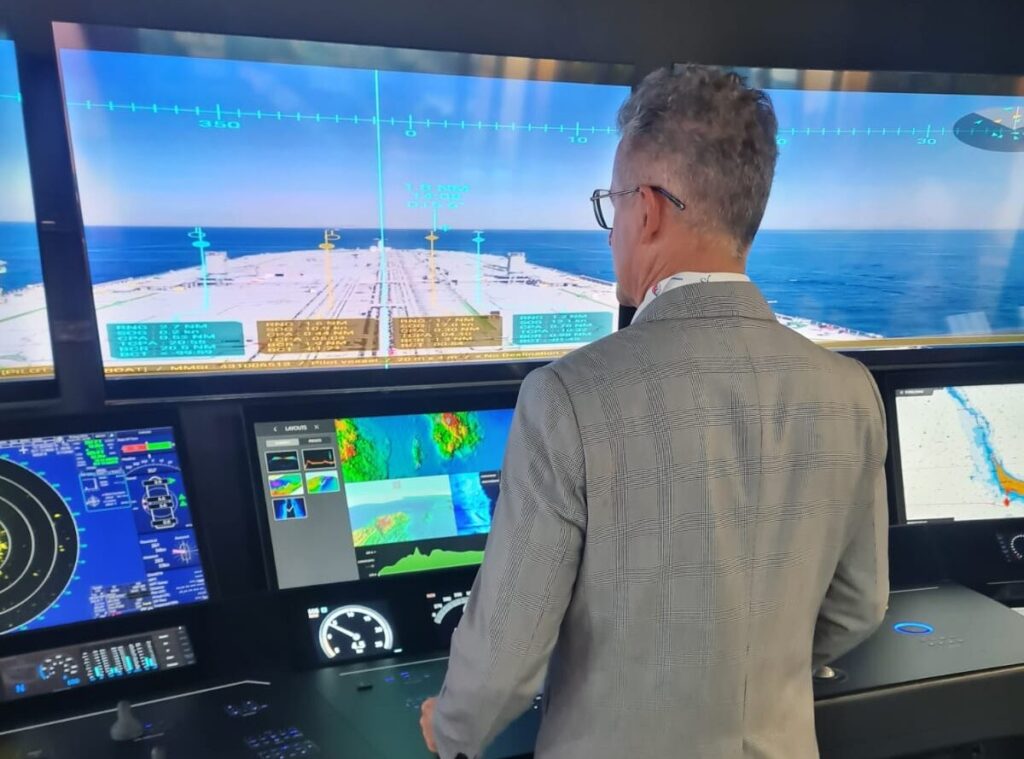
Add to that dive-site-assessing remotely operated drones, advanced navigational equipment and sidescan sonar devices that can penetrate the water so invasively that you can generate a computer image of a scratch on the glass surface of a scuba mask lying on the seafloor 50m down. The marine equivalent of an MRI scan?
Justin Kiel is business development manager of such a device, the WASSP Multibeam. The operating unit can be placed on any size of craft. With more aquatic toys and innovation than you could shake a stick at, shipwreck-hunting now becomes an interactive and immediate reality; search for it, find it… dive it.
Unlike the enclosed luxuries and convenience of submarines, scuba diving remains a more visceral or even spiritual interaction with the undersea world. Scuba divers not only see and hear the aquatic environment but feel and experience it close-up. They engage with it and – become it.
Cleaning the hull
Finally at the Monaco Boat Show I spotted a full set of scuba gear mounted on the rear deck of a large superyacht. Nearly every other boat displayed Seabobs and sun-loungers.
“It’s mostly for cleaning the underneath of the boat,” explained the helpful Burgess Yachts crew-member. “However, we do accommodate scuba divers. We recently had a large group of 17 divers aboard.”
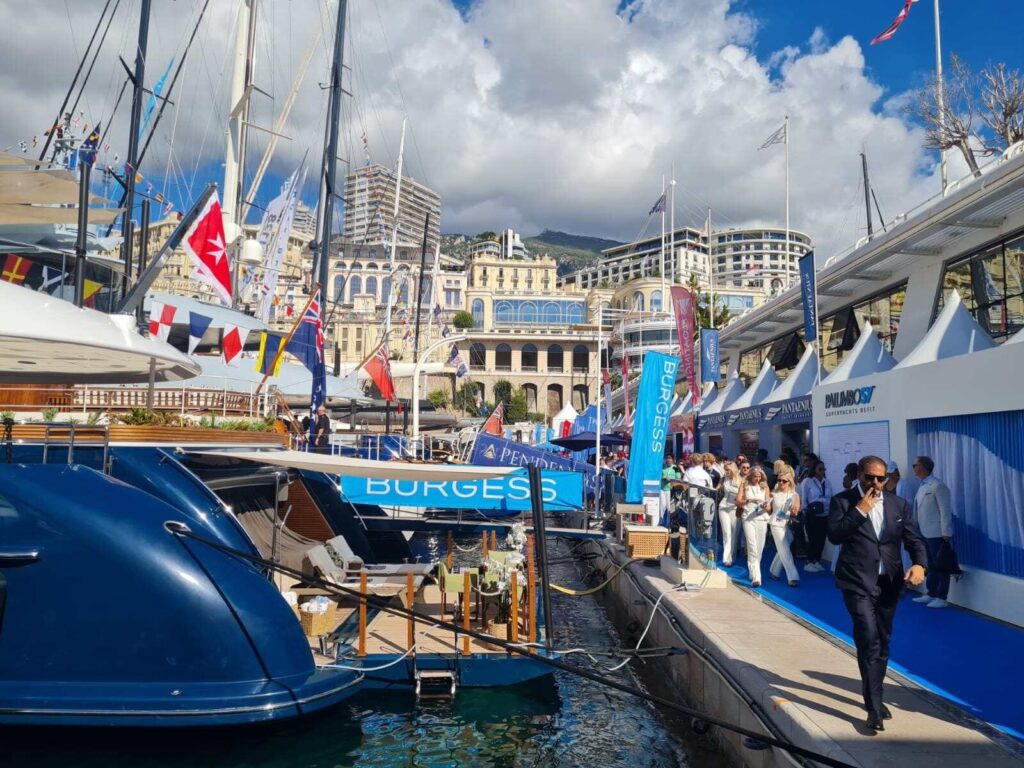
Burgess Yachts is a big hitter in the charter market and actively promotes and accommodates scuba divers on a number of its boats. The 85m Wanderlust is an excellent example.
Leading the way at Monaco with the world’s largest fleet of luxury crewed charter yachts is Ocean Independence. As far as scuba diving is concerned, it has very much embraced the sport and recognised the need for accommodating it into its range of onboard activities.
I spoke to Toby Maclaurin, its chief commercial officer, at the Dubai International Boat Show in February and he introduced me to his marketing department, which commissioned me to write an article to assist scuba divers on superyachts.
Activity-based
So is change in the air? Absolutely. At the Monaco Boat Show I also attended a number of talks and presentations in its conference room. The message was clear across the board.
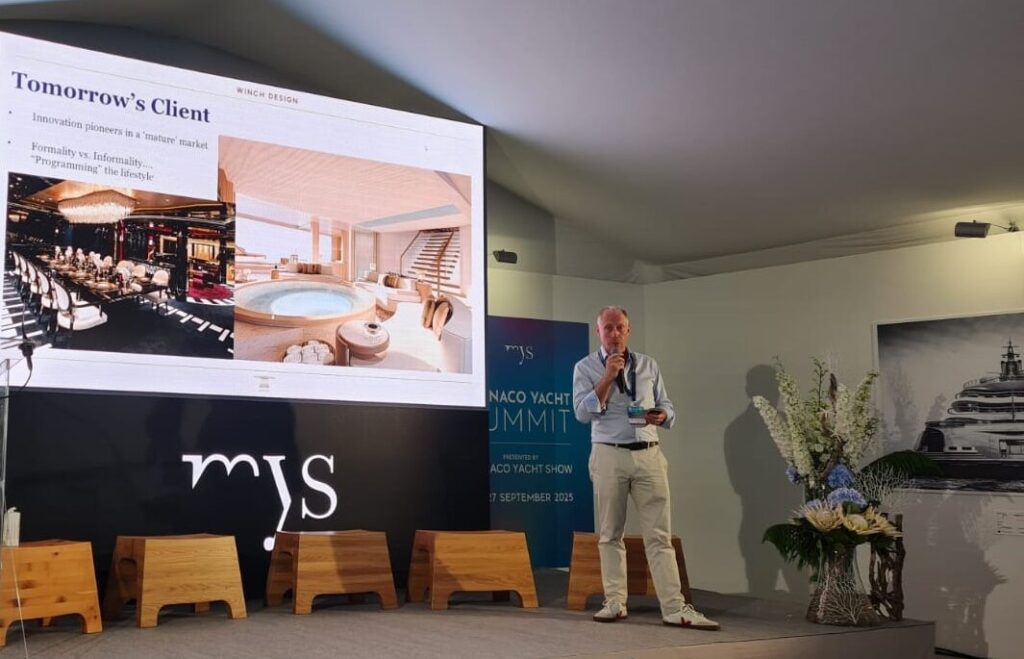
“During the past five years, superyachts have become more focused on activity-based charters rather than just being gin-palaces or for showing off,” claimed speaker Jim Dixon, a yacht designer with Winch Design.
Of course, they’re still good as show-off gin palaces, and mine’s a Bombay Sapphire & Schweppes at sundown, but many of today’s Ultra High Net Worth Individuals (UHNWIs) are a more conscientious breed who wish for more than merely lounging around and sunbathing.
“These activities involve a range of sport including surface and underwater exploration,” continued Jim.
I believe that solutions to problems are best established at source, so it was time for the diving professional to meet a superyacht designer and architect.
Who better than award-winning Italian designer Giorgio Cassetta and his PR manager Filippo Ceragioli aboard the Baglietto motor yacht Andala, a 43m craft launched in June and a darling of the Monaco show, winning accolades in both exterior and interior design?
The main lounge area was open, welcoming, light and beautifully designed. It was stunning. “I need to replace the coffee table,” said Giorgio, insisting on perfection throughout.

Giorgio is a scuba diver and intends to incorporate diving facilities into future yacht designs. He showed me around the magnificent craft. He recognises the concerns of owners and the wishes and preferences of scuba-diving guests, and echoed the observations of other designers and charter companies over the past five years.
“More and more people are looking for activities when chartering superyachts,” he said. “Owners have been afraid to accommodate scuba divers. Quite simply, they don’t want to take the risk of having any incidents on their boats.”
Half an hour later, the myths and misconceptions of scuba diving had been acknowledged, discussed and, I hope, removed. We’re united by water but historically separated by lack of communication.
Our meeting of minds was a breath of fresh air for both our industries, and I hope the beginning of the end for scuba diving on superyachts being simply “tolerated” or deemed “a necessary evil” simply to leverage a lucrative charter booking.
Quality of dive-pros
Perhaps the most important consideration when introducing scuba-diving activities to the superyacht community isn’t just about the design and equipment required but the individual professionals who will conduct the activities.
Yacht and charter companies maintain exceptionally high standards of quality throughout with their design, build, service and staffing. With weekly charter fees running into six to seven figures, these hard-earned reputations are to be guarded rigidly.
If the scuba-diving industry wishes to serve this community with equally high professionalism and safety standards that are second to none, it must send in the heavyweights, not the part-timers, gap-year-divers, burnt-out resort freelancers, low-paid locals or “dive-servants”.
The job starts way before the charter and finishes after it ends. As in the City, the advice is: KYC – know your client.

Who’s on board, what experience and dive qualifications do they have, what equipment do they possess, what do they need, are there any health, fitness, medication or disability issues, is there a compressor on board and where are the intended diving locations?
Burst O-rings and incompatible tank-valves are easily solved with spares and adaptors or, better still, pre-trip confirmation of their exact type. Yet their absence can delay a boat’s departure and cost more than £3,000 an hour in wasted charter time.
Preplanning and communication are the name of the game.
Diving destinations
Someone who has grasped this concept well is veteran dive professional and marine expert Andrew Mackenzie, a PADI Master Diving Instructor, TDI Trimix Technical Diver and now director of the marina for Emirates Palace, Mandarin Oriental, where berthing and anchorage is offered for superyachts visiting Abu Dhabi.
Andrew was at the Monaco show to represent the marina and acknowledged the many questions arising from the UHNWI sector in the Emirates, such as: “What’s now available for high-end guests on superyachts to experience and explore, and what type of professionals and ‘dive-ready’ boats are available for these trips?”.
“What timeline would be manageable for the scuba-diving industry to get onboard with the concept of offering bespoke diving services to the exceptionally high standards required for superyacht guests?” was another pertinent question Andrew posed.
There is no shortage of high-quality, global destinations for the aspiring superyacht scuba diver. Among them is the Red Sea, rich with coral gardens, historical shipwrecks, aquatic national parks and abundant marine life.
I sat down with Dr Mohamed El Sherbeiny of the Egyptian Tourist Authority, who said that Egypt was keen to welcome and accommodate the superyacht community in the Red Sea.
This was in progress, he said, and required expanding current marina and mooring facilities and reviewing Suez Canal fees to allow such craft to make their trips economically viable. Watch this space.

Across the water on the Saudi side remains over a thousand miles of additional Red Sea coastline waiting to be discovered and explored by diving operators equipped for this lucrative and developing tourist region.
Perhaps the superyacht community’s demographic aspirations for high-commitment and engaging activities will be the leading edge of a broader sociological trend; the desire for authentic, high-value experiences that offer a paradigm shift in engagement that can only grow stronger.
The UHNWI sector is simply the first to prioritise this. The future of superyacht diving is less about novelty value and more about conscientious exploration. Diving industry: take note.

JOHN KEAN is an independent scuba professional and best-selling dive author. In recent years he is a private diver and consultant to the superyacht community.
His books include SS Thistlegorm: WW2’s Greatest Shipwreck; Lost Wife: Saw Barracuda; A Walk On The Deep Side; The Great Buoyancy Scam And How To Avoid It; Sharks, Fights And Motorbikes and Spring Loaded. Also read his feature The Elephant in the Pool on Divernet.
If I were to pay that price for a luxury yacht rental that offered Scuba diving, I would expect that my buddy would be an extremely qualified professional level dive instructor/ tech diving instructor. I would expect the dives to be made one on one ( one pro Instructor per guest diver). I would expect that the dives would be done on rebreathers, or Nitrox open circuit at minimum. Additionally I would expect the vessel to be equipped with a decompression chamber with certified recompression Dr. and staff.
Futuristic sci fi rebreathers with wireless ROV’s to automatically control divers buoyancy, navigation, decompression, emergency recall, GPS…
The largest problem I currently see among wealthy divers is an extremely casual approach to the sport, in fact they seem to consider diving more of an activity than a technical sport. If I had a dollar for every Dr. I have dived with who was barely capable of following divemaster fins, on rental gear, (maybe owning a dive watch / comp and a mask at best) I could afford one of these trips…