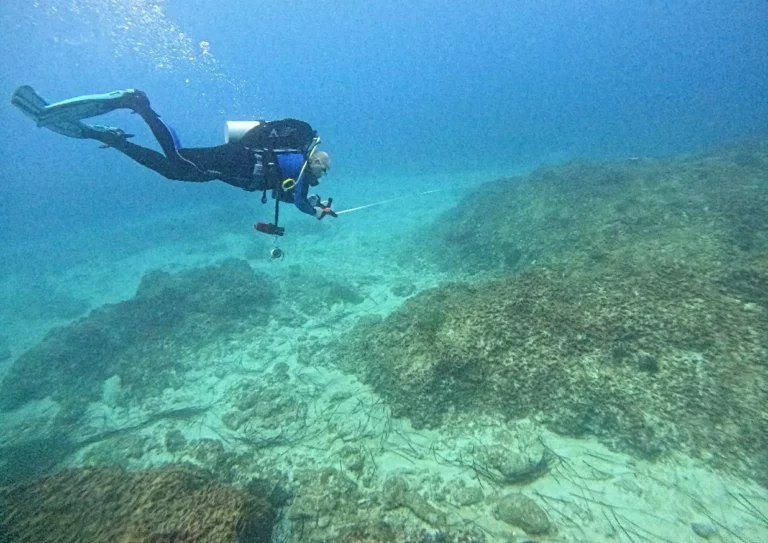
Archaeological divers from Poland’s University of Warsaw have uncovered a strip of ancient shipwreck remains that accumulated over centuries near what was once the thriving port of Ptolemais in Libya.
“It was definitely several ships, not one, because the wreckage strip stretches for over 100m,” says Dr Piotr Jaworski, who heads the university’s research both on land and at sea around Ptolemais. “This is a place where disasters must have occurred periodically.”
The wrecks appear to have formed a growing navigational hazard for others that followed. At least one dates from the times of the late Roman Empire and another one or more from the early Byzantine period.

“This is also a good starting point for long-term underwater research at Ptolemais,” added Jaworski. The discovery had been made during underwater surveys by a dive-team led by Prof Bartosz Kontny, according to a report on the discovery by the Polish Press Agency Science in Poland portal.
Ptolemais was one of the largest ancient Greek cities in Cyrenaica, now the north-eastern region of Libya. It was founded by the Ptolemaic dynasty between the 4th and 3rd centuries BC and became a major hub for Mediterranean maritime trade until the Arab conquest in the 7th century AD. Ptolemais today corresponds to an area near the small town of Tolmeita.
Libya anniversary
2026 marks 25 years of Polish archaeological work in Libya, though most of Ptolemais remains unexplored. The team resumed excavations in the country in 2023 after a 13-year pause resulting from the Libyan civil war, conducting both land and now underwater research at the ancient port.
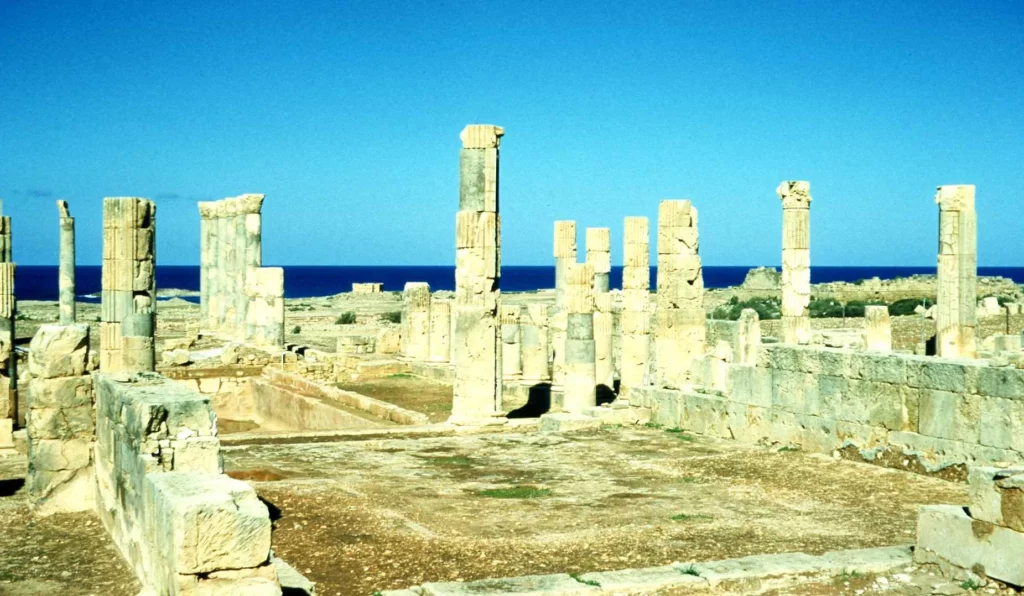
‘Over the centuries, the level of the Mediterranean Sea has risen slightly, and earthquakes have also caused the coast to erode,” says Kontny. “As a result, part of the ancient port infrastructure is now under water.
“We have found ancient columns, traces of submerged roads, numerous dropped anchors and probes used to explore the seabed in antiquity. We will be examining all of this in the coming seasons.”
Fragments of cargo
The strip of shipwrecks was discovered at depths of around 10m near a shallow rock formation that must have posed the initial hazard for vessels approaching the port from the east. Alongside structural remains, the researchers recovered fragments of cargo.
These included amphoras, one still containing traces of what is thought to be crystallised wine, and a bronze aequipodium – part of a lead-filled Roman balance scale shaped like a woman’s head. The team is waiting for the results of analysis of these finds as conservation work is carried out in Warsaw.
Also on Divernet: Divers tried to smuggle rebreathers to Libya