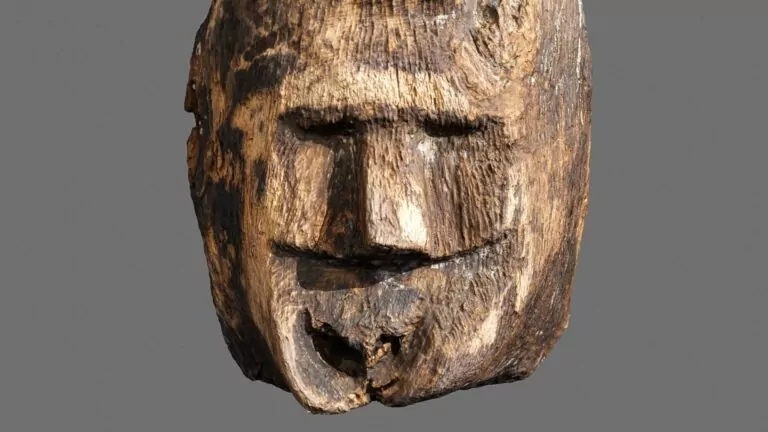
A structural timber beam bearing a human face thought to have been carved more than 1,000 years ago has been discovered by underwater archaeologists in Poland. They think it could indicate a continuation of pagan beliefs around the time the emerging state was becoming Christian.
The rare discovery was made last year – though has only now been announced – by divers from the Nicolaus Copernicus University (NCU)’s Centre for Underwater Archaeology. They had been exploring Lake Lednica, which lies north-east of Poznan.
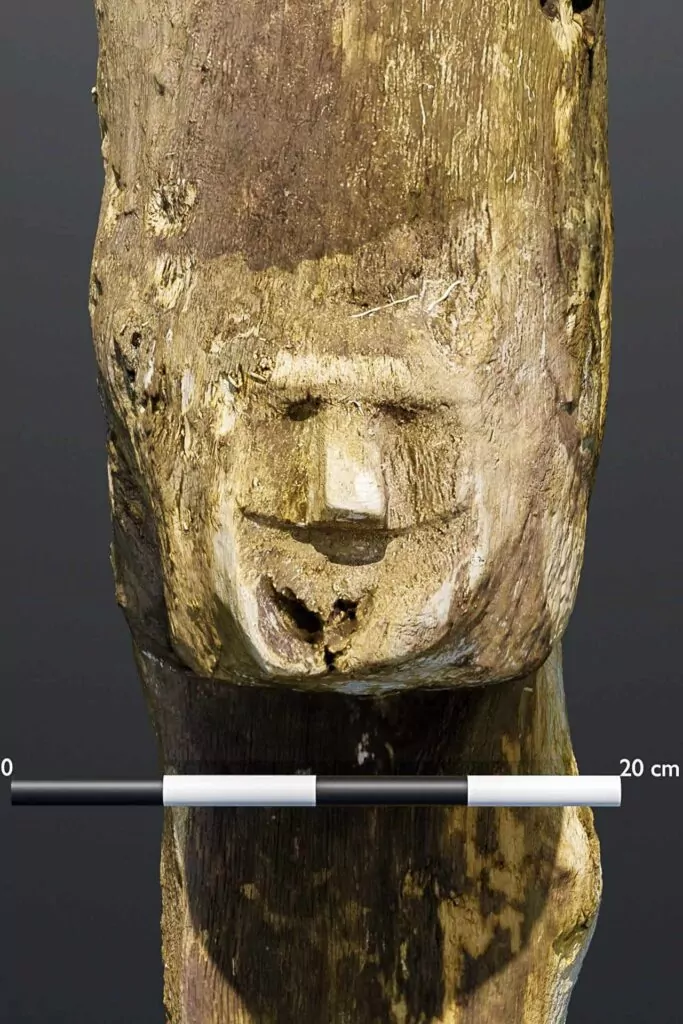
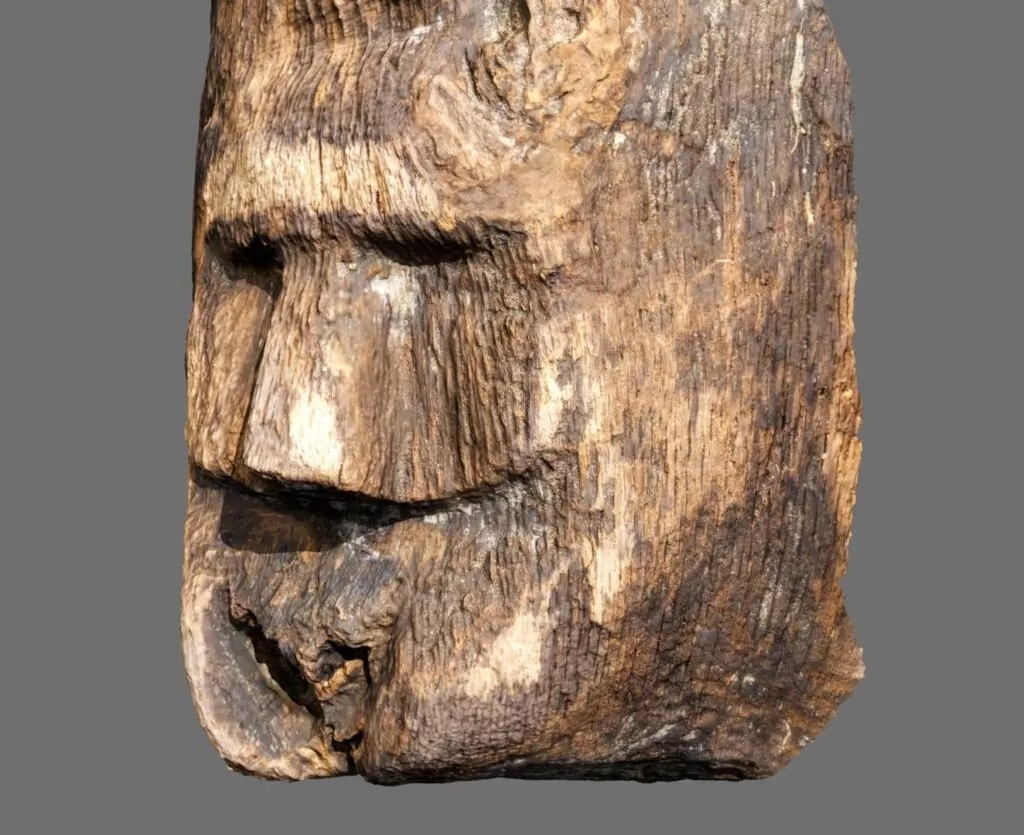
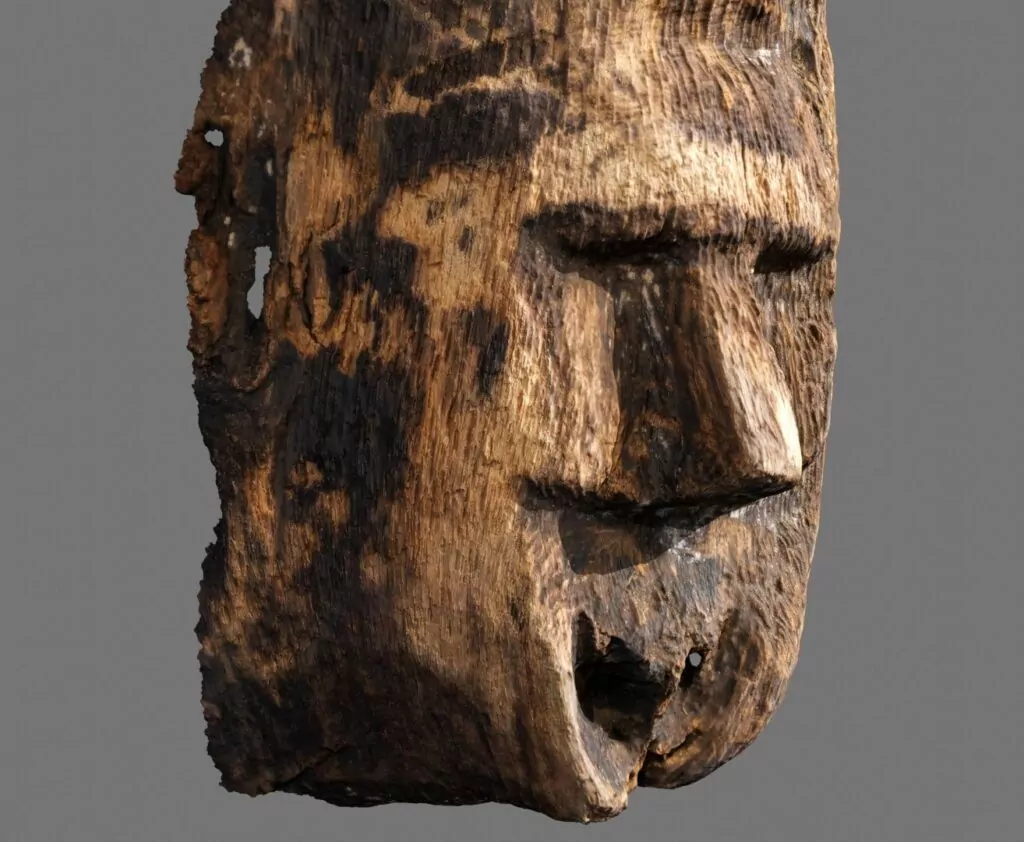
The 1.34m long beam is one of a number of well-preserved oak and elm structures that once formed part of fortifications for a mediaeval settlement but have been hidden for centuries in the lake. The face, 12cm high and 9cm wide, is thought to have represented a deity, protective spirit or hero charged with guarding the settlement’s inhabitants.
The forehead, cheeks, eyebrows and beard are said to have been precisely sculpted, whereas the nose and lips have a simpler, schematic shape.
“This discovery not only evokes admiration for the craftsmanship from over a thousand years ago but also opens a fascinating discussion about the spiritual life of early medieval Slavs,” commented Dr Andrzej Pydyn, director of the Centre for Underwater Archaeology.

Analysis by the university’s dendrochronology laboratory indicates that the tree from which the beam came was felled around the year 967, at the time of Mieszko I, Poland’s first Christian ruler. Older beliefs still prevailed at the time, as indicated by the bones of wild animals discovered nearby, thought to have been sacrifices made to help protect the fortifications.
“In the material culture of the Slavs, figural anthropomorphic representations may have been much more common than the number of preserved artefacts suggests,” said another NCU archaeologist, Konrad Lewek.
“Wood decomposes quickly, which is why such objects have survived only in exceptional conditions, such as wetlands or underwater environments. The beam from Lake Lednica, perfectly preserved in the rampart landslide, is therefore a unique object of exceptional scientific and cultural value.”

The archaeologists have not been able to rule out the possibility that the face was carved during later reconstruction work, though similar depictions from the period have been found in other Slavic cities. According to Pydyn, the find could call for a rethink to the current approach of assessing traces of Slavic spirituality based on monumental statues of deities.
Archaeological discoveries have been made in Lake Lednica since the 1950s, but systematic underwater research began in the early 1980s, with the NCU conducting annual field research in collaboration with the Museum of the First Piasts at Lednica.
Bridge fragments, dugout boats and what is said to be the largest collection of early medieval weaponry in central Europe have been excavated over the years.
Also on Divernet: NORWEGIAN WOOD: LAKE SHIPWRECK INTACT AFTER CENTURIES, DIVER DISCOVERIES IN BLACK SEA FORTRESS HARBOUR, DIVERS SET TO LIFT BRONZE AGE ‘SEWN’ BOAT, DIVERS FIND ‘EVIL-EYE’ DISC – AND VILLAGE OF 100,000 SPIKES