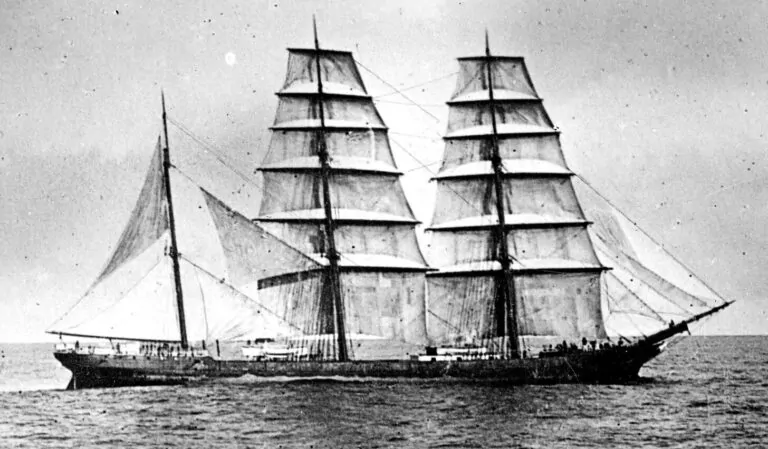
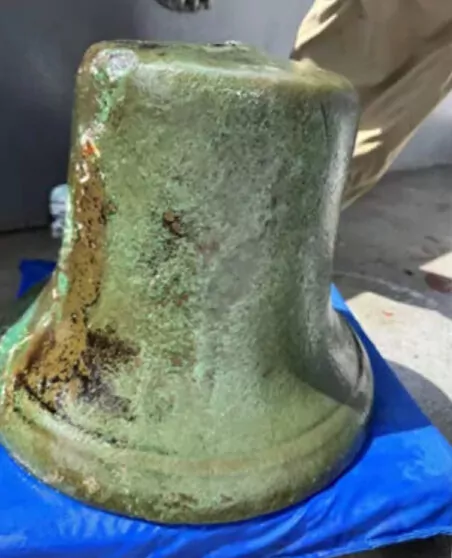
Scuba divers have recovered the bronze bell from the wreck of the Star Of Bengal, a 151-year-old ship that sank at a remote location in what remains Alaska’s second-worst maritime disaster in terms of lives lost.
The Star Of Bengal was an 80m iron-hulled, three-masted sailing ship that had been built by Harland & Wolff in Belfast in 1874. British trading company JP Corry & Co operated her for many years, mainly between London and Calcutta, and in 1906 the Alaska Packers Association bought the vessel.
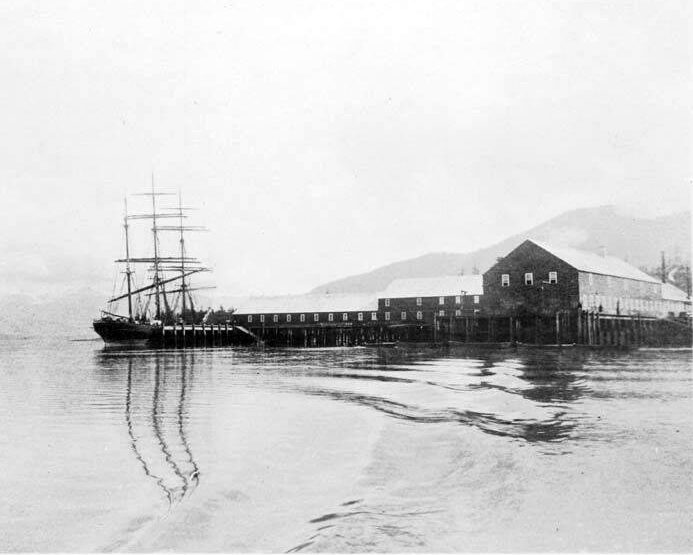
She was then used to transport mainly Asian workers and supplies to the cannery town of Wrangell each spring, and in autumn to bring the workers back to San Francisco along with the canned salmon.
There were 138 men onboard the Star Of Bengal when she sank on that return trip on 20 September, 1908 – the crew of 32 and 106 cannery workers.
Also onboard were the results of the workers’ labours, 2.5 million one-pound cans of salmon, as the ship passed through Alaska’s Sumner Strait towed by two small tugs, the Kayak and the Hattie Gage.
A combination of high winds, lack of communication and mechanical failures forced the tugs to sever the tow lines. The Star Of Bengal dropped anchor but when the anchor dragged the ship was broken on the rocks of remote Coronation Island, some 130km west of Wrangell.
Most of the 110 men who died were Chinese, Japanese and Filipino labourers and, reflecting attitudes of the times, when their bodies were recovered they were buried in a mass grave – while the all-white crew-members were interred in individual graves. More than half of the crew had survived, though that was true of fewer than 10% of the Asian workers.
Second time lucky
The volunteer research team that has now mapped the ship had first dived the 20m-deep site in May 2022, though at that time poor weather conditions had seriously hampered the operation.
The recent expedition was again carried out from the science and education nonprofit research vessel Alaska Endeavour, captained by Bill Urschel, who announced the team’s findings this week.
The operation was led by marine archaeologist Jenya Anichenko with Wrangell divers Gig Decker and underwater videographer Stephen Prysunka, along with drone operators and a number of other volunteer divers and researchers, many of whom had taken part in the earlier expedition.
It was Decker who, more than 30 years ago, had first came across anchor-chain indicating the Star Of Bengal’s whereabouts and leading to the bell’s discovery.
Over 10 days this May the team located and documented the Star Of Bengal’s hull frames and plates, four anchors and the windlass and other ship’s machinery as well as the bronze bell.
The bell was raised and has been sent to the Centre for Maritime Archaeology & Conservation at Texas A&M University but will later return to go on display at the Wrangell History Museum.
“There is something special about a ship’s bell,” said Captain Urschel. “It gives life to a ship. One of our party said: ‘Science is important, but 100 years from now folks will connect to the Star and the cannery workers who died on it through this bell.’ The men going down that night heard that bell. That bell will ring again.”
Star’s history
Now that the wreck-site has been documented, it is being nominated for the USA’s National Register of Historic Places.
The Star Of Bengal project was funded by the Alaska Maritime Heritage Preservation programme supported by the city of Wrangell and the Wrangell History Museum, with additional funding from drone company 3 Points in Space Media, divers Shawn Wells, Kevin Lansdowne and Shawn & Susan Dilles, and Alaska Endeavour.
Another of the expedition team, maritime historian Ronan Rooney, has produced a five-part podcast about the Star Of Bengal story.
Also on Divernet: DIVER’S BELL DISCOVERY BLOWS SHIPWRECK MYTH OUT OF THE WATER, TRAGIC WRECK OF ‘SAFEST’ SHIP FOUND IN LAKE SUPERIOR, SHIP’S BELL FROM FIRST WW1 US DESTROYER CASUALTY RETURNED, TRANSATLANTIC TIE-UP LIFTS WW1 DESTROYER BELL