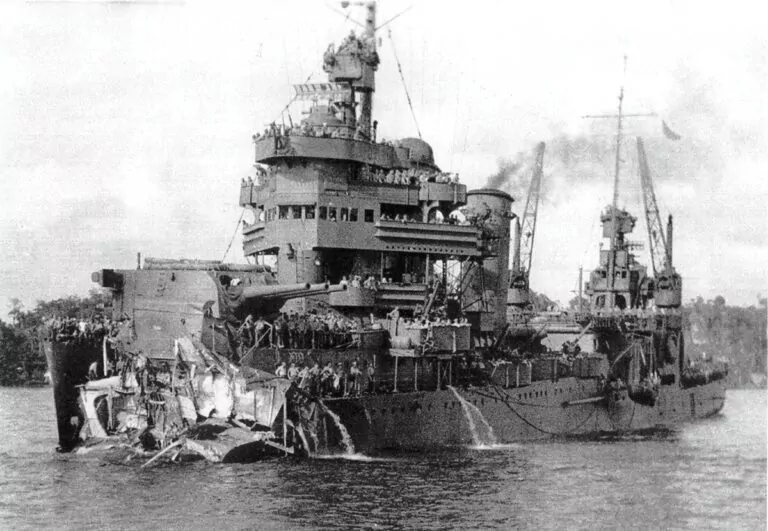
The bow of USS New Orleans was blown off by a Japanese torpedo in the Solomon Islands on 30 November, 1942 – yet, patched up with coconut logs, the heavy cruiser not only made it backwards to the USA but went on to see distinguished action through to the end of World War Two.
The whereabouts of that 46m forward section of the ship had remained unknown until a few days ago, when a team led by Robert Ballard and his Ocean Exploration Trust located and captured images of the iconic wreckage in the depths of Iron Bottom Sound.
Also read: Tech divers find WW1’s last missing RN cruiser

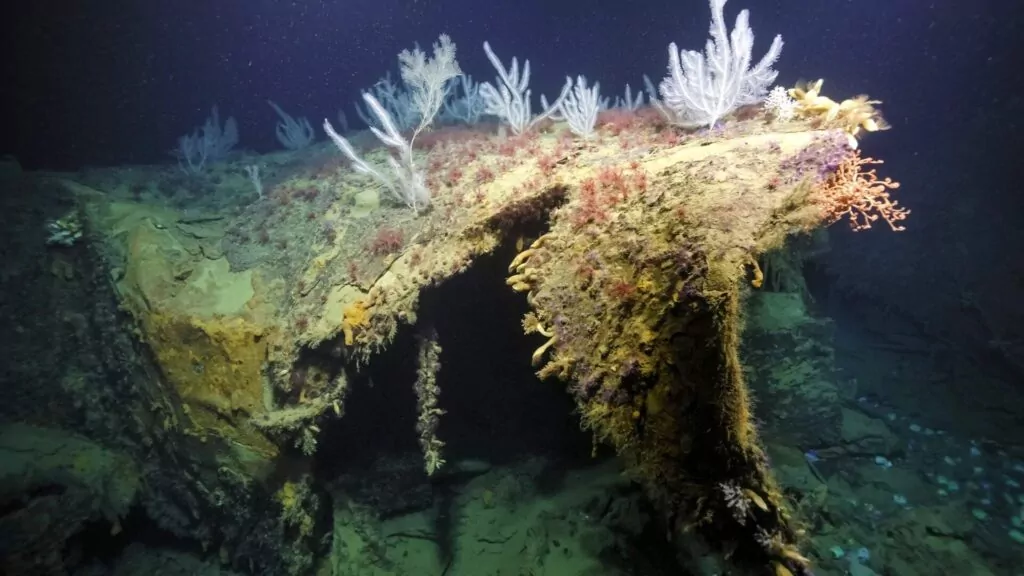

The breakthrough came on 6 July when the team on NOAA Ocean Exploration’s expeditionary vessel Nautilus deployed ROVs to investigate a mark found during seabed-mapping operations carried out from the University of New Hampshire’s uncrewed surface vessel DriX.
Also read: WW2 Japanese destroyer wreck find rewrites history
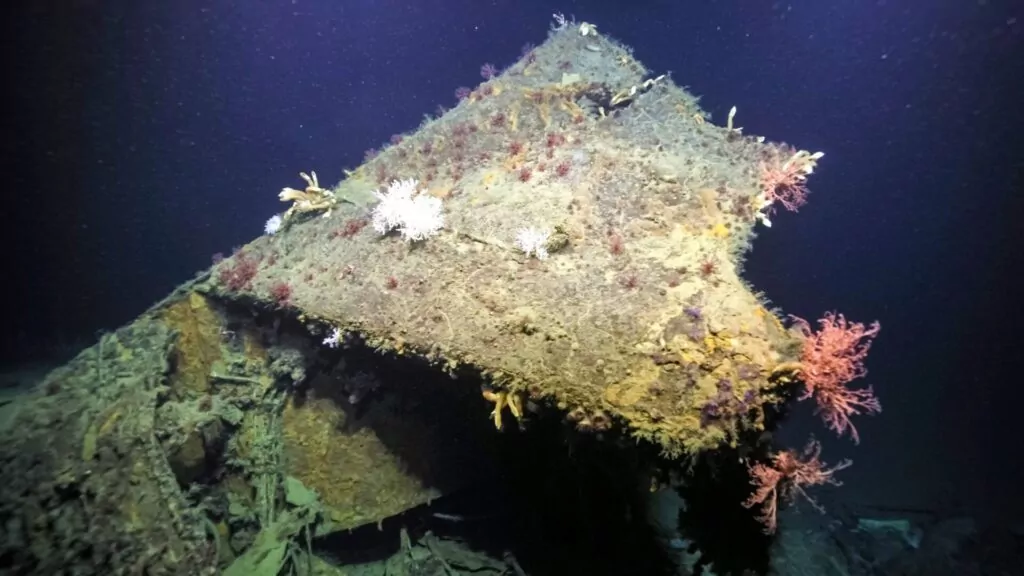
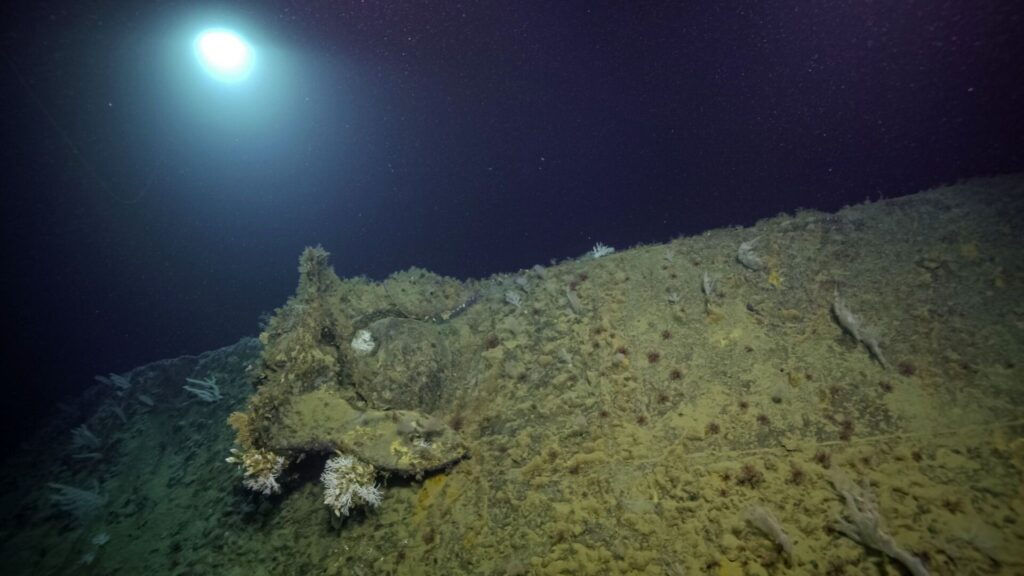
The anomaly was too small to be a shipwreck yet did not appear to be natural. The team spent four hours imaging the wreck-site, which lies 675m deep. Onboard archaeologists joined experts from WW2 combatant countries the USA, Japan, Australia and New Zealand to examine the live-streamed footage together.
Between them they were able to distinguish enough details of the structure, residual flecks of paint and an anchor engraved with the words “Navy Yard” to enable a positive identification to be made. The missing forward turret was not found with the bow section.
17 battle stars
With 17 battle stars, the New Orleans (CL/CA-32) was one of the most highly decorated US Navy vessels of WW2, and its crew among the most decorated individuals.
The US Navy’s lead New Orleans-class cruiser was 179m in length. Fitted with thin armour but classed as a heavy cruiser because of her 8in guns, she had been built in Brooklyn and launched in 1933.
The New Orleans had already seen action at the battles of the Coral Sea, Midway and the Eastern Solomons when, during the Battle of Tassafaronga, she ran into the path of a Japanese Long Lance torpedo.
This detonated her forward magazines and fuel tanks, tearing off the entire forward section. The severed bow swung around the port side, punching several holes in the hull before sinking at the stern, damaging the port inboard propeller.
More than 180 of the 1,183 crew died as this devastation occurred. Other men remained at their posts as the vessel started to flood, and managed to steer the ship to nearby Tulagi harbour, though three more died in the process.
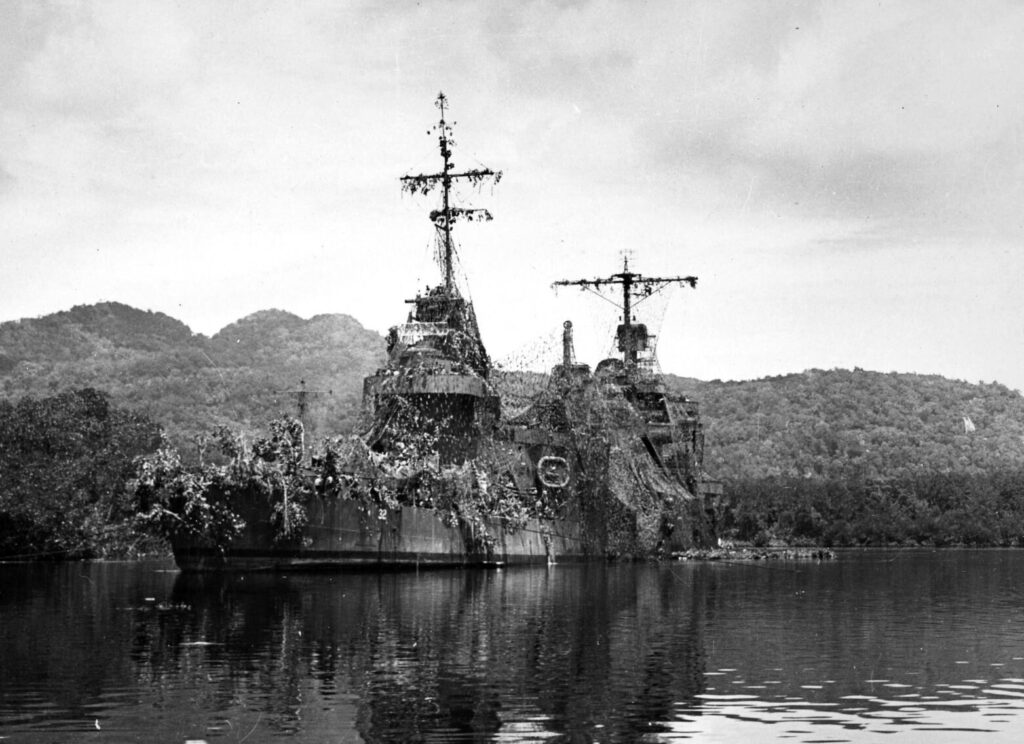
Using coconut-tree logs the survivors were able to make New Orleans seaworthy enough to allow her to be sailed – in reverse – to Sydney, Australia. There the propeller was replaced and a temporary bow fitted before she sailed, again backwards, to Puget Sound Navy Yard.

With a new bow and forward turret fitted, USS New Orleans returned to action in October 1943 and saw action at Wake Island, the Marshall and Caroline Islands and the Battle of Leyte Gulf, as well as participating in the invasions of Okinawa and the Philippines.
She was at Subic Bay when hostilities ceased in 1945, was decommissioned in 1947 and scrapped in 1959.
“By all rights, this ship should have sunk but, due to the heroic damage-control efforts of her crew, USS New Orleans became one of the most grievously damaged US cruisers in World War Two to actually survive,” commented Samuel J Cox, director of the US Naval History & Heritage Command (NHHC), which also supported the expedition.
“To find the bow of this ship is an opportunity to remember the sacrifice of this valiant crew, even on one of the worst nights in US Navy history,” he said. The Iron Bottom Sound expedition is set to continue until 23 July.
Emperor’s new centre
Not that visitors will be able to visit the New Orleans bow, but it happens that Emperor Divers has just opened a Solomon Islands dive-centre, so they will be able to explore shallower wreck-sites in Iron Bottom Sound.
Emperor Divers Honiara complements the long-established Solomon Islands-based liveaboard Emperor Bilikiki, and offers facilities for technical divers.
Also on Divernet: 5KM-DEEP DIVE REVEALS AIRCRAFT, MAP + MYSTERY CAR, DEEP CORAL REEF IS WORLD’S BIGGEST KNOWN, DEEPEST ROV DIVES CAPTURE 3 MIDWAY CARRIER WRECKS, NAUTILUS TEAM FIND ‘YELLOW BRICK ROAD’ – 2KM DEEP