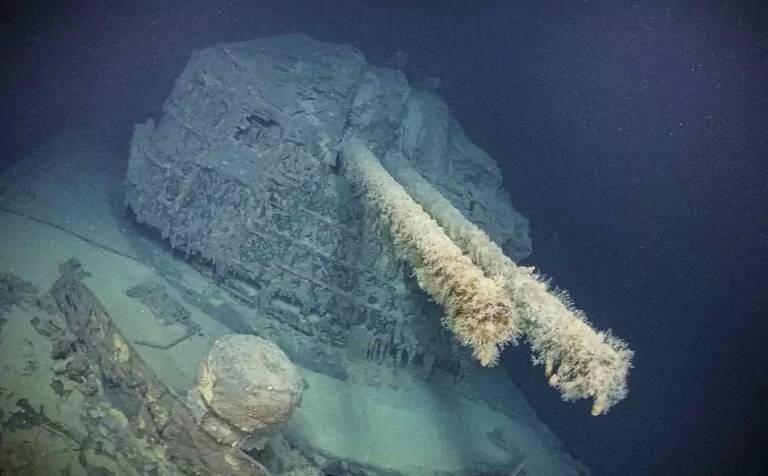
In another maritime-history breakthrough, the wreck of the Imperial Japanese Navy destroyer Teruzuki, lost during the brutal Guadalcanal campaign of WW2, was discovered on 10 July in Iron Bottom Sound by a team led by the Ocean Exploration Trust aboard the exploration vessel Nautilus.
The shipwreck was located more than 800m deep off Cape Esperance on the island of Guadalcanal, using advanced mapping from the University of New Hampshire’s uncrewed surface vehicle DriX before being explored by the ROVs Hercules and Atalanta.
Also read: Tech divers find WW1’s last missing RN cruiser
IJN Teruzuki (Shining Moon), an Akizuki-class destroyer, had been only three months in service when she met her end. Armed with powerful 100mm dual-purpose guns, the 134m vessel was the new flagship of Rear-Admiral Raizo Tanaka during his “Tokyo Express” supply runs. She had originally been designed to screen ships from aircraft attack.
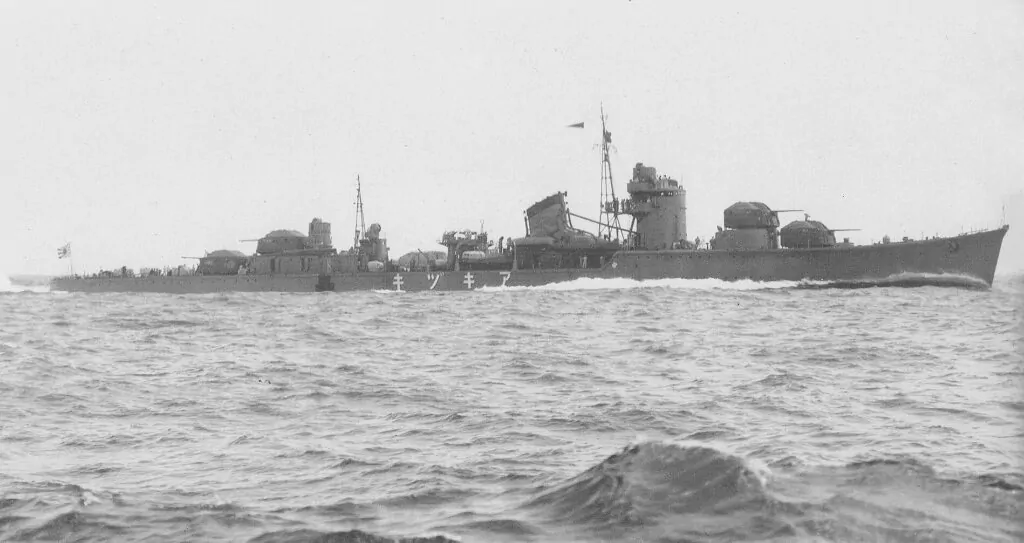
In the early hours of 12 December, 1942, as IJN Teruzuki was protecting supply ships off Guadalcanal’s northern coast, the US patrol boats PT-37 and PT-40 intercepted the convoy.
The small vessels struck Teruzuki astern with a pair of Mk-8 torpedoes, breaking her rudder, disabling the ship and setting her ablaze. Hours later, a massive explosion sank the destroyer.
Nine of the crew were killed but 197 were rescued by accompanying destroyers, while another 156 were able to swim to Guadalcanal.
Bounce-dive
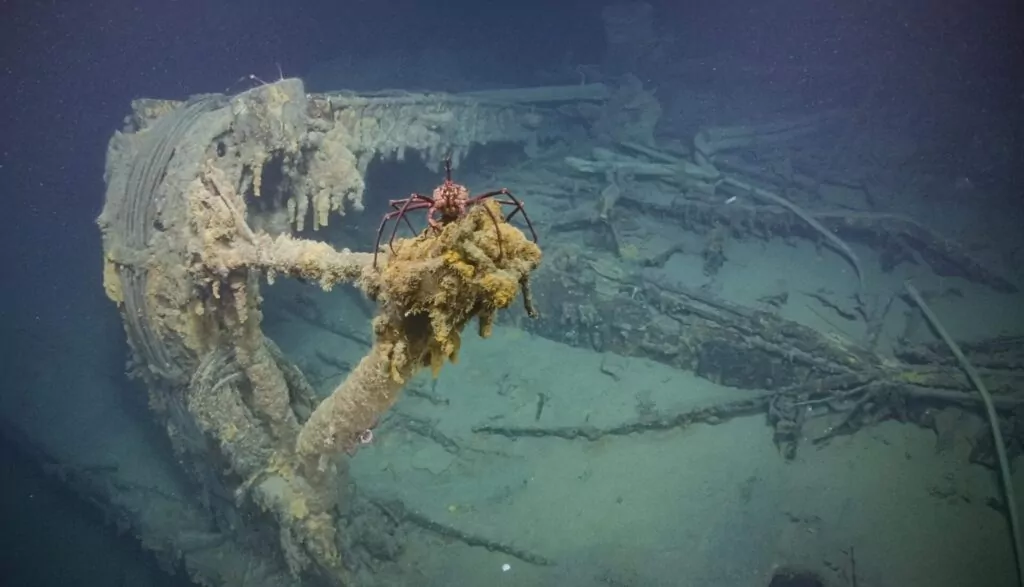
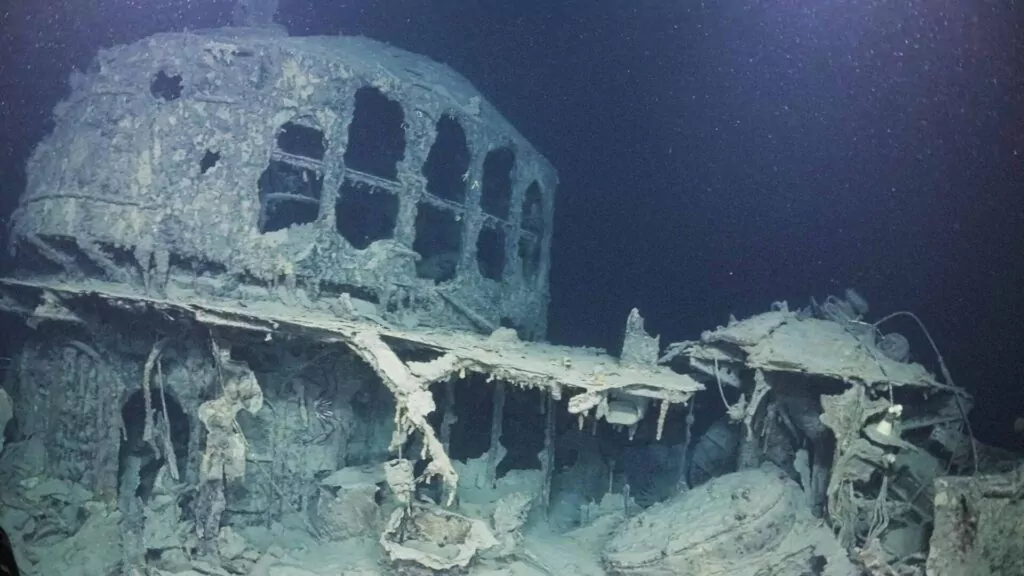
An initial bounce-dive was carried out to check an anomaly identified during shallow-water mapping operations, before the ROVs went down to survey the wreck-site and capture images of the ship.
“Japanese naval-vessel plans were kept highly secret during the war, so much so that no historical images of Teruzuki exist today,” stated the Ocean Exploration Trust. “This survey is the first-ever look at the vessel for this generation.”
The experts first noted the collapsed and flattened bow, leaning to port. The forward “super-firing” gun-turrets were intact but trained in the wrong direction – skywards – and further back much of the superstructure had fallen off to one side.
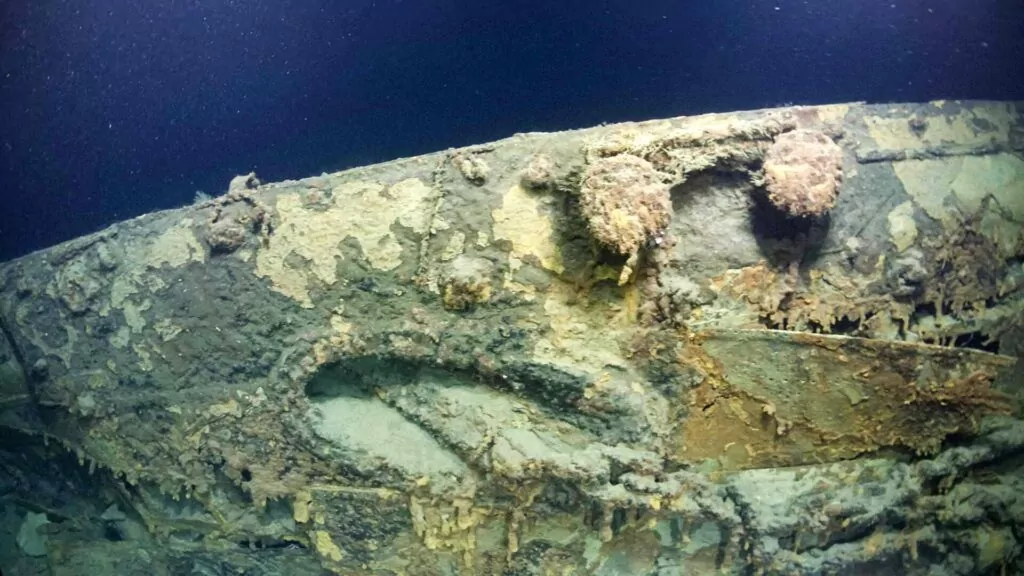
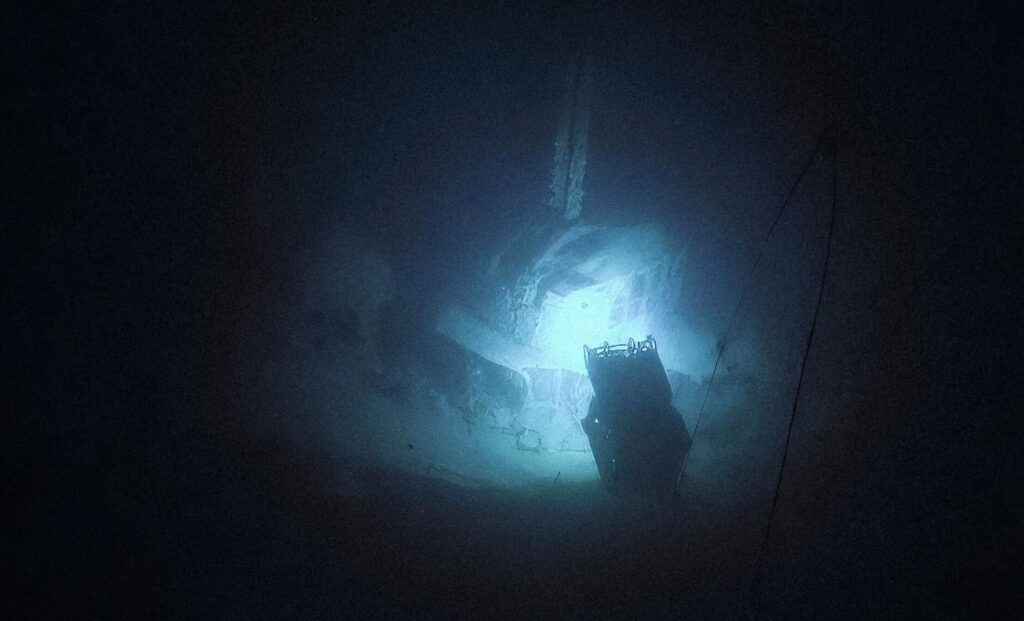
Significantly, unexploded depth charges were seen at the separated and collapsed 18m stern section, which lay more than 200m from the main wreck-site.
This indicated that the explosive devices had not been responsible for blowing the stern off, as previously thought, but that it had broken away either as a result of the torpedo strikes or when the ship was sinking.
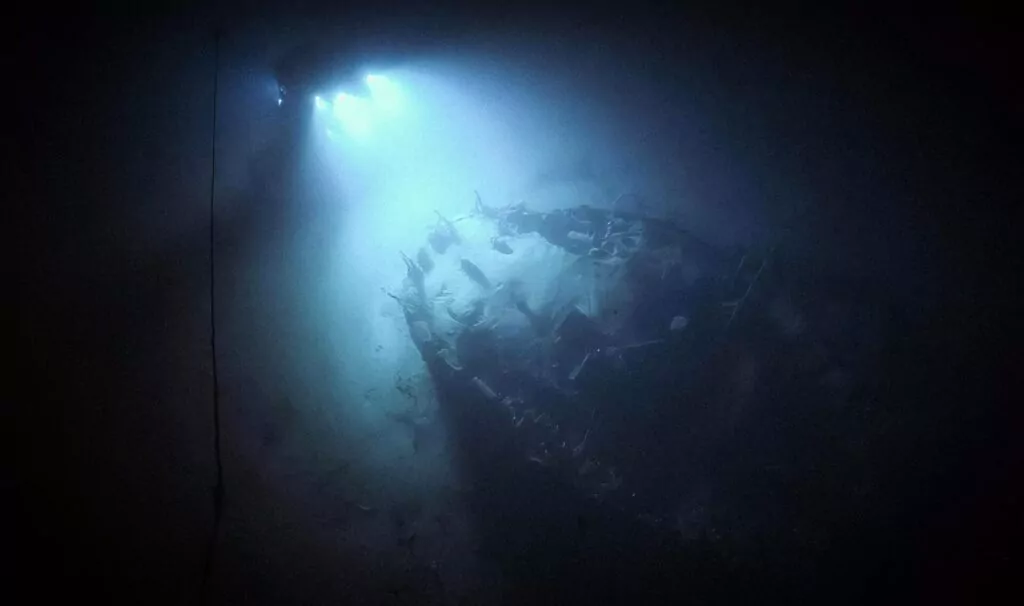
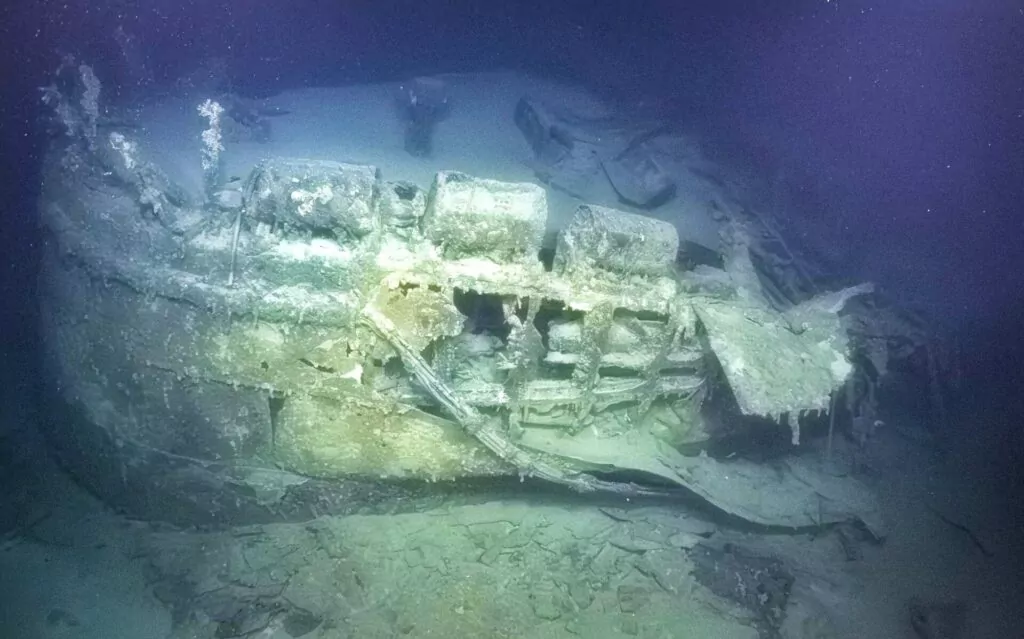
Japanese experts including Dr Jun Kimura of Tokai University and Hiroshi Ishii of Kyoto University were able to confirm the wreck’s identity through structural analysis and historical correlation.
Iron Bottom Sound
Iron Bottom Sound was the stage for five major naval battles that resulted in the loss of more than 20,000 lives, 111 naval vessels and 1,450 aircraft between August and December 1942. It was named after the remains scattered across the seabed, still being discovered.
Fewer than 100 of these US, Japanese, Australian and New Zealand military ships and aircraft have been located so far, but all are reckoned to lie within an area of 46 x 74km, up to 1,400m deep.
The discovery was part of the 21-day Maritime Archaeology of Guadalcanal expedition to Iron Bottom Sound, supported by NOAA Ocean Exploration, the Solomon Islands government and institutions from Japan, Australia, New Zealand and the USA.
Teruzuki was the 12th wreck to be explored during the expedition, which broadcasts its dives live. Apart from the momentous discovery of the severed bow of USS New Orleans (the rest of the cruiser made it back safely to the USA!), reported recently on Divernet, the team have also explored wrecks that include USS Northampton and USS Vincennes.
Also on Divernet: ICONIC WW2 CRUISER’S BOW FOUND IN SOLOMONS, 5KM-DEEP DIVE REVEALS AIRCRAFT, MAP + MYSTERY CAR, DEEP CORAL REEF IS WORLD’S BIGGEST KNOWN, FOOTAGE RELEASED OF THREE ICONIC SHIPWRECKS FROM BATTLE OF MIDWAY