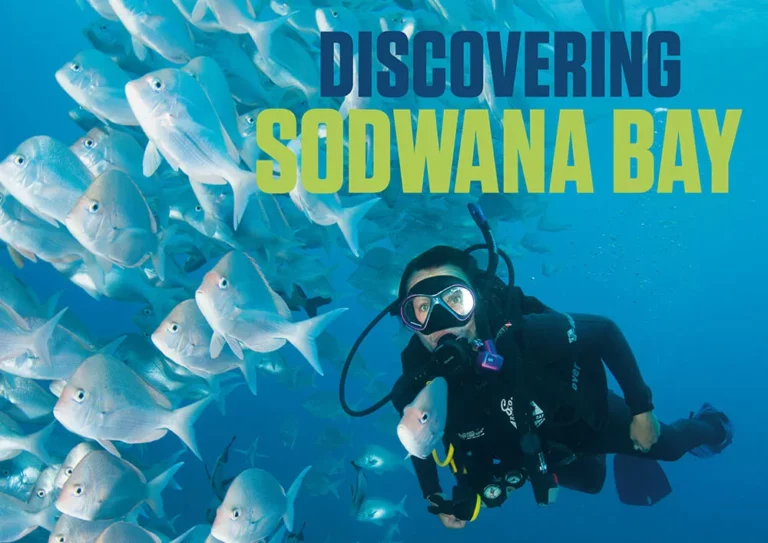
Deborah Dickson-Smith makes the long trek to South Africa, and finds the exhilarating diving off Sodwana Bay something that takes your breath away
My lasting memory of Sodwana Bay is my first plunge into crystal-clear water, into sunbeams and the largest school of fusiliers I’ve ever seen. Just below the surface, they swim around frantically, brilliant flashes of yellow and blue as they turn and the sun catches them.
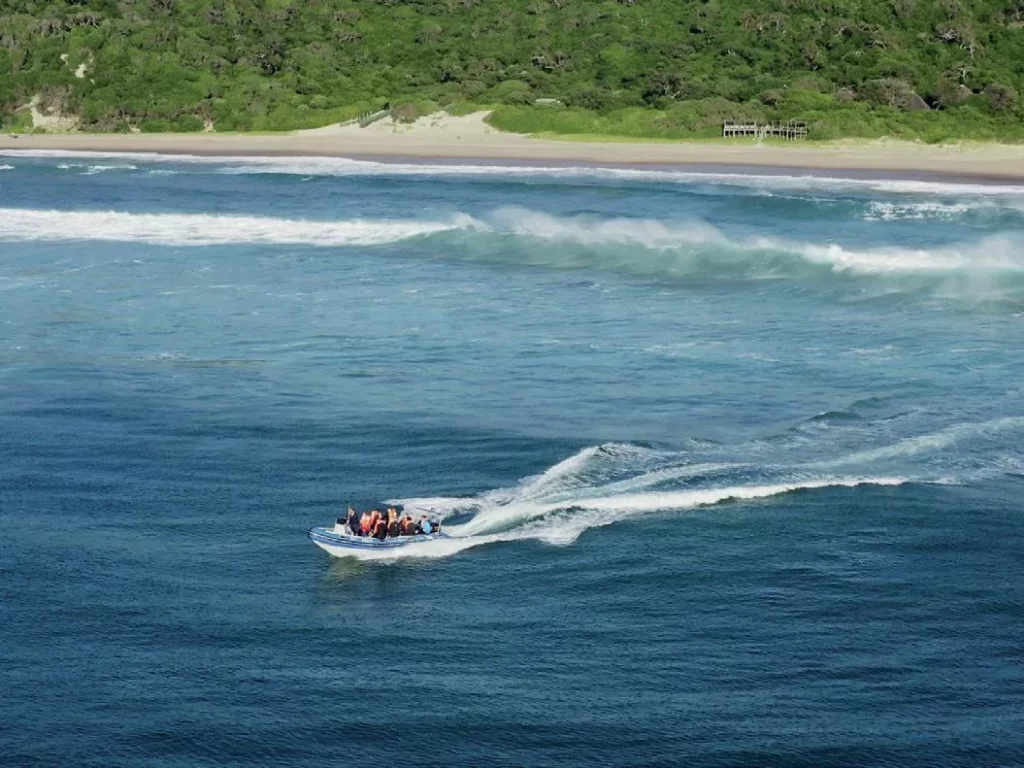
In fact, I was excited about my first dive here before I even took the plunge, following an exhilarating beach entry in a small RIB, our skipper expertly navigating the surf, following rips and riding the backs of the waves.
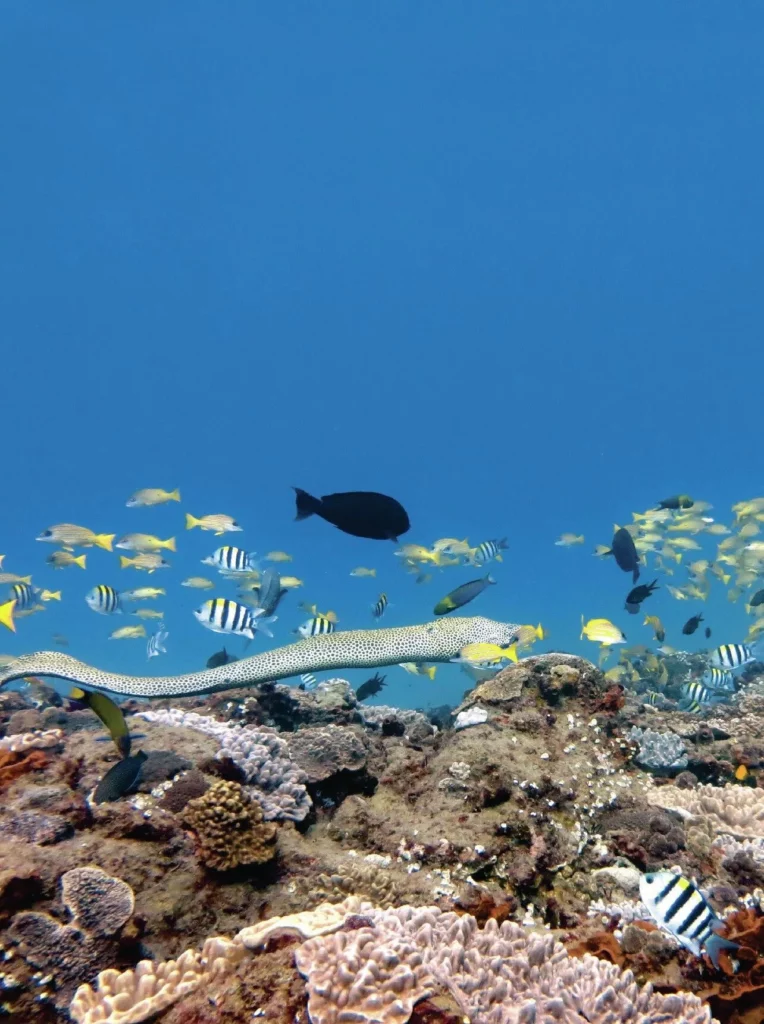
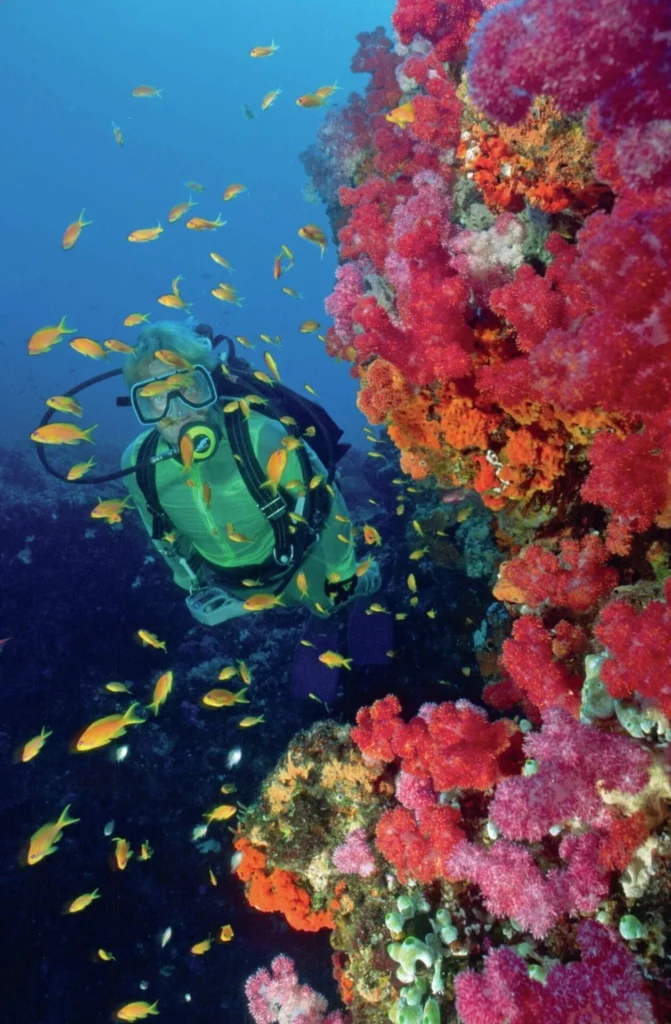
I’m visiting this popular South African dive destination in early April and I’m told, just as the current shifts direction. The colder, nutrient-rich water now heading into this enormous bay is the reason for all the activity. The activity doesn’t slow down as we descend, with large schools of fusiliers and snapper flying backwards and forwards over the reef. Purple soft corals and green coral trees have clouds of orange and purple anthias hovering above them, damsels, angelfish and butterflyfish flit about, in and out of the staghorn and plating corals. All of the reefs we dive in Sodwana Bay are teeming with an immense variety of fish life, from nudibranchs and crustaceans to anemonefish, gobies, blennies, damsels, and larger wrasse, parrotfish, triggerfish, scorpionfish and moray eels. There are also very large potato cod, turtles and bluefin kingfish.
iSimangaliso Marine Protected Area

The biodiversity and biomass here is testament to the success of the 10,700 sq km iSimangaliso Marine Protected Area (MPA), which has 1,200 recorded species of fish, 43 types of hard corals and 11 different species of soft corals.
Did You Know?
Sodwana can be dived 364 days a year, weather permitting. The park is however, closed on New Year’s Day each year. The best months to dive are from January to May, as the water is then at its warmest and viz is anything from 20-30 metres.
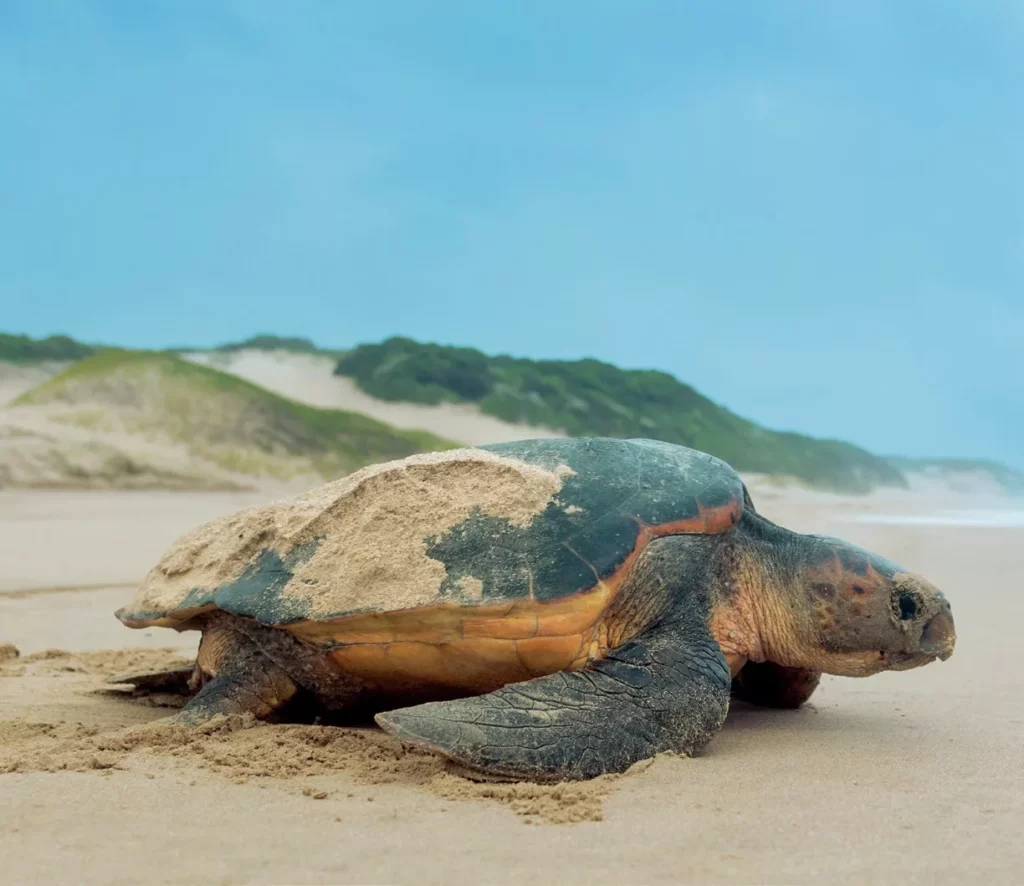
Established in 1999, iSimangaliso Wetland Park is South Africa’s first UNESCO World Heritage site and the country’s largest MPA, providing safe nesting grounds for endangered leatherback and loggerhead turtles, and perhaps even more significantly, a safe environment for a living dinosaur. Its submarine canyons are home to the incredibly rare coelacanth, a fish that has been around since the time of the dinosaurs. Thirty-three individual coelacanths, each recognised by their distinct spot patterns, live in this marine park.
The reefs of Sodwana Bay
The reefs of Sodwana Bay are formed from fossilised sand dunes, which are densely covered with hard and soft tropical corals. These are the world’s most southerly coral reefs after those of Lord Howe Island.
Corals here thrive on the nutrient-rich water upwelling from the deep canyons close to shore. In turn, the reefs provide a healthy habitat for diverse marine life, everything from nudibranchs and reef fish to pelagics and occasional larger visitors such as manta rays and whale sharks.
Signature sites
The reefs that stretch across this wide bay are named according to their distance from the launch point at its southern tip at Jesser Point – Quarter Mile Reef, Two Mile Reef, Seven Mile Reef, Nine Mile Reef, and so on.
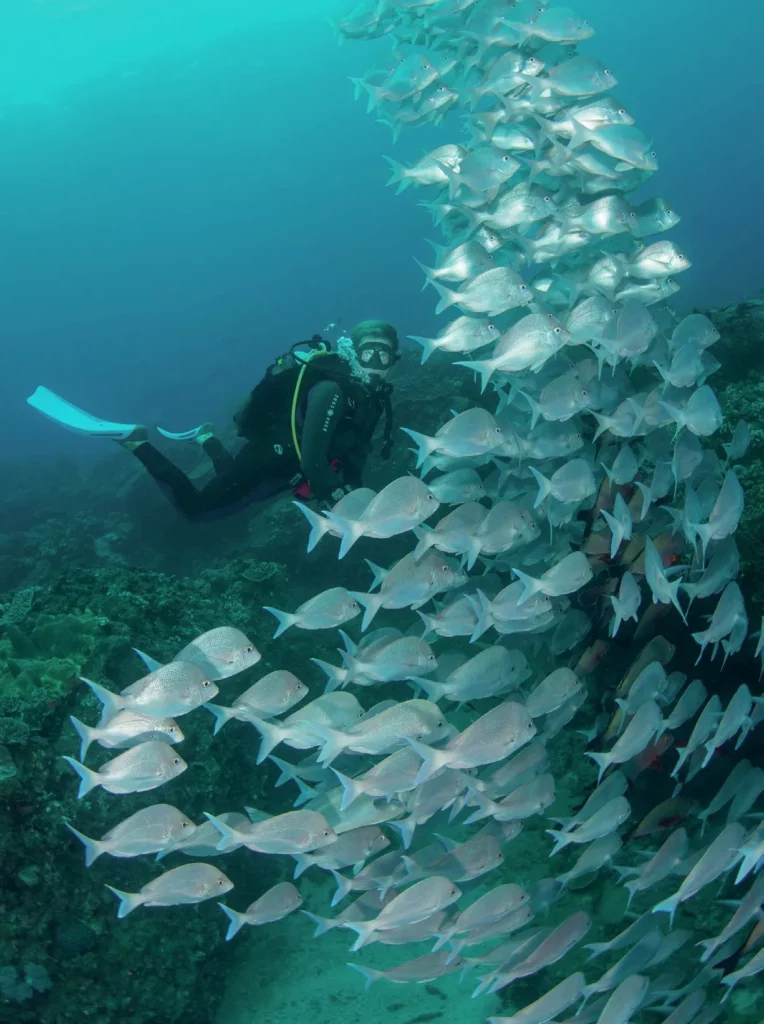
Sitting between Quarter Mile Reef and Two Mile Reef, Stringers is a standout dive site. While tiny in comparison to its neighbours, and very shallow, it’s enormously pretty, twin rocky outcrops are teeming with life.
Did You Know?
Sodwana Bay is roughly 400km north of King Shaka International Airport in Durban, approximately five hour’s drive.
What’s compelling is its role as a nursery for juvenile fish, which attract large game fish and in the nooks and crannies, nudibranchs, seahorses and cleaner shrimp – I even spotted a harlequin shrimp having a little dance in his hidey hole.

Two Mile Reef is the largest reef system at just over 1,800 metres long and 900 metres wide. Its depth ranges between 8m and 35m with quite dramatic topography.
Popular dive sites on Two Mile reef include Wayne’s World, a slightly deeper site with flat terrain, perfect for drift dives. Coral Gardens is so-named for its vibrant hard and soft corals. At Simon’s Cave there are sprawling colonies of anemones and large schools of butterflyfish. Pinnacles is a collection of underwater pillars with swim-throughs and a small cave sometimes occupied by whitetip reef sharks.


Anton’s (my first and favourite dive) is home to large numbers of schooling fish, turtles and bait balls of many species. In fact, it appears to be a favourite among most divers for its dynamic underwater environment. Fed by north-south currents rich in nutrients, it attracts large schools of fish such as slingers and vibrant humpback snapper. Other Two Mile Reef dive sites include Roonies, Hopscotch and Mellow Yellow, which are slightly deeper dives and offer divers the opportunity to see larger marine life such as mantas, hunting pelagics and sharks. Bikini is an important cleaning station and a macro photographer’s playground, with shrimps, eels, juvenile fish and nudibranchs galore.

Add on a topside safari
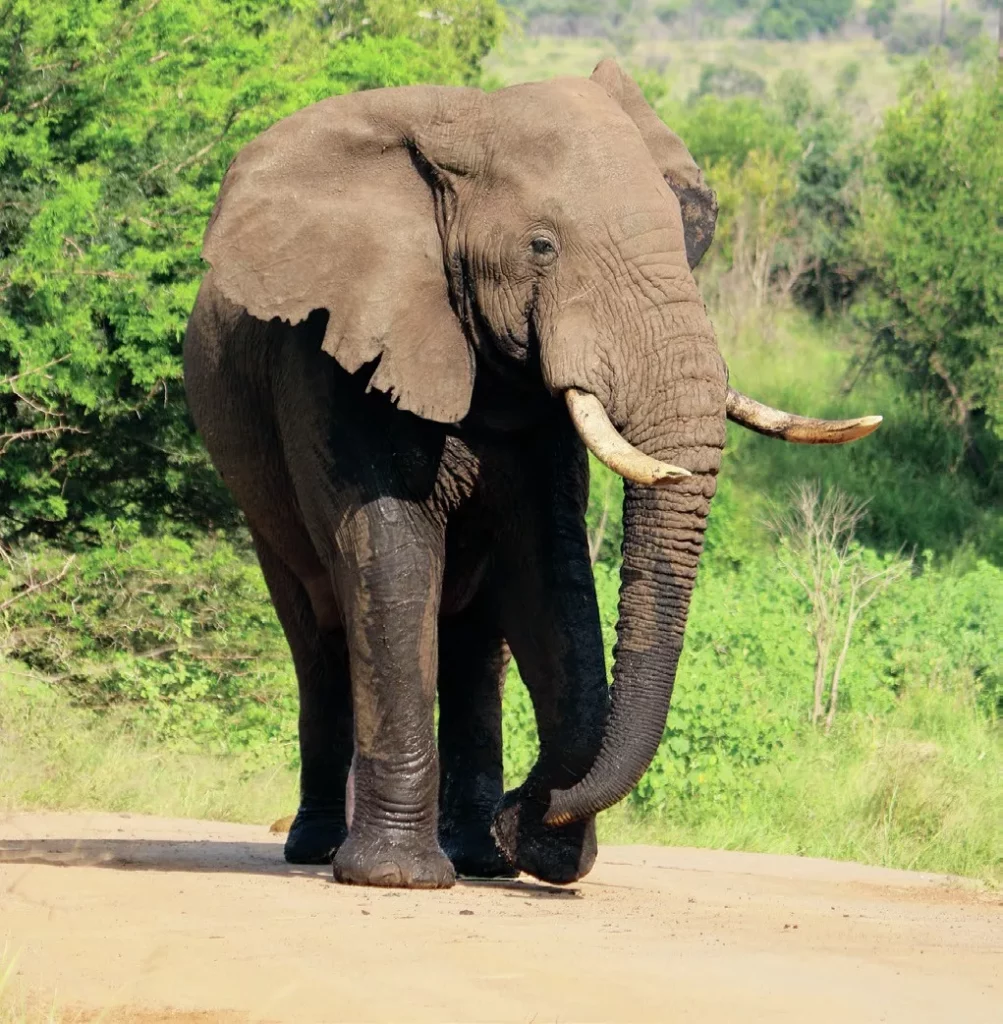
There are some fantastic game reserves on the Kwazulu Natal coast, some very close to Sodwana Bay. One great (and reasonably priced) lodge is Bayala Private Safari Lodge, situated within Zuka Private Game Reserve, just two hours’ drive from Sodwana Bay. The reserve boasts amazing biodiversity with elephants, black and white rhinos, lions, leopards, buffalo, cheetahs, giraffes, zebras and myriad species of bird, mammals and reptiles. Other nearby game reserves include Tembe Elephant Park, Ndumo, Hluhluwe-Imfolozi and Mkuze.

When to dive
Sodwana Bay is a year-round diving destination, so it really depends on your interests. The warmest water is found from November to April, with the best visibility, while good year-round, is often best between April and September, reaching up to 30 metres.
The humpback whale migration occurs from June to October, and loggerhead and leatherback turtles nest here from November to February. Whale sharks and manta rays are spotted year-round, but more in winter (June to November).
Dive sites farther from Jesser Point include Snapper College at Six Mile Reef, named for the large number and variety of snapper found here. At Seven Mile Reef, Northern Wall and Mushroom Rocks have interesting topography and lots of cleaning stations festooned with vibrant soft corals. Divers are likely to see black tipped reef sharks, large schools of pelagic fish, moray eels and turtles.
Further north, Nine Mile Reef features a massive, two-and-a-half-metre high green tree coral, a magnificent centrepiece surrounded by swarms of anthias. This site offers a fantastic multi-level diving experience adorned with an intricate system of swim-throughs, overhangs, and caves. Home to moray eels and tube anemones hiding within its crevices and under its overhangs, and there are also regular shark sightings.
Contact the experts at Diveplanit Travel to start planning your South African dive safari: enquire@diveplanit.com
Where to stay
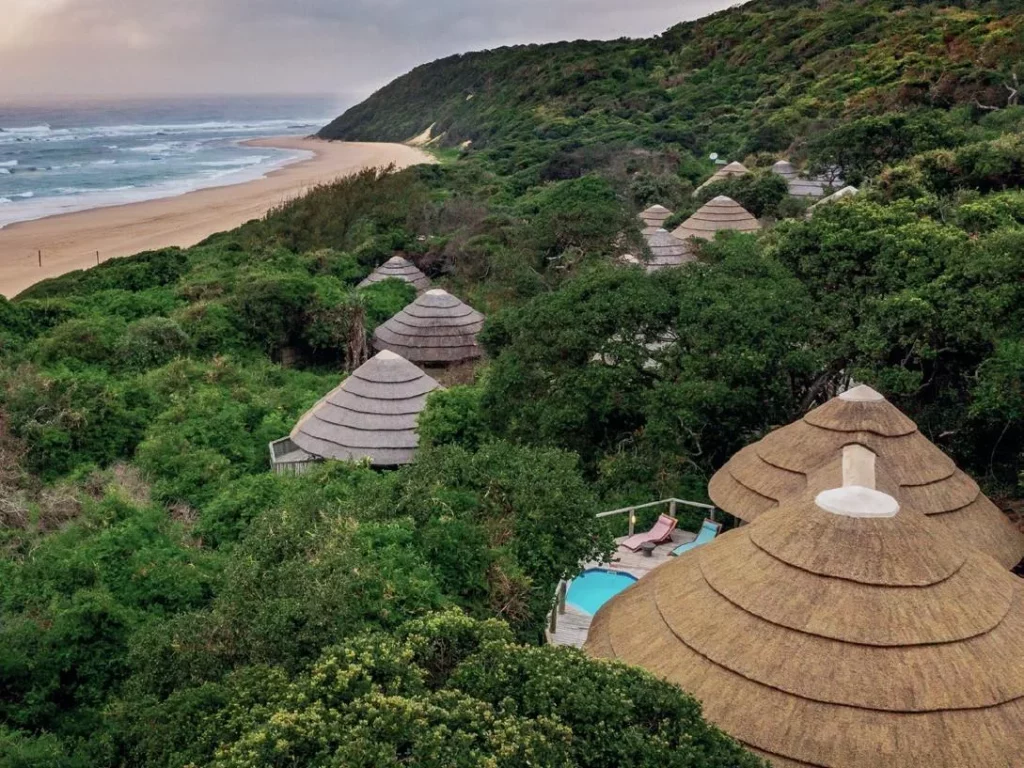
Budget: Coral Divers is located inside iSimangaliso Wetland Park and has a range of accommodation options – from tented accommodation to more-deluxe ensuite bungalows. You can also choose to dine at the lodge restaurant or self-cater in a shared kitchen.
Mid-range: Also within the Park is Mseni Beach Lodge, located directly behind the sand dunes with direct access to the beach and sweeping views from the restaurant.
With traditional thatched cottages, Sodwana Bay Lodge is located in town with easy access to a range of restaurants, cafes and bars.
Luxury: Thonga Beach Lodge is located at the northern end of Sodwana Bay and is the epitome of secluded barefoot luxury. Accessed via 4×4 only, it takes just over an hour to reach from Sodwana Bay town. Accommodation is in treetop villas with sweeping views of the beach, which you will share with a handful of other guests.
FAQS
When is the best time for diving Sodwana Bay?
You can dive year-round, but the best months are January to May for warm water and April to September for the best visibility, often reaching 30 meters.
What marine life can I see while diving Sodwana Bay?
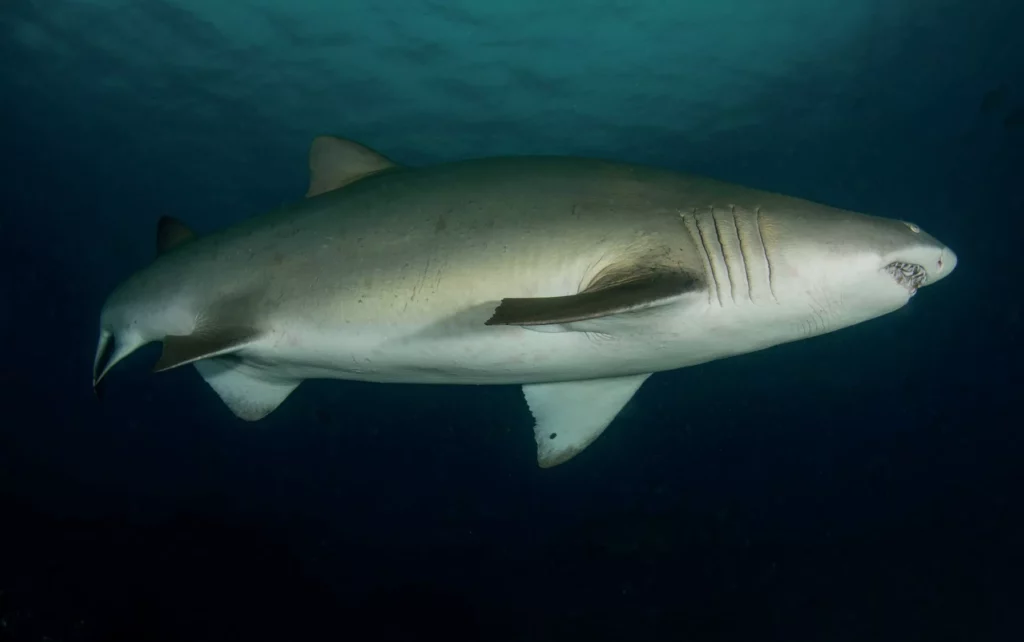
Expect massive schools of fusiliers, snapper, and anthias. You may also see potato cod, turtles, ragged-tooth sharks, and the rare “living fossil” coelacanth.
Are the boat launches at Sodwana Bay difficult?
Diving Sodwana Bay involves exhilarating surf launches in RIBs. Skippers expertly navigate the waves, making the journey to the reef an adventure in itself.
Do I need a 4×4 to visit Sodwana Bay?
While the main town and lodges are accessible by regular car, some luxury spots like Thonga Beach Lodge require a 4×4 for the sandy coastal tracks.
This article was originally published in Scuba Diver Magazine
Subscribe today with promo code DIVE1 — enjoy 12 months for just £1!
