Some believe that what they call the wreck capital of the Atlantic emerged as the result of the presence of UFOs and/or the lost city of Atlantis, but MICHAEL SALVAREZZA and CHRISTOPHER P WEAVER know better. A bigger question for them is: what’s the secret of all those hard corals?
Captain Janis Valikos looked out over the inky darkness of the mid-Atlantic Ocean and saw nothing. It was 16 January, 1940, a calm but cold winter’s night. Despite the relative quiet of the open ocean, however, the winds of war had been blowing fiercely for more than a year and this was no time to let the ship’s guard down.
Valikos had sailed past Bermuda many times before and was on his final voyage before retirement. On this voyage, he was master of the Pelinaion, a 117m cargo steamer loaded with a cargo of iron and manganese ore. She had left West Africa days earlier and was heading towards the safe port of Baltimore.
The Pelinaion had been built in 1907 at Port Glasgow and was originally named the Hill Glen. After her ownership changed to a Greek shipping company, she was renamed the Pelinaion in 1939. Perhaps tonight the bad luck usually associated with renaming a ship would catch up with her.
Pelinaion was not scheduled to stop in Bermuda on her way to America but, short of fuel, Captain Valikos decided to make a stop.
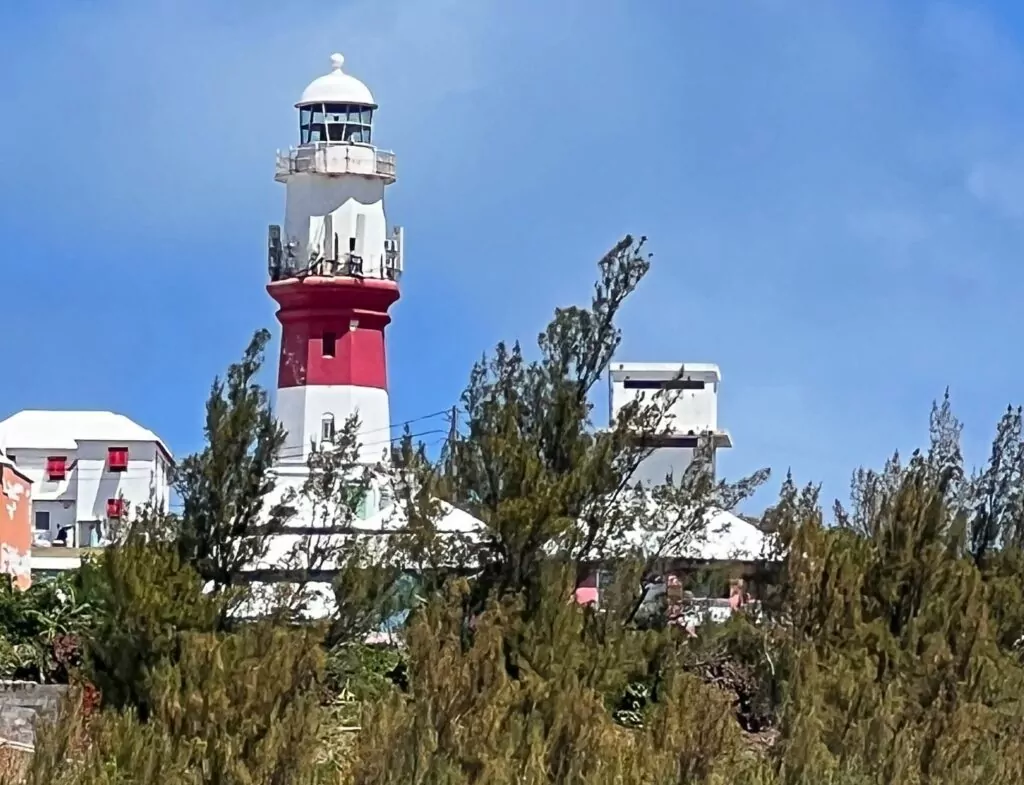
For its part, Bermuda was blacked out during the evening hours in an effort by the British to keep the Germans from spying on the island. Even the prominent St David’s Lighthouse, standing guard over the north-east side of the island since 1879, had been extinguished on this night. Indeed, all was black.
Thinking he was 12 miles from Bermuda, the captain ordered the ship to proceed in the darkness. He was mistaken. The island of Bermuda was actually only metres away.
The sickening sound of metal being torn open by the fangs of a rocky coral reef reverberated through the ship. Shuddering as she was torn open, the Pelinaion was soon lost.
All hands were saved as she sank within sight of land, but the once dutiful Pelinaion was now yet another silent victim of the ravages of World War Two.

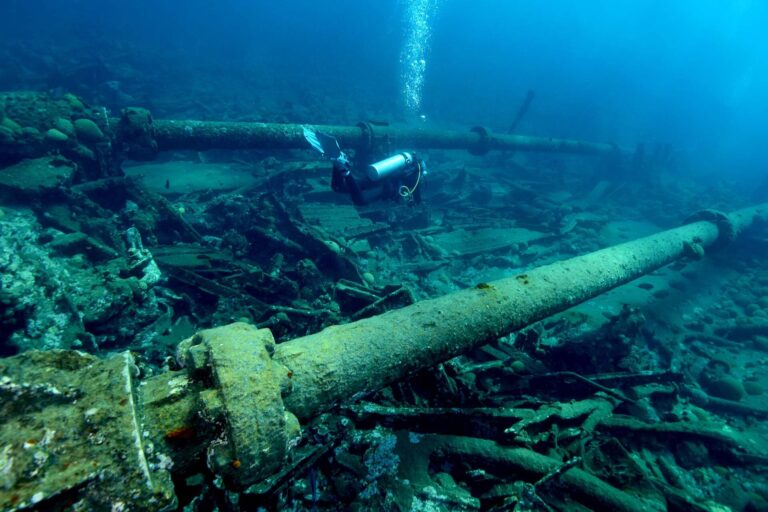
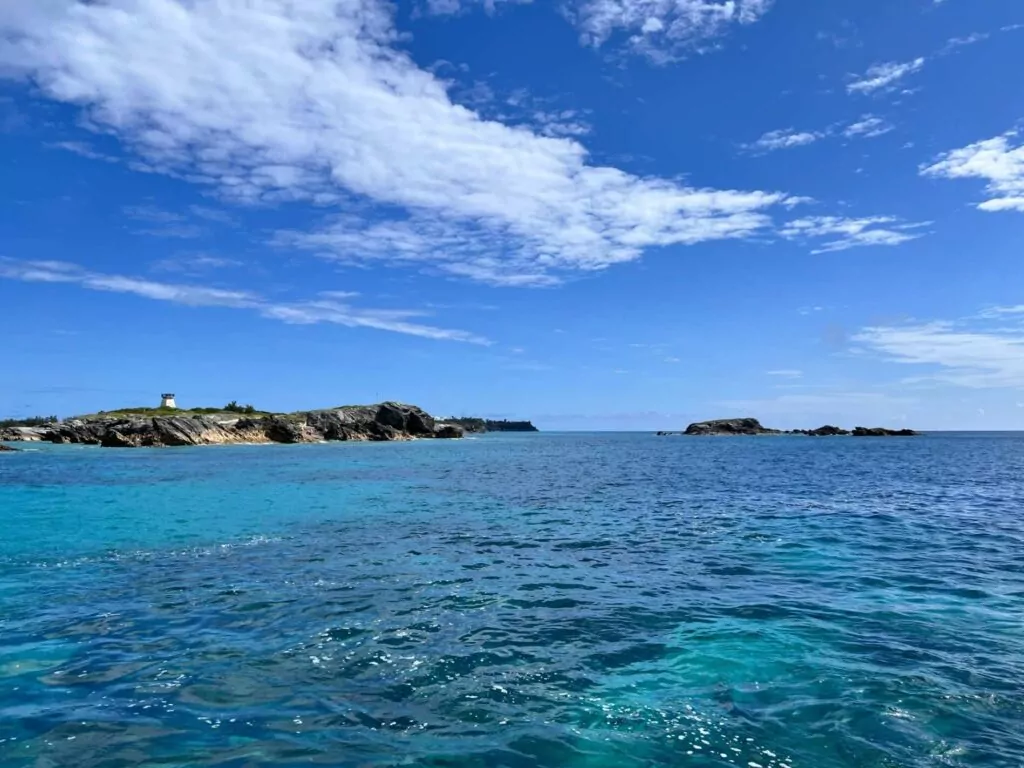
We suited up to dive the Pelinaion on a bright, summer’s morning within shouting distance of the St David’s Lighthouse, still on duty and flashing its light in a never-ending rhythm. With water temperatures approaching 27°C and visibility 25m, the torn-up wreckage of the cargo-carrier immediately came into our view.
We descended, always exhilarated by the prospect of exploring a shipwreck while also mindful of the tragic history of victims of war.
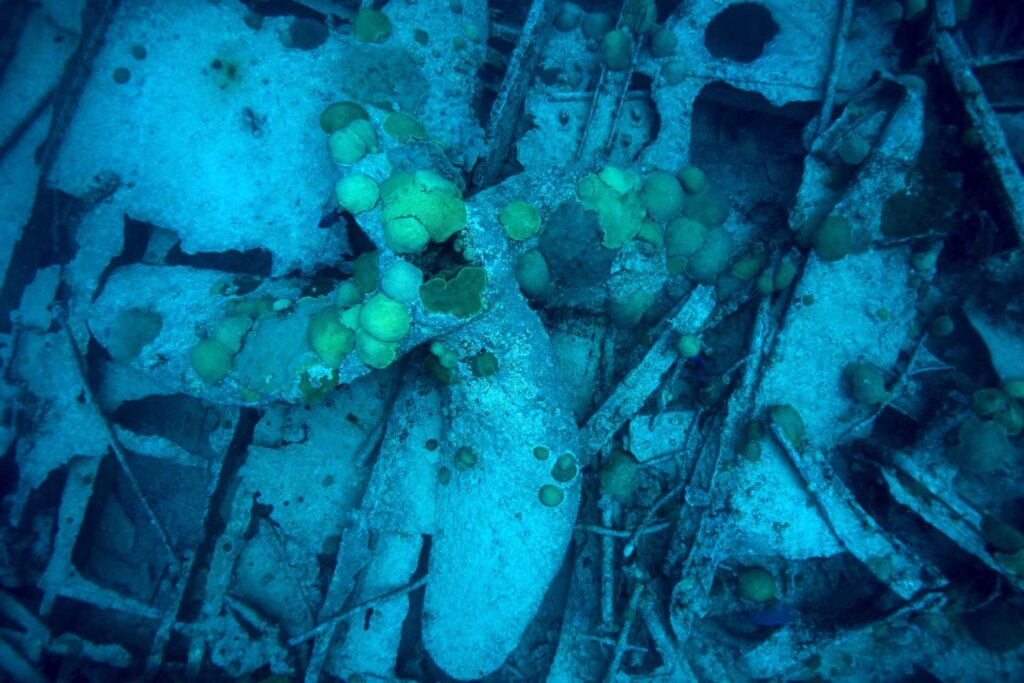
The Pelinaion site is a jumble of broken-up metal strewn across a large area of ocean bottom. Eight decades of hurricanes, winter storms and other activities have destroyed much of the recognisable portion of the ship.
One part of the wreck-site worth noting is the still intact A-frame, which then leads to the long propeller-shaft. Following this shaft into the deeper waters will bring divers to the actual propeller.
Lying in about 18m of water, the prop tells the story of the fateful night as one imagines its strain to continue turning and moving the ship forward once the impact with the reef had occurred.
Bermuda Triangle
The Pelinaion, an authentic shipwreck with a sad story, is but one of at least 300 documented shipwrecks in the waters surrounding the island of Bermuda.
The earliest discovered and identified wreck with an established date is the San Pedro from 1594. However, historical records and accounts of ships wrecking on Bermuda’s reef date back as far as 1543. Some divers have dubbed Bermuda the “Wreck Capital of the Atlantic”.
Lying at the northern tip of the “Bermuda Triangle”, but despite fanciful claims of UFOs, aliens or the lost city of Atlantis, the reason for the abundance of shipwrecks in these waters can be easily explained: the reef.
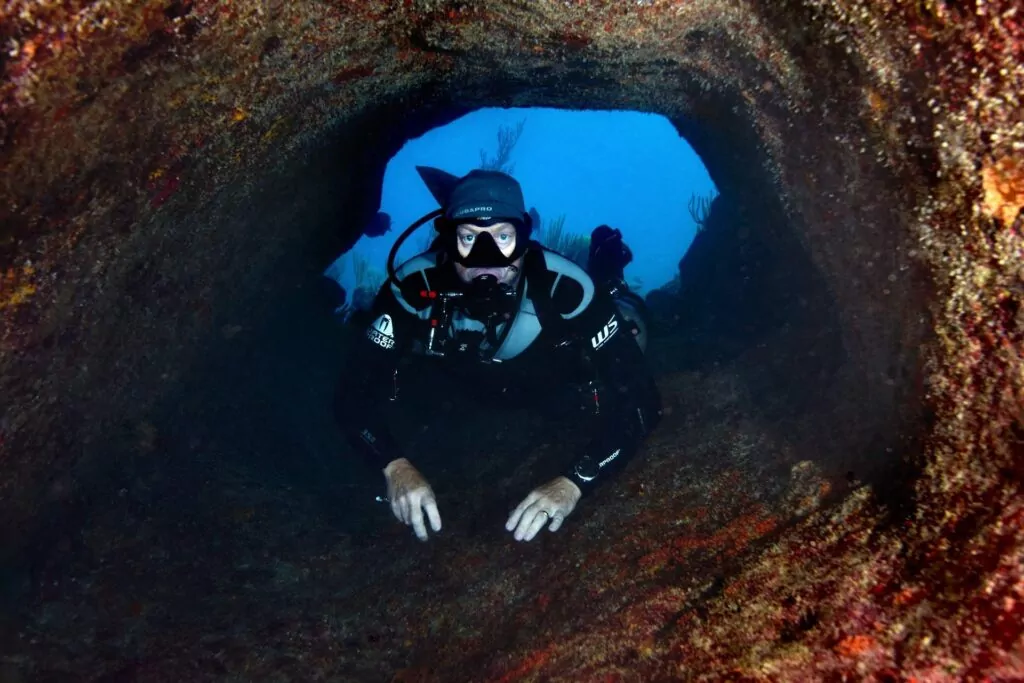
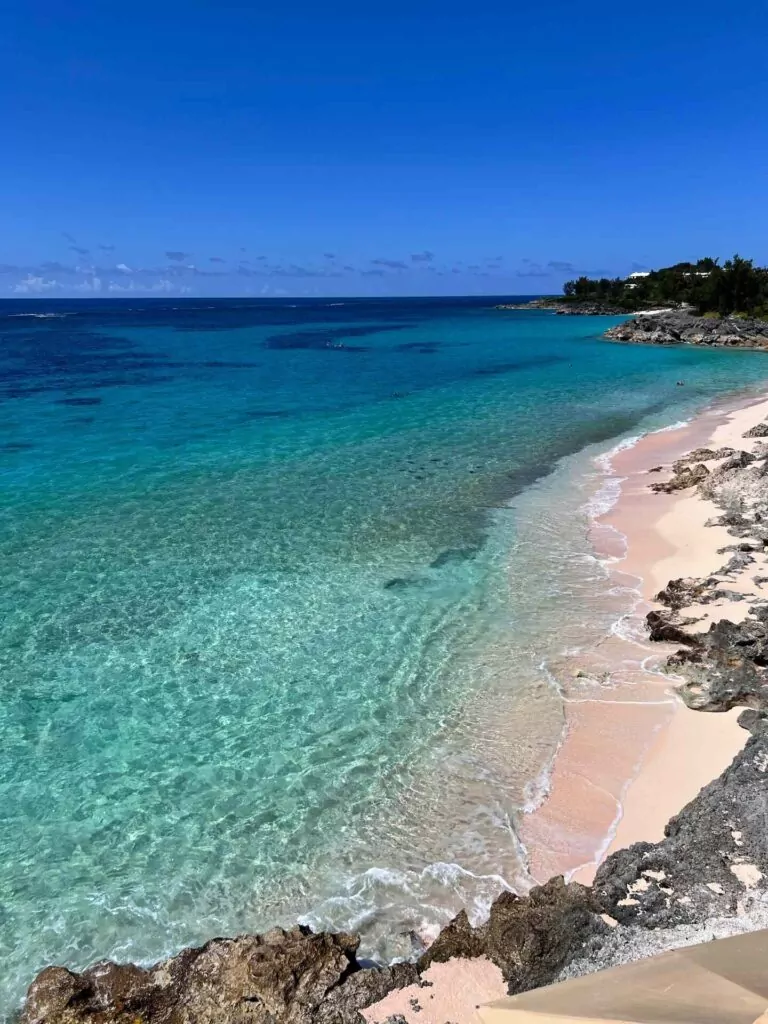
Bermuda’s fringing reefs often rise sharply from relatively deep water to within centimetres of the surface. These reefs extend far out into the Atlantic and have caused many a ship to meet an untimely end.
Other factors include the confluence of ocean currents, namely the powerful Gulf Stream, which not only bedevils ship captains but also creates unpredictable weather conditions. Hurricanes generating powerful winds and waves often ride the steering water and air currents to close proximity of the island.
It doesn’t take a UFO to sink a ship in Bermuda!
Rita Zovetta
We continued our small sampling of the wrecks of Bermuda by exploring the remains of the Rita Zovetta. She was built in 1919 in a Scottish shipyard in Glasgow and was a cargo steamer originally known as the War Gascon. Later converted to carry dry cargo, she was renamed the Rita Zovetta by her new owners in Italy.
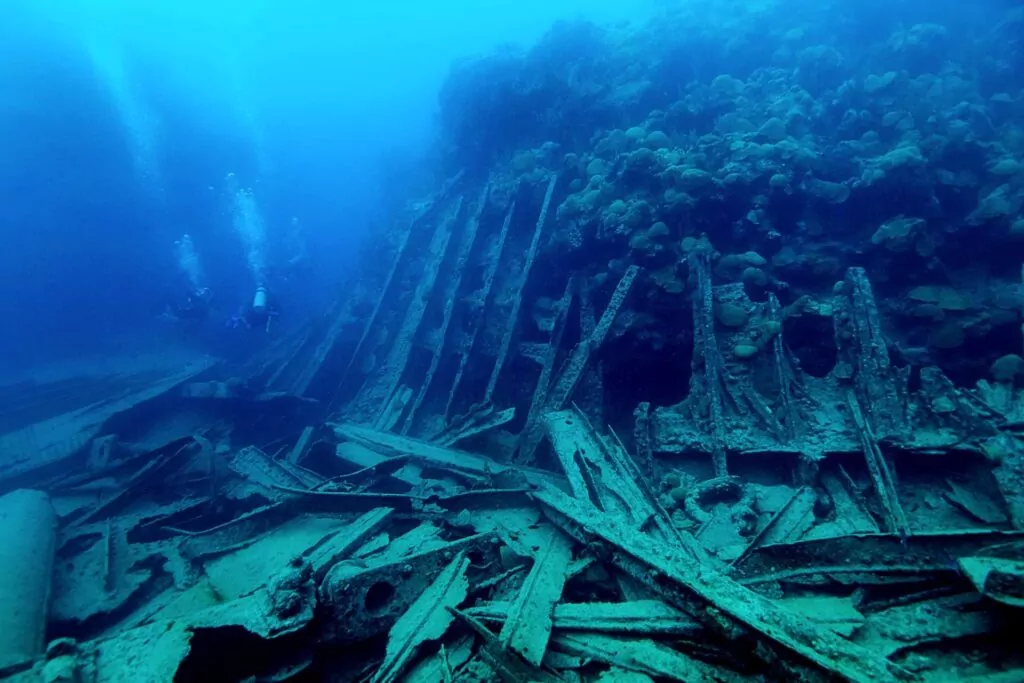
In 1924, as she was sailing from the port of Poti in Georgia on the Black Sea to Baltimore, Maryland, the Rita Zovetta ran aground in heavy winter seas on the north-east side of Bermuda, just off St David’s Lighthouse.
Fortunately nobody died in the sinking, and most of the cargo of manganese ore was offloaded before the ship fully sank on 13 February. After WW2, the wreckage was heavily salvaged for scrap metals.
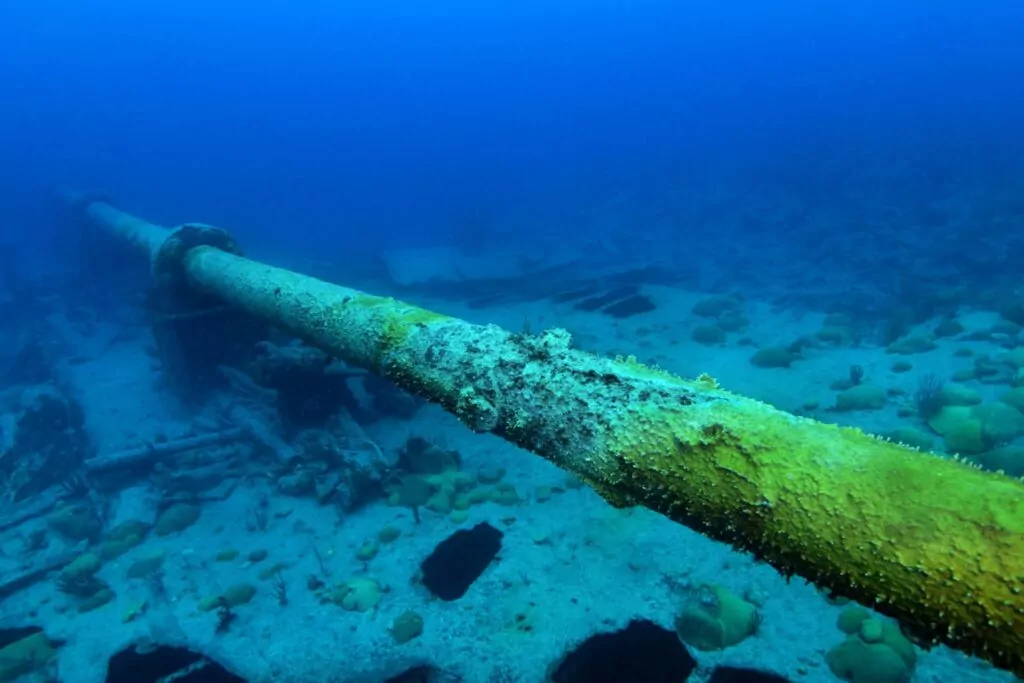
The Rita Zovetta lies in 6-20m of water near the Pelinaion wreck. The ship is very broken up, with a wide debris field, but the stern and the propeller-shaft remain intact. The engine, winches, chains and boilers can all be found among the debris.
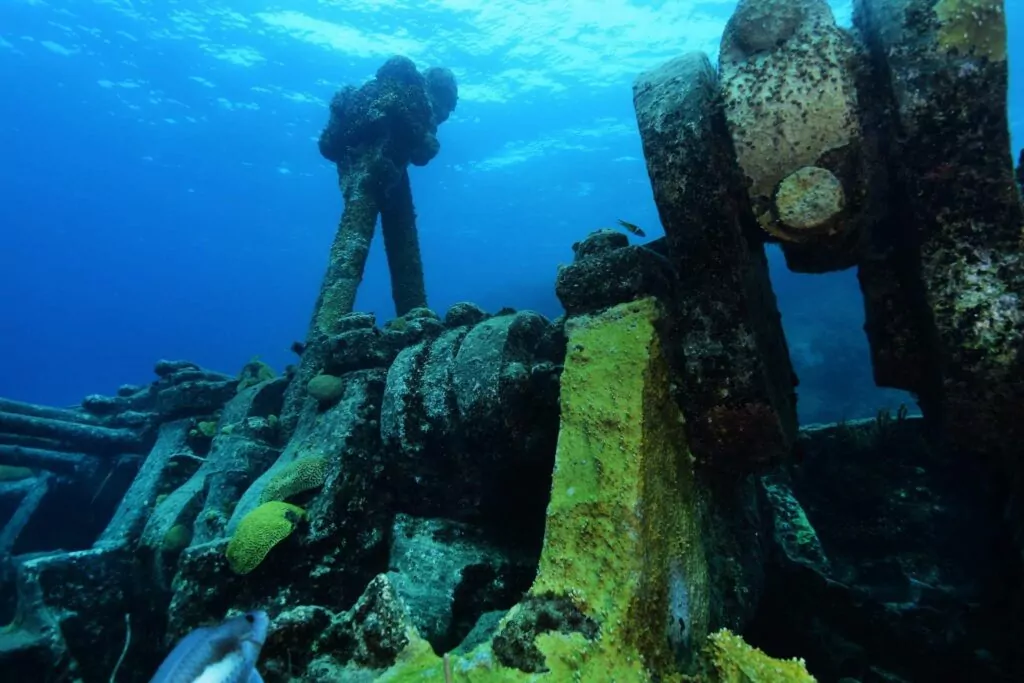
As we explored the wreck, we came across a handful of invasive lionfish, along with numerous parrotfish and sergeant-majors boldly protecting their egg-masses.

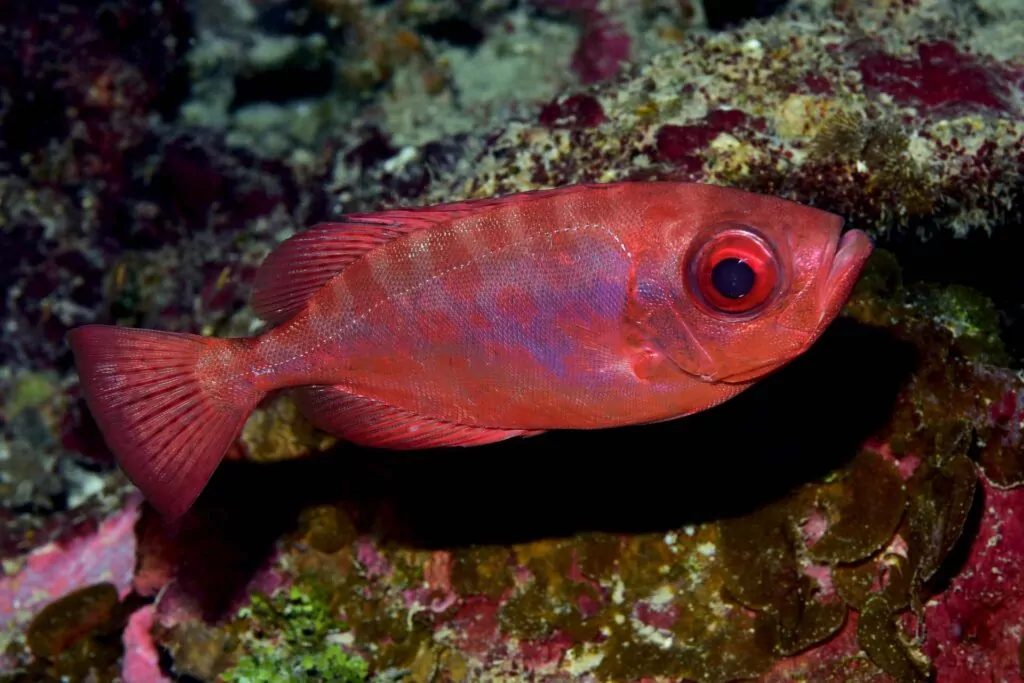
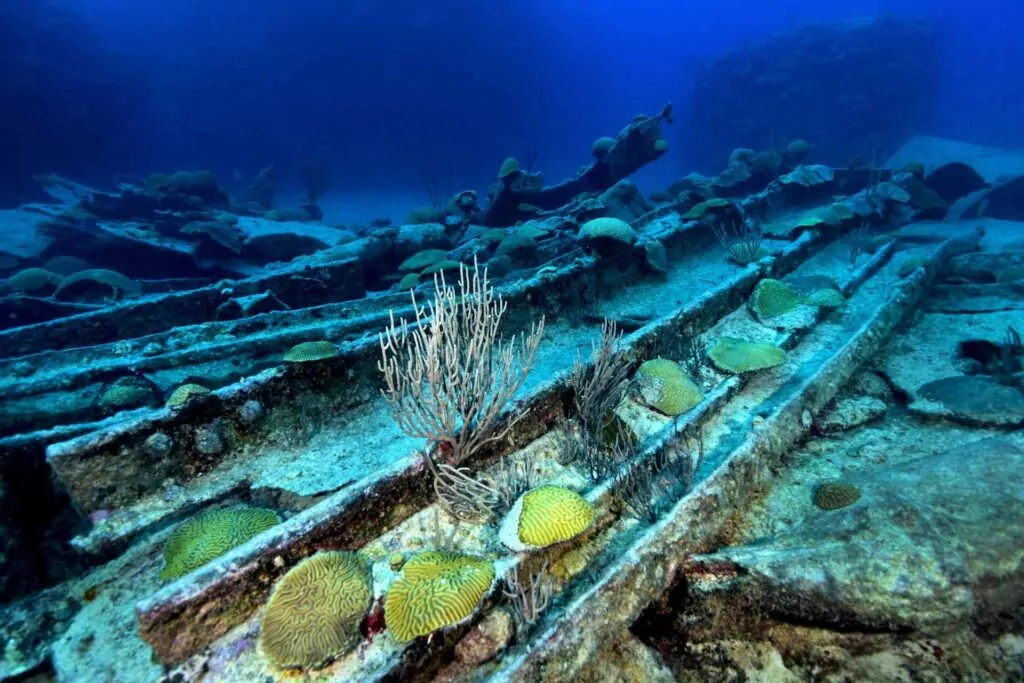
In some of the darker recesses of the wreckage we found a few squirrelfish and a bigeye cardinalfish. The wreck has become a home to these species, and the hard surfaces also provide a solid substrate for corals to grow.
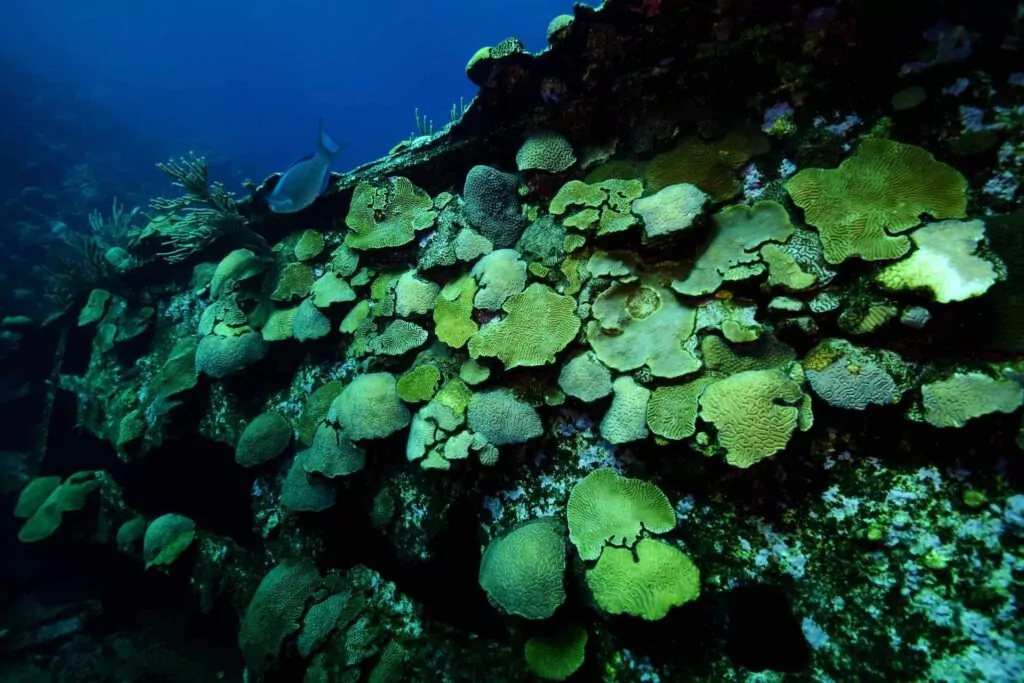
Here, as on all of the wrecks we explored, it is the brain coral that seems to be the dominant species, although other corals are thriving as well.
The Taunton
Another wreck with a story to uncover is that of the Taunton. Built in Copenhagen in 1902, she was carrying a cargo of coal from Norfolk, Virginia into St George, Bermuda when she ran into a fog bank on approaching the island on 24 November, 1920.
Despite the captain’s best efforts she struck the northern reef and sank with no loss of life.
Because the ship lies in shallow water with an average depth of only 6m, we explored it as a second dive of the day. The bow is very prominently intact, and we also enjoyed swimming over the steam engines and boilers, which stood solidly on the ocean floor.
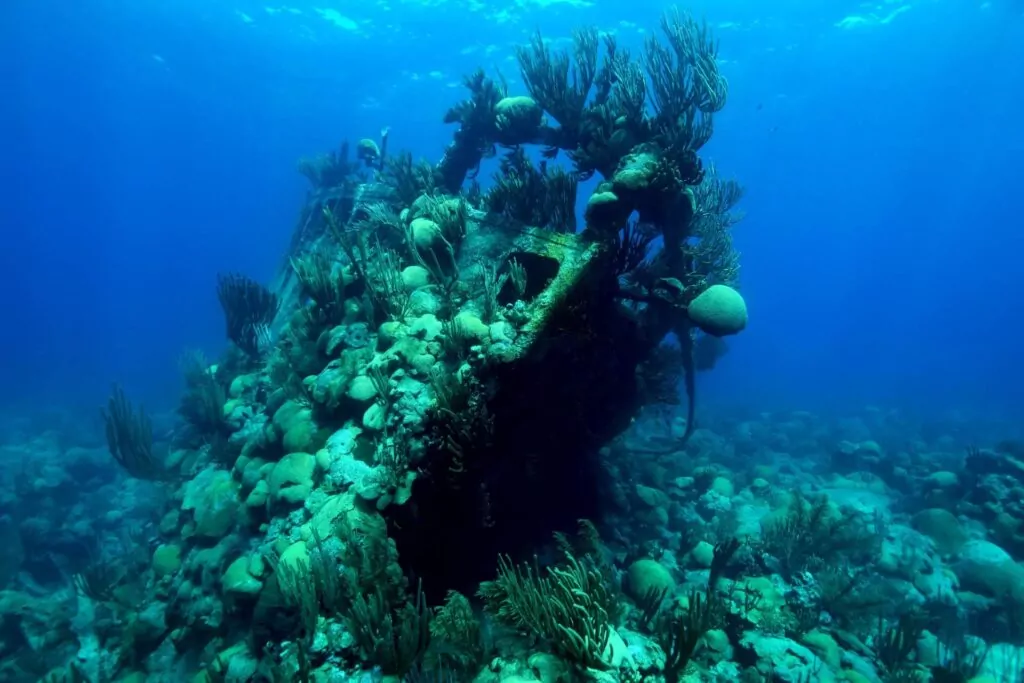

The ship’s bell was salvaged by marine archaeologist Teddy Tucker and later used as a prop in the popular movie The Deep. It is now on display at the Gibbs Hill Lighthouse Museum.
Diving on the wreck we came across pockets of darkened sand and lumps of coal, still in place more than a century after the sinking! These remnants of the cargo carry the story of the ship to a new generation of explorers – the scuba divers who visit Bermuda’s shipwrecks.
Cristobal Colon
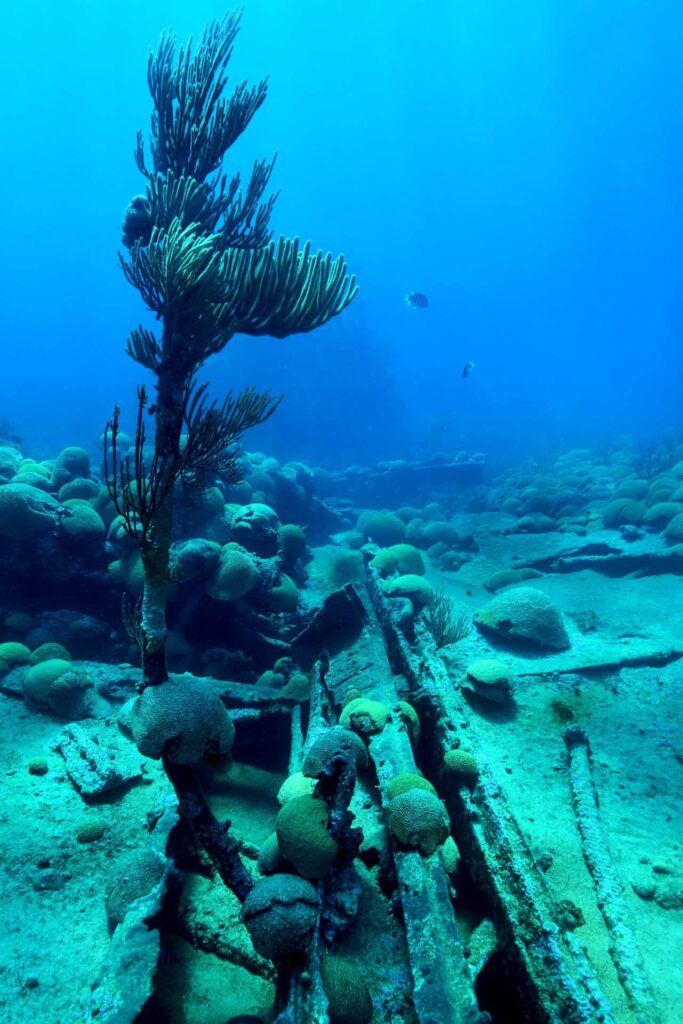
Perhaps the most popular wreck with divers in Bermuda is that of the Cristobal Colon, a 150m luxury liner that crashed into the North Rock reef system in 1936. The captain had mistaken a communications tower at North Rock for the Gibbs Hill Lighthouse and struck the reef in the confusion.
On board at the time were only the 160 crew, because the ship had recently completed a voyage from Mexico to Spain with 344 passengers on board, and was now heading back to Mexico.
The the once luxurious ocean liner remained upright and mostly out of the water for many months afterwards. Damaged beyond repair, she became the target of looters, who pillaged numerous items from the ship.

To this day, artefacts from the Cristobal Colon can be found in homes and establishments around the island. The taking of items from the ship was illegal, and several Bermudians were arrested and tried. According to one account, one defendant gave this as his defence in court: “Why would I steal a Spanish radio when I can’t speak Spanish?”
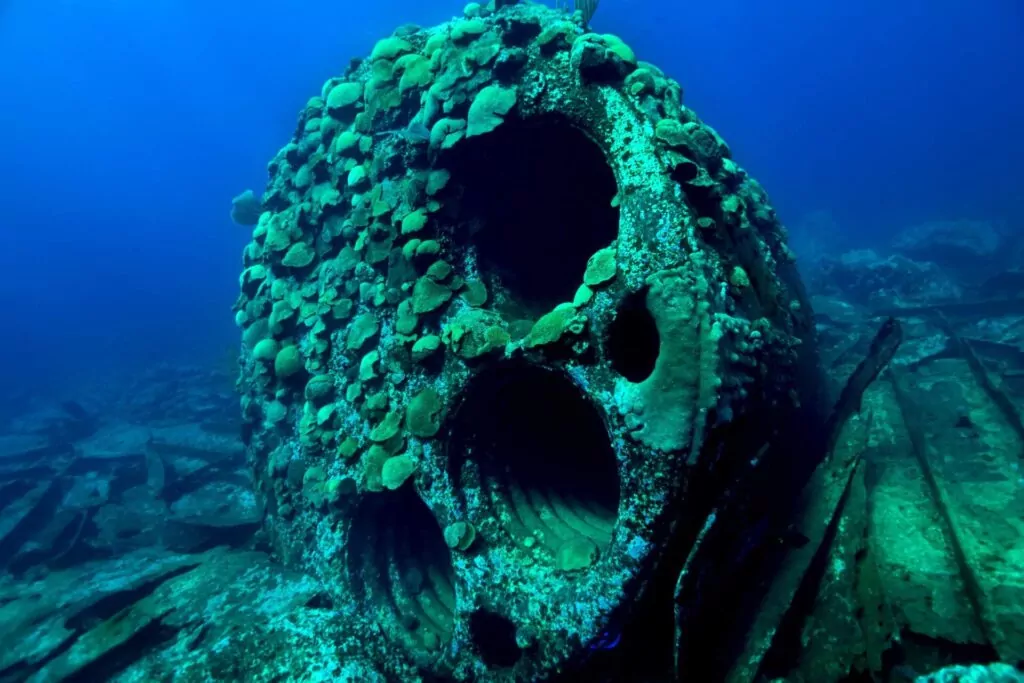
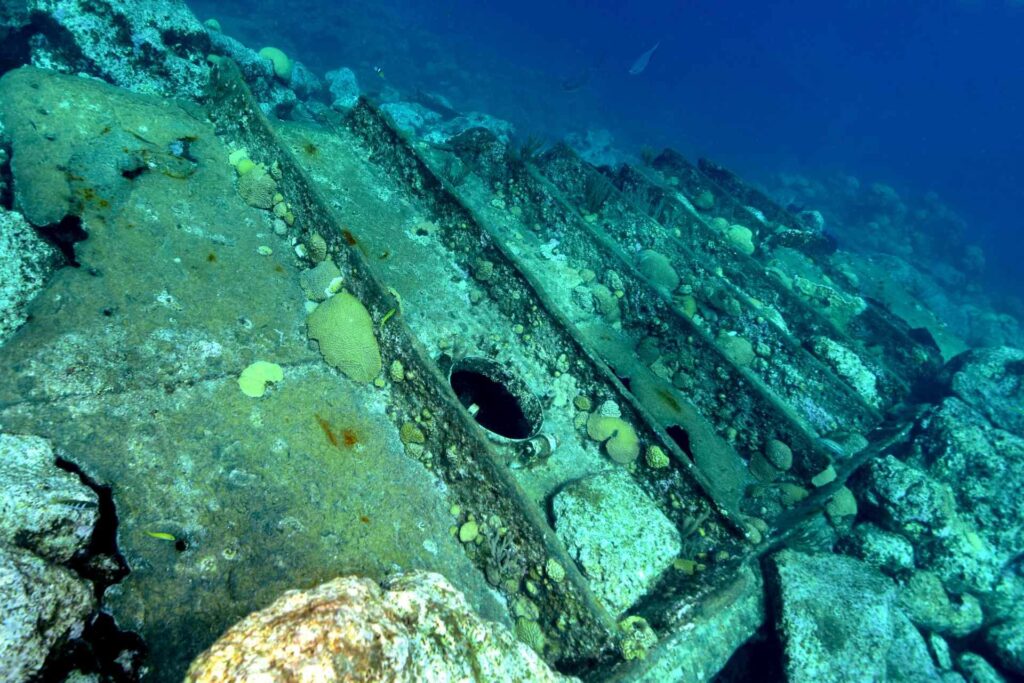
The Cristobal Colon was used by British and US forces for target practice during WW2, and eventually sank. Over time, and as a result of the target practice, the wreck is very much broken up and spread over 9,300sq m of seabed. It lies in water between 5 and 18m deep.
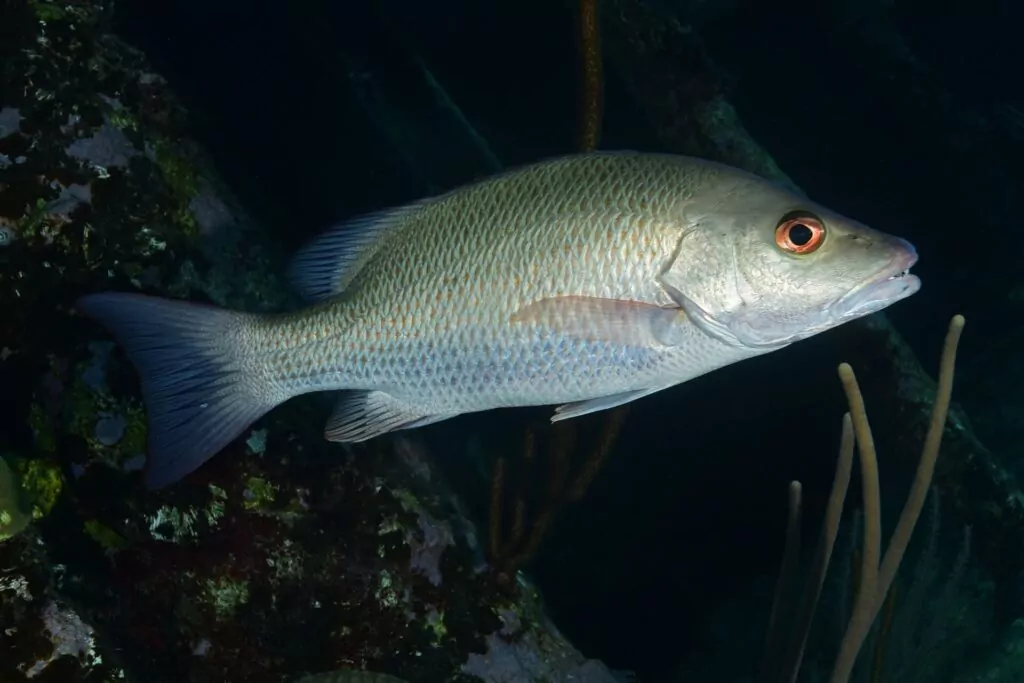
As we explored this wreck, we were able to see the ship’s engines, steam turbines and its twin propeller-shaft. This is an ideal wreck for divers of all levels, who will not only spot parrotfish, barracuda, snapper and damselfish, but will swim over and among a significant part of Bermuda’s maritime history.
Other shipwrecks
There are hundreds of wrecks to explore in these waters, and many more yet to be discovered.
Some of the most frequently visited by divers include L’Herminie, a British warship from 1824; the Mary-Celestia, a Confederate blockade-runner that sank in 1864; and the Niobe Corinthian. This floating casino had been converted from an oil-tender, and was sunk as an artificial reef in 2017 after the government took possession of the derelict ship with its chequered history.
As we explored the wrecks and reefs of Bermuda, one question came to mind. Given that the winters are cool there (air temperatures drop to an average of 16°C in January and February, with water temperatures dipping into the 14-17°C range, prompting many winter divers to use drysuits and thicker 7mm suits), how do the hard corals survive?
We know corals exist in a narrow range of temperatures, and although many struggle to survive in waters heated by rising climate conditions, we wondered about the lower end of their temperature tolerance.
In Bermuda, we found the reefs of hard corals to be quite healthy. Unlike so many other areas in the nearby Caribbean and Florida, these corals are thriving.
BIOS coral probe
Through discussions with dive-operators and local Bermudians, we learned that the Bermuda Institute of Ocean Sciences (BIOS) is conducting research into the genetics of the island’s corals, seeking clues to their inherent resiliency and perhaps finding ways to populate reefs around the world with species that can better tolerate large temperature swings. We eagerly await the discoveries that BIOS might make.
Bermuda is a captivating island with a rich maritime treasury of sunken ships waiting for divers to explore. And although the legends of the Bermuda Triangle might amuse and intrigue, it is the natural makeup of this island that has contributed to this legacy.
Still, questions and mysteries and unsolved tragedies remain. We dug a bit deeper into this aspect of Bermuda’s legendary waters by completing a PADI Bermuda Triangle Diver speciality certification.
At first, we anticipated this to be a gimmick but as we went through the course offered by Dive Bermuda we learnt the real reason behind Bermuda’s shipwrecks, we were exposed to some of the mysteries that still remain, and we gained a much better appreciation for the reefs, wrecks and archaeology of the island.
We have just scratched the surface.
Also by Salvarezza & Weaver on Divernet: Shipwrecks of the southern Sea of Cortez, Long weekend diving the Dominican Republic, Portal to Tubbataha, Jupiter: Out of this world, Where the water meets the sky, Vanishing frontier