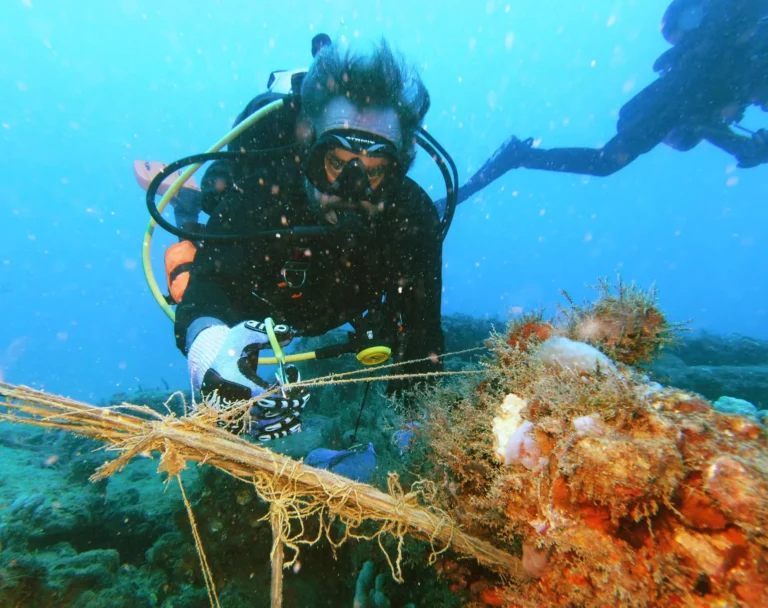
JOHN CHRISTOPHER FINE was out doing right by the ocean with some 400 other divers off Florida’s east coast on Earth Day
Early-morning stillness was interrupted by divers gathering at the Riviera Beach marina. Organisers of the third annual Reel It In For The Reefs clean-up dives passed out long-sleeved shirts emblazoned with the logo on the front and those of 27 sponsors on the back.
It was the Friday after Earth Day, and volunteers were embarking onto dive-boats along the east coast of Florida, from Jupiter to Key Biscayne. More than 400 of them were diving with a purpose: to remove fishing-line and debris that posed a danger of entanglement to turtles and damaged reefs.
The event had been organised by Anna Bennett, a veteran of 35 years of diving and a former dive-boat owner but now director of operations for the National Save the Sea Turtle Foundation.
Anna realised that something had to be done in 2024 when she encountered a turtle dragging a dead flipper entangled in fishing-line.
The turtle was rescued and brought to Loggerhead Marinelife Centre in Juno Beach, where the flipper was amputated by veterinarians. It was later successfully released back onto its reef.
That same year Anna organised eight dive-boats with 150 diver-volunteers who removed 340kg of debris and line. The next year the event drew 400 divers on 26 boats tallying 545kg trash and 154km of monofilament.

“We established a relationship with Coastal Connections, which had a fishing-line recycling program,” says Anna. “The monofilament was cleaned and dried in Vero Beach, then shipped off to be recycled.”
25 dive-boats
This year’s event saw 25 boats carrying more than 400 divers. The tally this time was more than 725kg of trash, including line that Anna guesses will measure more than be over 190km when someone is able to check that.
“Dive-boats donate every diver’s space free,” says Anna. “We help with stipends to pay for hard costs like fuel and captains. We have organisers on every dive-boat to give briefings and tally debris.”
It is clear from the enthusiasm and participation levels of divers that the event is one that they enjoy. Volunteers feel a great sense of accomplishment by helping to prevent entanglements of turtles and other marine life. As well as shirts, an after-dive partywith free food is held that evening so that results can be announced and a prize raffle held.
Marika Weber, the designated organiser on the boat I was on, is a volunteer with turtle rescue and read from a carefully prepared briefing document. Organisers always have to emphasize that the goal is to remove harmful debris and fishing-line but to do the environment no harm in the process.
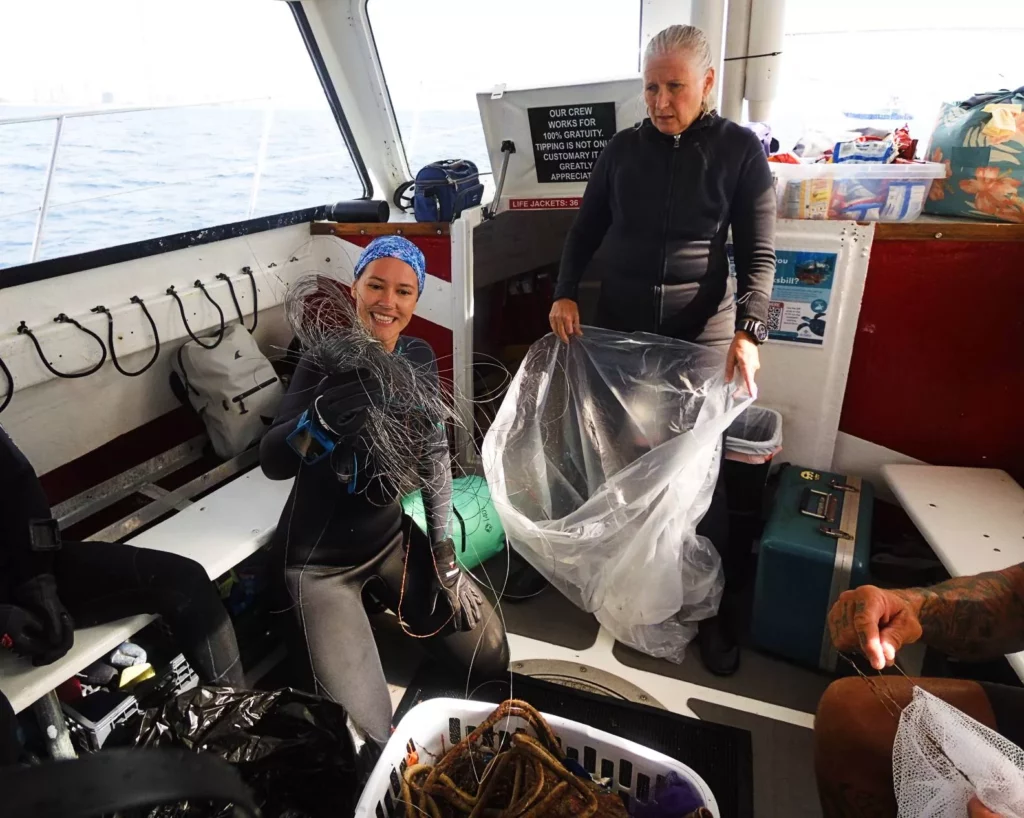
“If marine life has overgrown the debris then leave it in place,” she explains. “Use your own judgment. If removing it will harm the reef,do not remove it.
“Cut monofilament fishing-line into sections. We have provided mesh bags, shears and medicine containers for hooks. We have gloves for any that do not have them,”
The same briefing was given by volunteer organizers on each of the participating dive-boats. They are chosen from among marine-biology students, or are those who have worked with turtle rescue or had experience with the National Save The Sea Turtle Foundation.
Turtles benefit
Our boat left the dock and headed south of the Palm Beach Inlet. Divers were dropped on a24m-deep reef called Double Ledges. Fishermen get their hooks and lures caught on reefs, and when they cannot them they cut the line, leaving long trails behind.
Waves and currents move the line until it settles onto the reef, often tangling in coral and sponges. Turtles that need to come to the surface to breathe can swim into this line and get tangled, often making it impossible for them to ascend.
“Earth Day coincides with turtle mating season here along Florida beaches,” said Anna. “It is good to remove lines because turtles are numerous – they come here to mate, then lay their eggs on the beaches.”

When divers surfaced their mesh-bags were emptied into tubs, hooks carefully dealt with and line segregated from other debris. The volunteers recorded the debris by category and a second dive was briefed by our divemaster, who would this time lead the divers over shipwrecks sunk as artificial reefs.
These fish havens attract a lot of fishing interest, and the steel wreckage also snags hooks and lures. Sometimes ghost-lines continue to catch fish and certainly pose a danger of entanglement.
Divers cut free and removed a great deal of monofilament that had tangled in the wreckage. When brought aboard the boat it almost filled a bin. Rusted hooks were carefully removed and stored safely.
“Our goal is to have every diver devote ten minutes on every dive to cutting and removing fishing-line from reefs,” said Anna. “We do it to raise awareness.”
The next Earth Day clean-up dives will be on Friday 23 April, 2027. To find out more or to participate in any of the programmes visit Save The Turtle or Reel It In For The Reefs sites.
Also on Divernet: Forgotten heroes, overlooked dive business
Impact calculator to motivate clean-ups
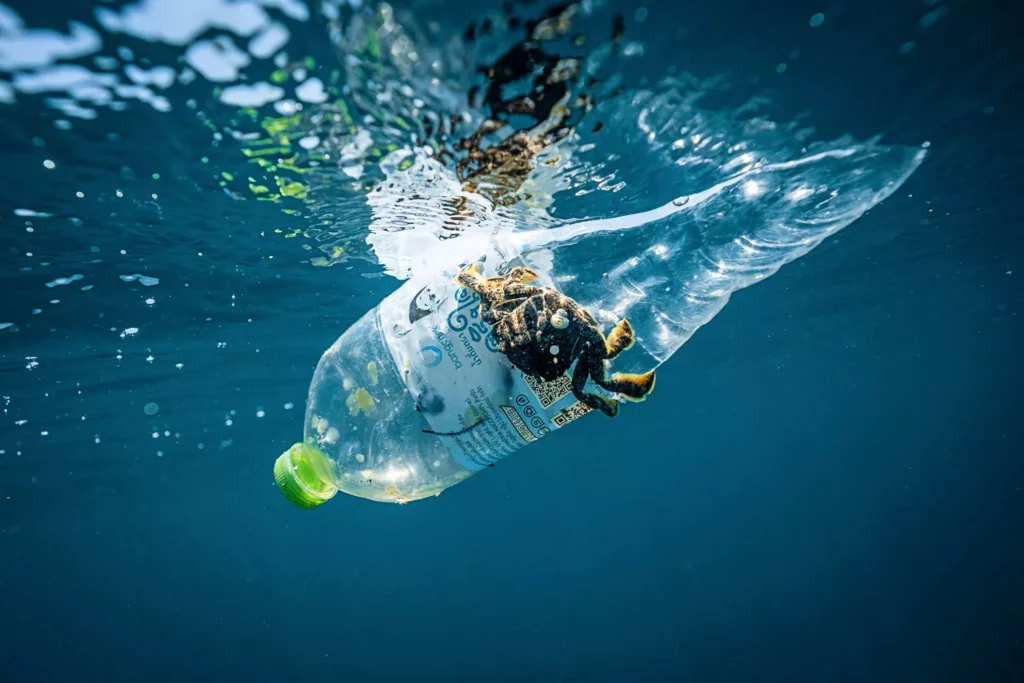
A free online tool called the Wildlife Impact Calculator has been launched to encourage divers and others who volunteer to clear seabeds, beaches and inland waterways of plastics waste.
For those who keep count of the rubbish you collect by category, the calculator provides a quick guide to how many marine animals have been protected through your efforts.
The Washington-based Ocean Conservancy came up with the idea. “Every piece of plastic cleaned up from our beaches and waterways is one less threat to the life of a marine animal,” says its senior conservation clean-ups director Allison Schutes. “Our calculator shows just how much of a difference a clean-up can make for these amazing creatures.”

The tool incorporates more than 20 types of plastic pollutant found inside marine animals, including fishing debris, bottle caps, lids, straws, utensils, bottles, plates, balloons, bags, food wrappers and fragments. Up to 9,999 pieces can be reported for each type.
These types of plastics are commonly found by volunteers taking part in Ocean Conservancy’s International Coastal Cleanup over its 40-year history. The Wildlife Impact Calculator is based on peer-reviewed research led by Ocean Conservancy scientists and published last November in Proceedings of the National Academy of Sciences.