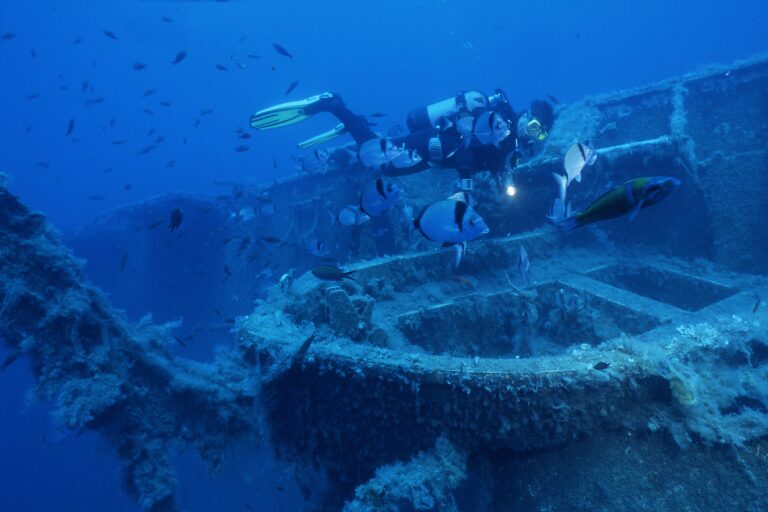
With gin-clear water, year-round sunshine, direct flights and one of the world’s top ten rated shipwrecks, Cyprus has a lot to offer, and whether you choose north or south of the border, you can be assured a warm welcome.
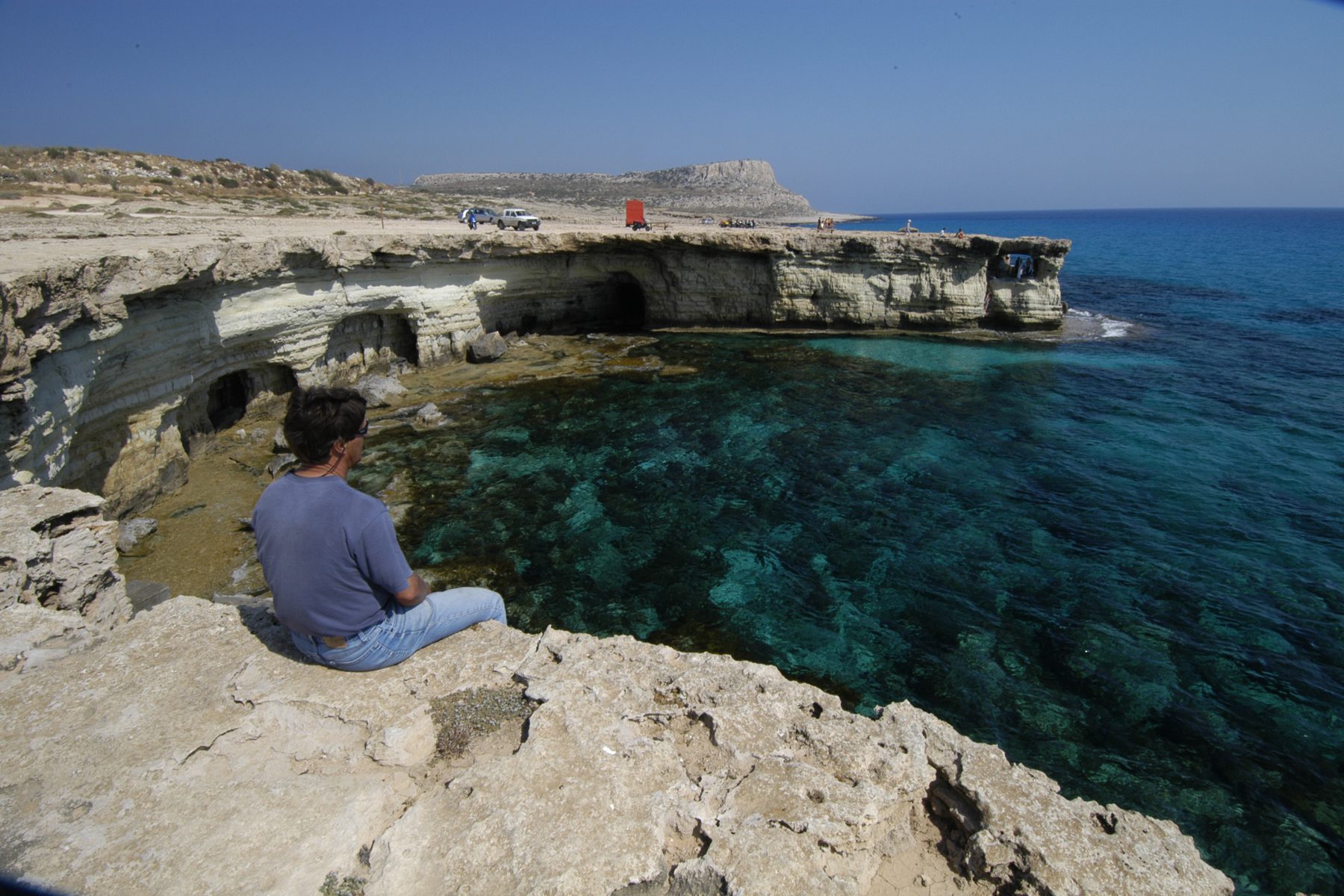
In fact, if you add it all up – you drive on the same side of the road as the UK, use three-pin British-style plugs and beer costs not much more than a pound – you have just about the perfect short-haul dive destination.
History of Cyprus
Cyprus is the third-largest island in the Mediterranean after Sicily and Sardinia. It’s an island full of contrasts, with fertile valleys full of citrus and olive trees, mountains stretching some 2,500 metres and long sandy beaches interspersed with stunning sea cliffs and sheltered bays.
Situated 40 miles south of Turkey, 60 miles north of Syria and 250 miles north east of Egypt, it stands at the crossroads of Europe, Asia and Africa. Its strategically important location has led to the island being fought for by the Phoenicians, Assyrians, Egyptians, Persians, Romans, Crusaders, Venetians, Ottomans, British and, more recently, Turkey and Greece.
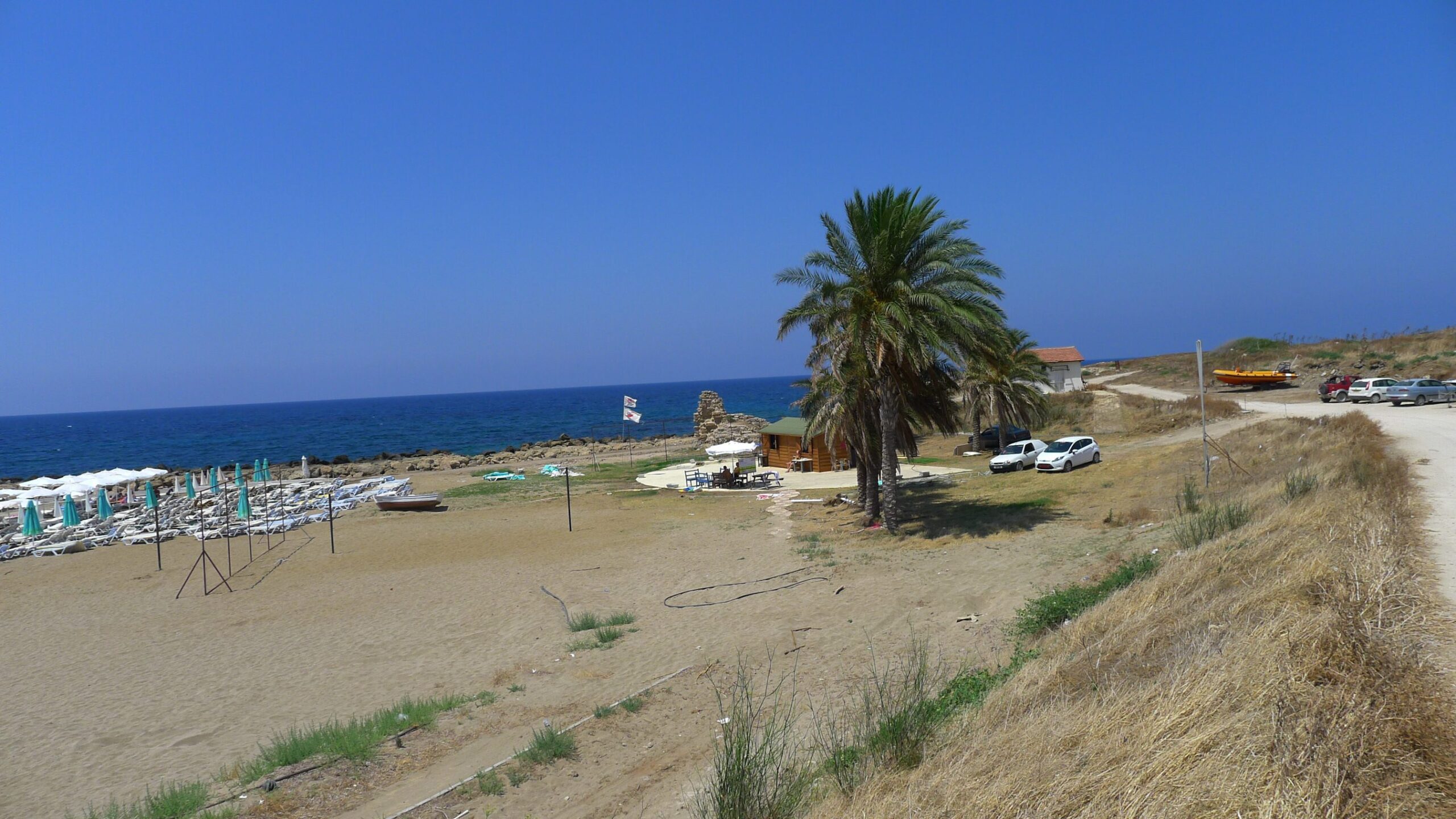
Britain ruled here from 1878 right through to 1960, when a Greek (NOCF) led liberation struggle (started in 1955 by army colonel Georgious Grivas) succeeded in gaining an independent Republic of Cyprus. Importantly, Britain retained two large Sovereign bases situated around Dekelia in the south east and Akrtini-Episkopi towards the west (on the road to Paphos).
Turks and Greeks had lived in relative harmony under British rule, however, Turkish ministers found the new power-sharing constitution unworkable. They called for Taksim (partitioning) as their communities increasingly came under attack from Greek Cypriots. The UN sent in peace-keepers to try and stabilise the situation, but things didn’t improve and the Greek military, impatient for a solution, launched a military coup against their own President Archbishop Makarious in July 1974. This gave Turkey the excuse they were waiting for and they invaded, taking control of around 37 percent of the northern part of the island and effectively splitting the country in two. Until fairly recently, the border between the two countries remained closed, but in 2003, it reopened as the prospect of entry into the EU softened relations.

Arriving at Dive Site
The good news is that the border remains open today and it is relatively easy to dive both on the Greek south and Turkish north. So, which has the best diving, and where should you base yourself?
Personally, having been to the north and south several times now, I’d base myself in the north and make one or two day trips south to dive on the Zenobia and perhaps the south’s other main wreck, the Cricket.

The north has much more of a holiday feel to it. Tourism is very important to the economy and really being developed and promoted. There are over 200 hotels and B&Bs. UK travel companies are really pushing the north and offering some amazing deals.
North Cyprus, although developing quickly, still somehow has a more laid-back feel to it than the south. Some of the dive sites are definitely richer in fishlife than the south. There’s no need to hire a car, as the dive shops will collect you from your hotel.
The majority of the dive sites are found within a 20 minute boat ride from the main town of Kyrenia. Built round the harbour and set against the backdrop of a stunning ridge of mountains which runs parallel to the coast for most of the island, it is home to the oldest surviving shipwrecks in the world.
The Wreck of Hellenistic Merchant Ship
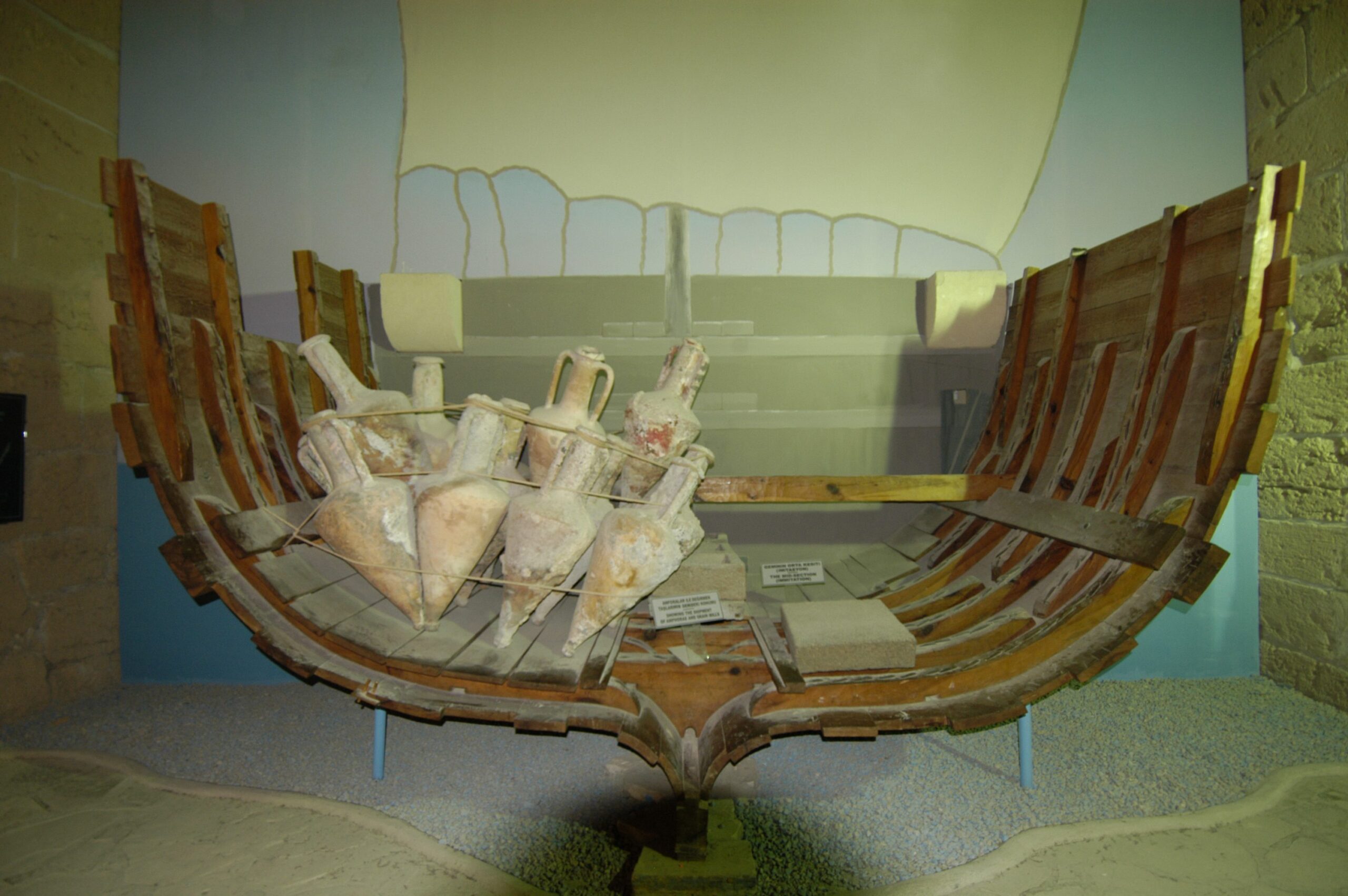
The Hellenistic merchant ship is thought to have foundered just outside Kyrenia harbour in 300BC. Discovered by a local sponge diver back in 1965, it was successfully salvaged by the university of Pennsylvania and today is housed safely in Kyrenia Castle along with much of its preserved cargo of amphora.
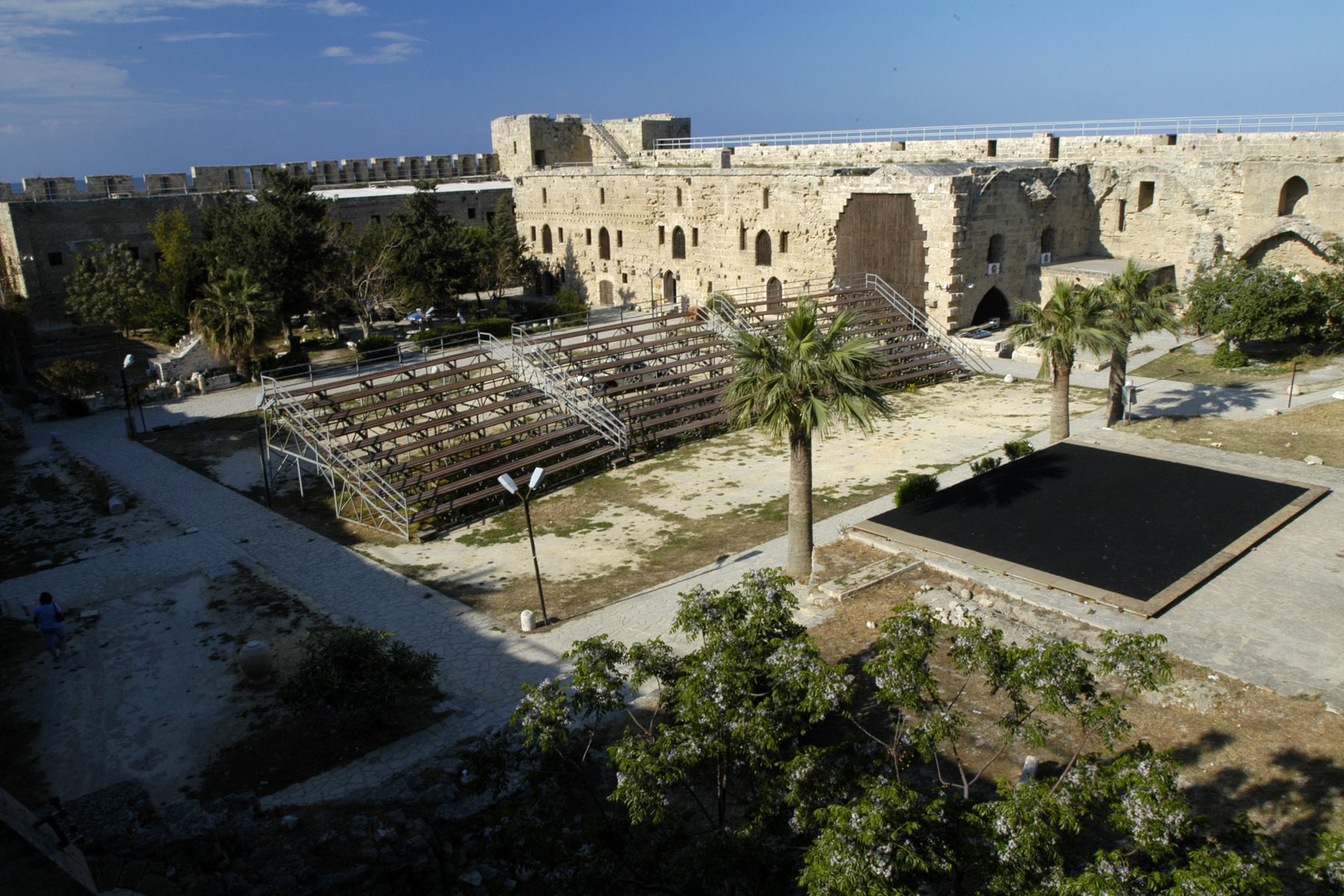
You can dive on the site where the ancient wreck was raised, but it’s best to visit the museum before you make the dive. There you’ll be able to see the salvaged ship’s wooden timbers, its cargo of amphora and photographs showing the salvage operation and some of its cargo, which included almonds, wine and olive oil from the Greek islands of Samos Kos and Rhodes.
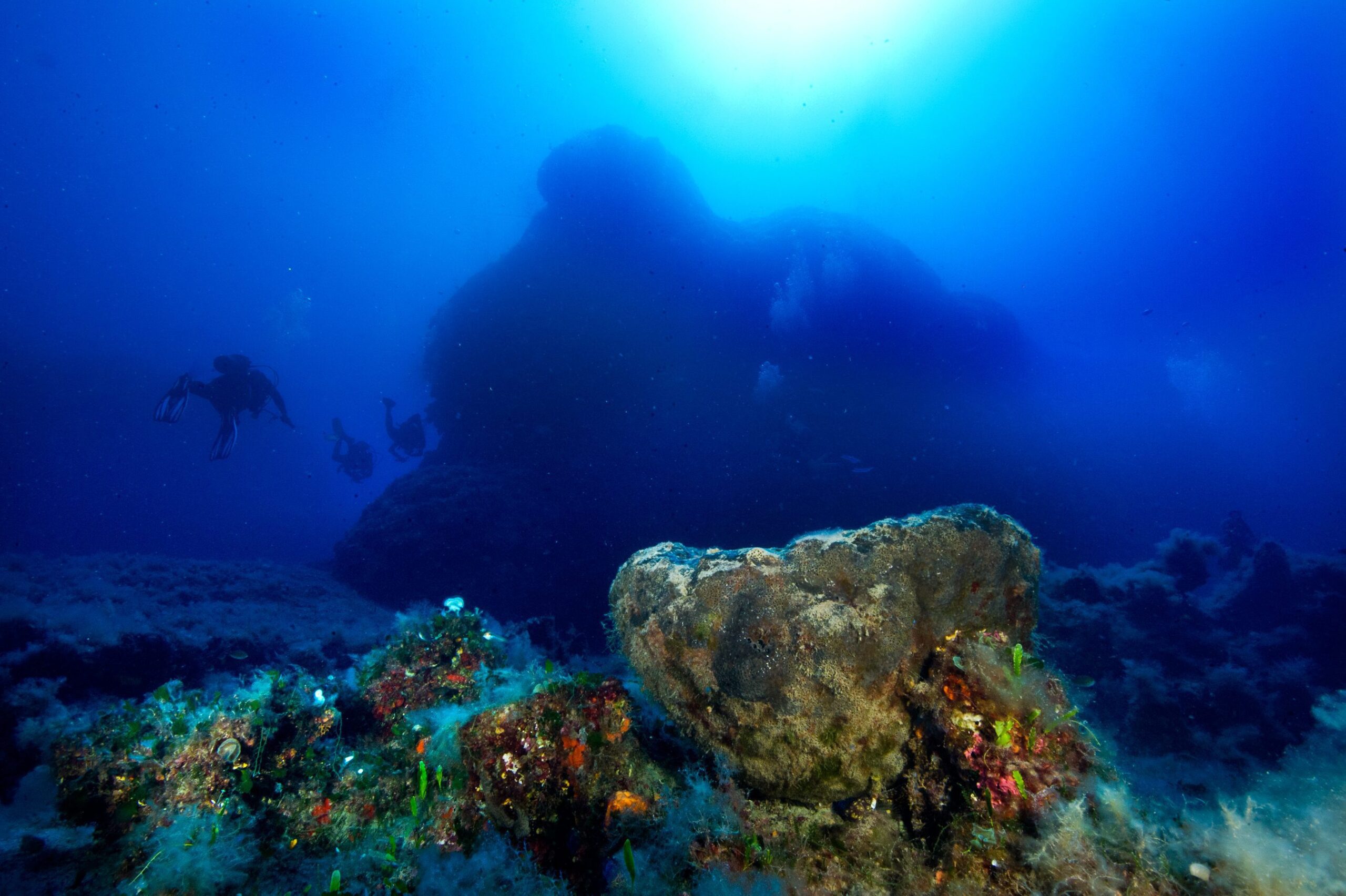
Zephyros is one of my favourite dives, along with the Wall and Paradise. Huge boulders, gullies and overhangs create a great backdrop to the dive, where the reef drops away quickly from 20-32m. A large anchor lies half hidden under one of the boulders. While the reef top is covered in Neptune grass, the walls are encrusted with red algae, yellow sponges and clusters of orange and green coral. Groups of parrot and schools of sea bream and little rainbow wrasse add splashes of rich colour to the background of green. Octopus, moray eels and grouper too can be found and seem relatively relaxed with divers.
Several species of nudibranch could be found grazing on the sea grass, including the dotted sea slug, annulated sea hare and black-spotted aelidian. Slipper or locust lobster with their brilliant orange and purple colouring hang upside down under reef ledges.
The Wall right next door to Zephyros drops away fairly steeply, with impressive scenery and often exceptional visibility. In summer, amberjack and tuna can be seen and huge scorpionfish are often seen all year round.
Paradise is a deep dive with the reef top starting in 24m and dropping to between 40-43m. Huge boulders create fantastic scenery similar to Zephros and several resident striped grouper and moray eel can be found, and on occasion, turtle.
Another dive worth a mention is Freds. Freds is close to Kyrenia harbour and named after a local instructor who used to feed friendly grouper. The feeding doesn’t really happen anymore, but there is still a grouper presence today. Not too far away is the wreck of a Wellington bomber that crashed to the east of Kyrenia close to the power station. The cockpit is the most-intact part of the wreck and is found in just over 20m.
Exploring The Karpaz Peninsula
If you really want to get away from it, there are some great dive sites along the Karpaz peninsula. Sites such as Secret Rock, Deep Cave, the Arch, the Karpaz shipwreck, St Andrews Reef and the Great Canyon all have appeal.
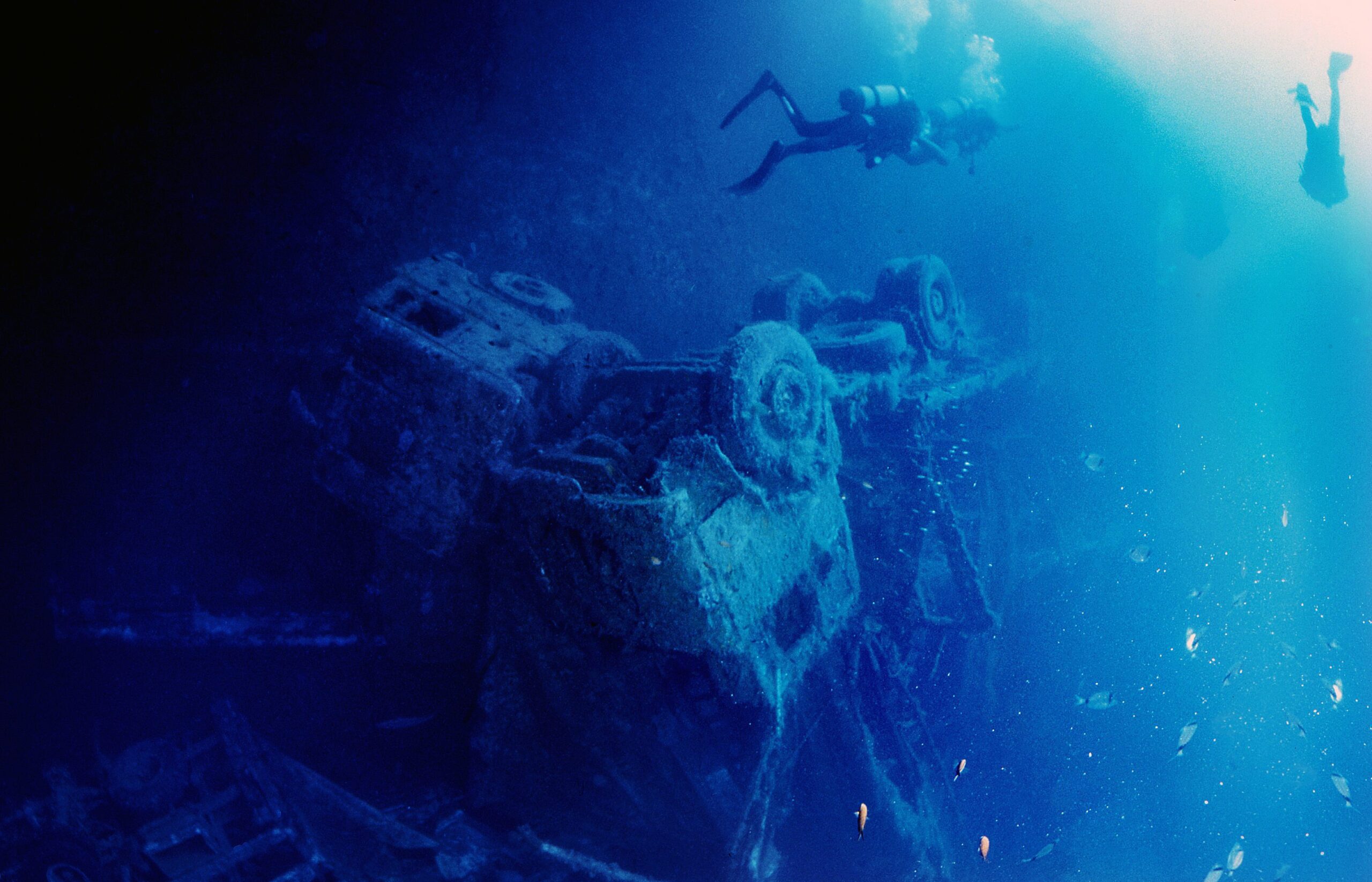
Whether you base yourself in the north or south, you’re definitely going to want to dive the Zenobia. An entire industry has been built up around the 10,000-ton Swedish-built roll-on roll-off ferry. She sunk in June 1980 after a bizarre computer failure caused water to be pumped incorrectly into some of her ballast tanks on one side of the ship! On board were 104 huge lorries with trailers full of cargo destined for Mediterranean and Middle East markets. Today, the wreck is a divers’ playground.
Cloaked in algae and seaweed, the 178-metre-long Zenobia rests totally intact on the bottom with the top of the wreck in just 16m, and the bottom in 43m. With little current to speak off and normally excellent visibility, the Zenobia is a safe easy place for both recently qualified divers and seasoned divers alike provided they watch their depths and don’t enter anywhere they can’t get out easily!
The Wrecks of Zenobia
The bridge, cafeteria and lifeboat deck are all very accessible and can be visited without dropping below 30m. As you swim around and inside the wreck, you find yourself squinting your head to imagine how they would look if the ship was sitting upright. In the cafeteria, the tea and coffee machine and the carpet, which is starting to lift off the floor, really remind you that this was a real ferry, similar to many that we ourselves might have sailed on in years gone by.
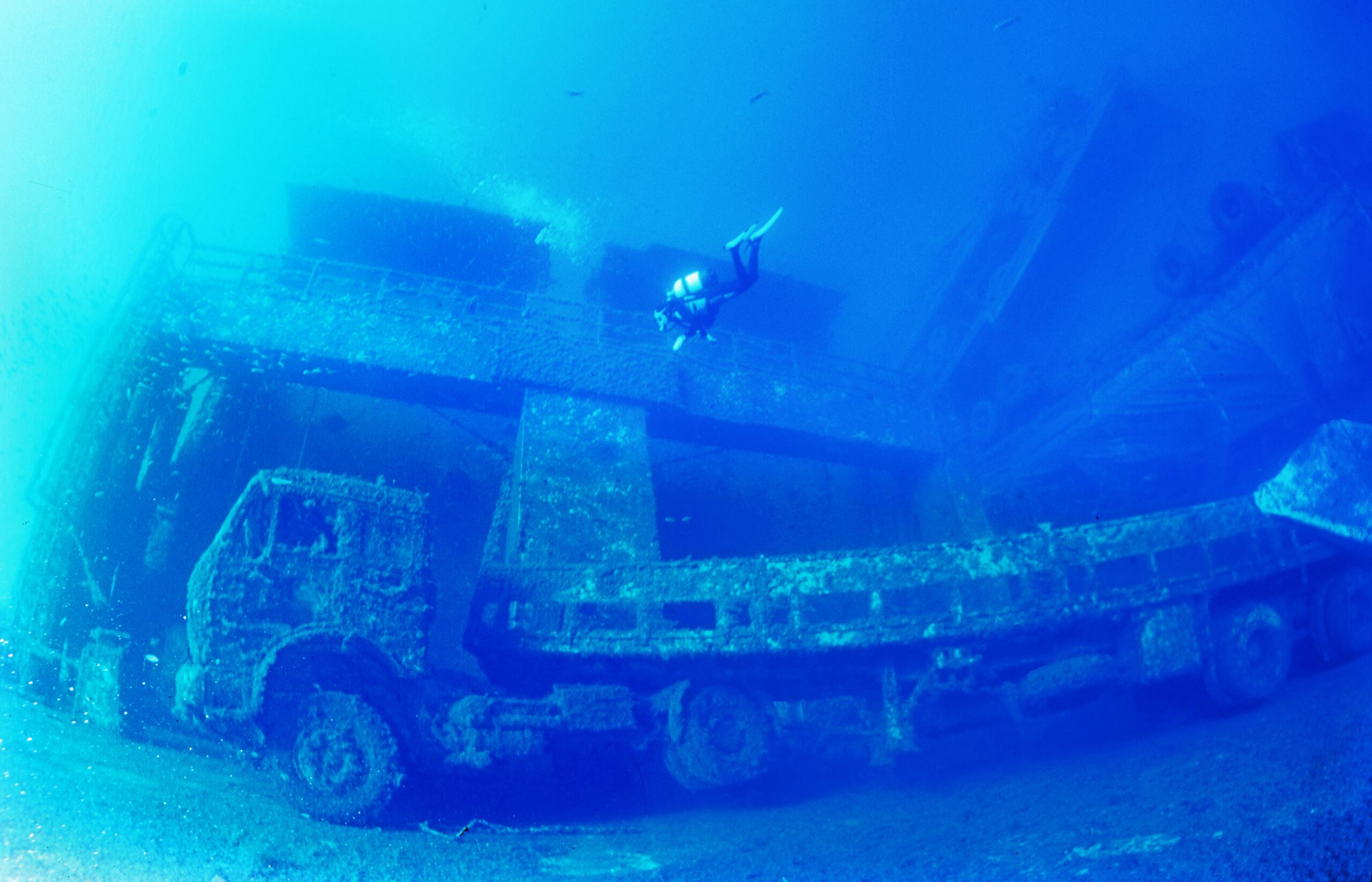
Although no-one died on the ship itself, several divers have lost their lives since, normally losing their way inside the deeper sections of the wreck. One lucky diver who got lost found an air pocket and survived for two hours before rescuers found her!
If you’re counting lorries on the outside of the wreck, you won’t reach much more than 20, as most remain inside in the upper and lower lorry decks. In the early years, many lorries hung precariously from the chains that secured them to the ship’s deck, but the chains have rusted through and most of the lorries have slid about as far as they can go towards the sea bottom.
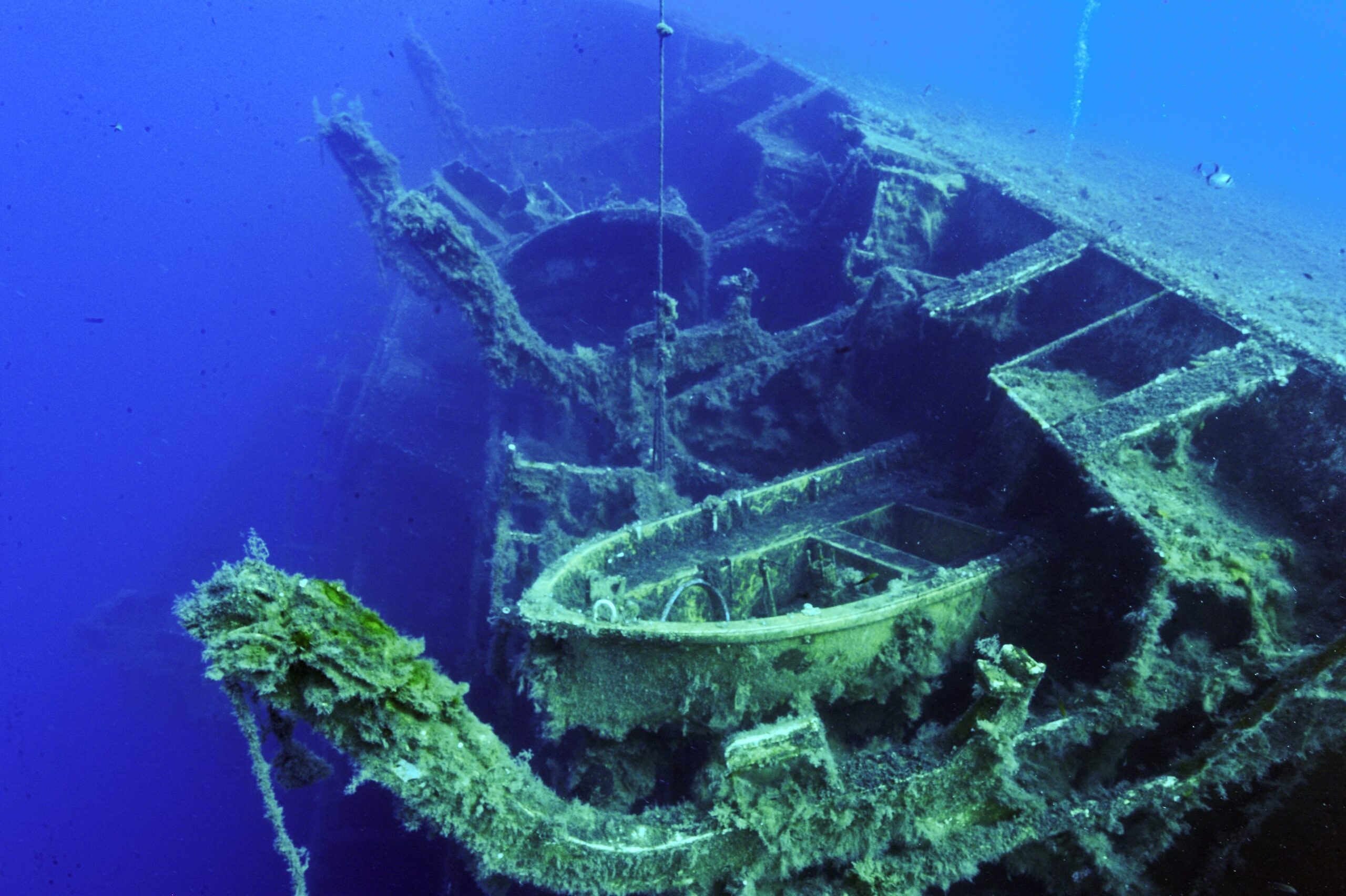
The lower lorry deck is definitely worth exploring if you are a seasoned diver and have a guide, as it involves a 40m dive in the dark with no visible means of exit. As well as loads of lorries, a bright yellow digger and a solitary car can be seen on this level.
The upper deck is relatively safe to explore. Some light filters through from a small exit hatch so you feel relatively safe despite being in darkness for most of the time. As you swim through, if you shine your light above you, you’ll notice some of the cargo from one of the trailers – bottles of ethyll alchohol have spilled out and now float seemingly in mid-air!
To really enjoy the full impact of the wreck you really need to make at least one sortie to the seafloor. Here you can swim alongside most of the accessible lorries and you can look for the thousands of eggs which have spilled out from one of the trailers and now lie on top of each other! You may also come across air-conditioning units, close to the back of a trailer where they’ve toppled from.
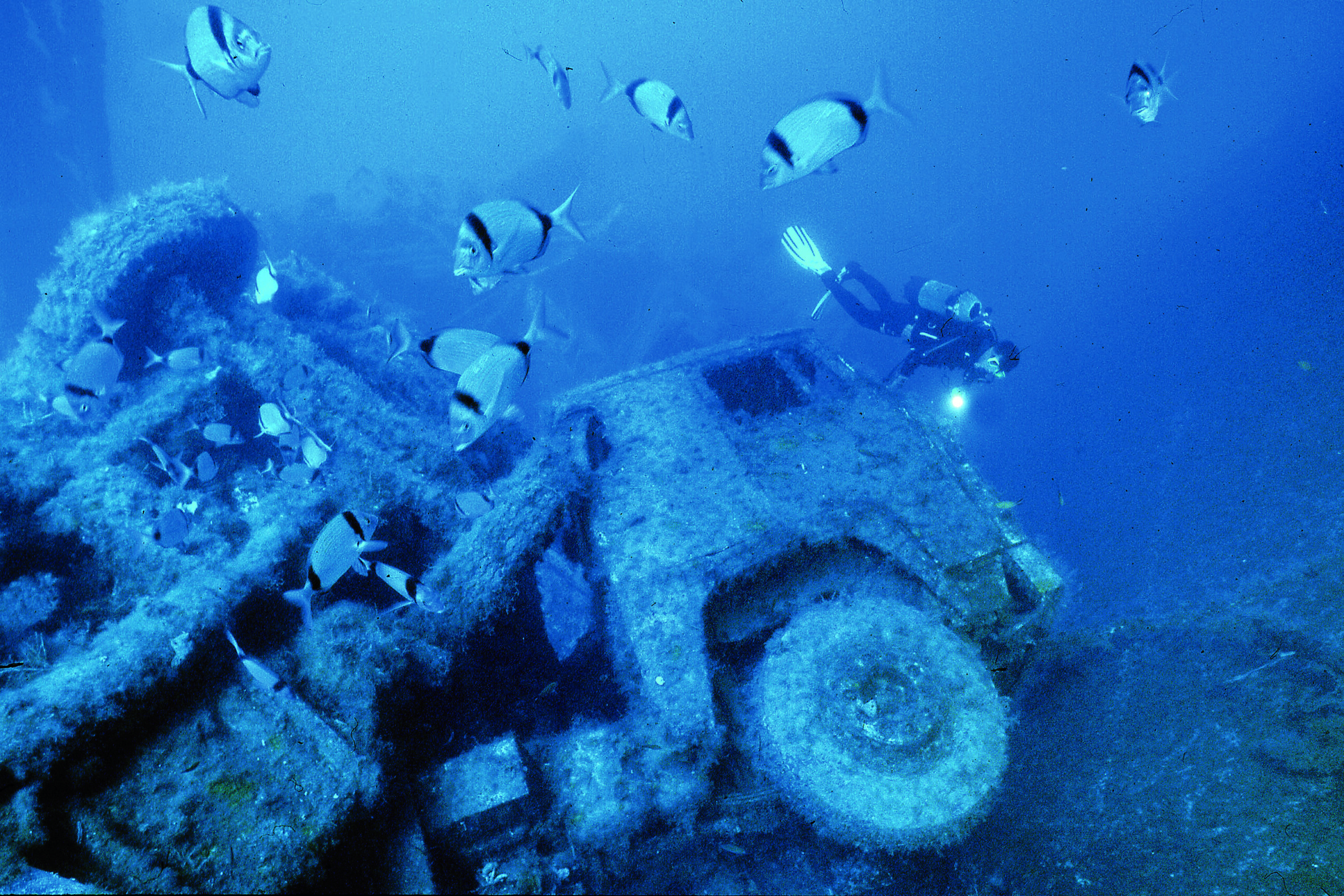
In summer encounters, amberjack, tuna and barracuda cruise round the wreck, often joined by a yellow submarine full of waving tourists! Throughout the year dusky and golden grouper hang out here safe from spearfishermen. There are also good shoals of bream, little rainbow wrasse, scorpionfish and nudibranchs.
You could spend a whole week just best diving on the Zenobia, but there are other dives worth doing in the south.
The Wreck of HMS Cricket

One definitely worth checking out is, in fact, another wreck, HMS Cricket. The Cricket was one of ten Aphis-class gunboats built during World War One to counter Austro-Hungarian monitors on the River Danube. Due to be scrapped in 1939, her life was extended by the outbreak of World War Two, where she was crippled by German aircraft off Tobruk, Libya, on 30 June 1941. She was salvaged in Alexandria in 1942 and towed to Larnaca Bay, where the RAF used train pilots on attacking formations. She is thought to have sunk in 1947 in bad weather. The lack of engines and boilers which had been salvaged perhaps allowed her to roll over and sink upside down.
She lies on a silty bottom in 27m and despite being upside and looking more like a submarine than a ship, she is a surprisingly good dive. One can swim relatively easily under the hull and into the ship, where you can then weave your way through her inverted rooms and corridors. Her interior is covered in thick sponges and rich colourful algaes, reds, oranges and whites, mostly encrusting on large parts of the wreck.
Other dives worth exploring from Larnaca include Sheep Dip Cave, where an arch and overhangs can be explored in just 16m. Looking for a deeper dive, try Mushroom Rocks, where depths reach 50mwith some nice rock formations.

The popular tourist site of Paphos has two small wrecks, the Achilleas and MV Vera K, which both sank in the 1970s and lie in less than 12m. Amphora Reef and White River are all great shallow sites for novice divers, while drop-offs at Manjijin and St Georges Island offer something a bit deeper for those more advanced.
In summary, north or south Cyprus has some great dive sites. If you have a week stay north and make a day or perhaps two day trips south to the Zenobia. If you have two weeks, stay a week in the north and a week in the south!
“As you swim through, if you shine your light above you, you’ll notice some of the cargo from one of the trailers – bottles of ethyll alchohol have spilled out and now float seemingly in mid-air!”
“She sunk in June 1980 after a bizarre computer failure caused water to be pumped incorrectly into some of her ballast tanks on one side of the ship!”
PREFERRED PARTNER Alpha Divers
Alpha Divers is a PADI five-star IDC centre based in Larnaca which offers recreational and technical diving from beginner to instructor, as well as offering specialist wreck dives on the Zenobia. The centre runs a 22-passenger hardboat and a 12-man RIB, and has a wide range of well-maintained rec and tech gear for rental.
PREFERRED PARTNER Deep Penetration Diving
Deep Penetration Diving is a PADI and SSI centre based in North Cyprus in Alsancak, Girne, which offers diving all around the northern coast, as well as arranging day trips into the south to dive the Zenobia shipwreck.
Photographs by Gavin Anderson
FAQ:
Is Cyprus good for scuba diving?
Yes. Cyprus is one of the Mediterranean’s best diving destinations, offering crystal-clear water, year-round sunshine, vibrant reefs, and world-class wrecks like the Zenobia. Both the north and south coasts feature excellent dive sites.
What is the Zenobia wreck, and why is it so famous?
The Zenobia is a 178-metre Swedish-built roll-on roll-off ferry that sank in 1980. Today, it is ranked among the top ten wreck dives in the world, with intact lorries, trailers, and multiple accessible decks to explore, all cloaked in marine life.
Are there good dive sites in North Cyprus?
Yes. North Cyprus offers laid-back holiday vibes with rich marine life. Popular dive sites include Zephyros, The Wall, Paradise, and wrecks like a Wellington bomber. The Karpaz Peninsula also boasts dramatic formations such as Secret Rock and Great Canyon.
What other wreck dives are in South Cyprus?
Besides the Zenobia, divers can explore HMS Cricket, Achilleas, and MV Vera K. South Cyprus also has sites like Sheep Dip Cave, Mushroom Rocks, Amphora Reef, and White River.
Do I need to stay in one part of Cyprus to dive?
Not necessarily. The border between north and south Cyprus is open, making it easy to dive both regions. Many divers stay in the north and make day trips south to the Zenobia, or split their holiday across both areas.
This article was originally published in Scuba Diver Magazine
Subscribe today with promo code DIVE1 — enjoy 12 months for just £1!