Wanted: scuba divers to help a team of scientists pinpoint important underwater sites for study around the world – in the cause of the fight against climate change.
The Convex Seascape Survey is an ambitious five-year project that seeks to discover exactly how the ocean performs its vital role as the world’s largest carbon sink, and to offer solutions that can be incorporated into global efforts to slow climate-change effects.
The work is being carried out by the University of Exeter and partners, funded by insurance company Convex Group and facilitated by UK-based conservation charity Blue Marine Foundation.
It will involve a number of programmes designed to scrutinise the carbon locked in global continental-shelf seabeds, while also assessing the role of ocean life on carbon storage and human influences on seabed carbon.
“We wish to find soft-sediment seabed habitats on continental shelves (less than 200m depth) that have escaped significant human impact or have recovered from past impact,” says graduate research assistant Annabel Kemp from the University of Exeter.
“Identifying these areas will allow us to conduct our research and gain insight into the condition of continental shelves on a global scale. We’re looking for the assistance of citizen-scientist divers with intimate knowledge of the seabed gained through work or leisure to help identify potential sampling sites for us to conduct our research,” says Kemp.
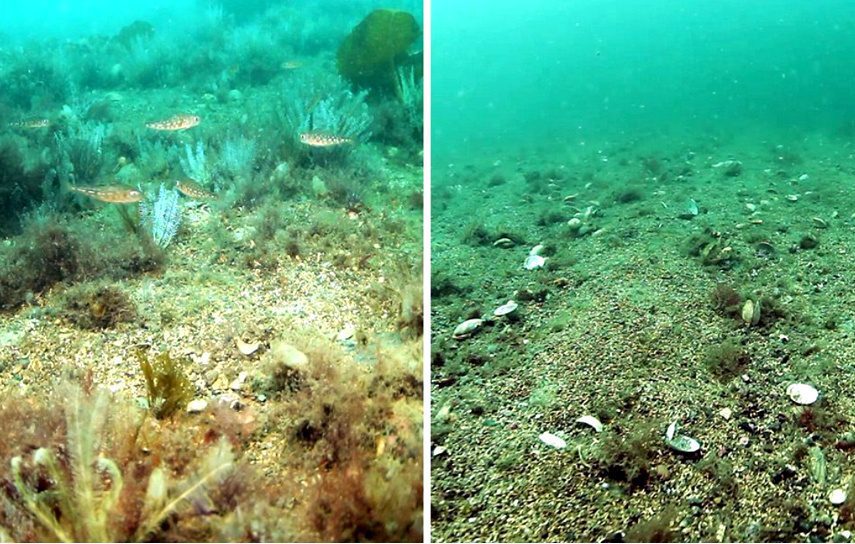
The team hope to locate areas with an abundance of plants or animals of many different species. These might not be as immediately obvious in sandy and muddy habitats as on coral reefs, they say, but are likely to be characterised by the presence of delicate species such as sponges, brittlestars, starfish, sea squirts, sea cucumbers and bivalves.
The area should be within the boundaries of areas where conservation measures are applied, such as a marine reserve or park; exclusion zones around oil and gas rigs; areas reserved for military exercises; or areas that fishing-boats might avoid, such as around shipwrecks.
Divers are asked to avoid nominating areas close to ports, harbours, shipping channels or busy, heavily populated towns or cities, or those showing evidence of plastic pollution, oil spillage, sewage input, boat traffic or destructive fishing activities.
The scientists will ask volunteers to submit photographs or video footage of such marine habitats with information such as date, GPS/approximate location and approximate depth to the Convex Seascape Survey’s Citizen Science Portal.
Also on Divernet: Pristine Seas kicks off 5-year Pacific venture, Divers: help to make Blue Planet III, Ocean Census targets 100k unknown marine species, Coral crash: can our reefs be saved?