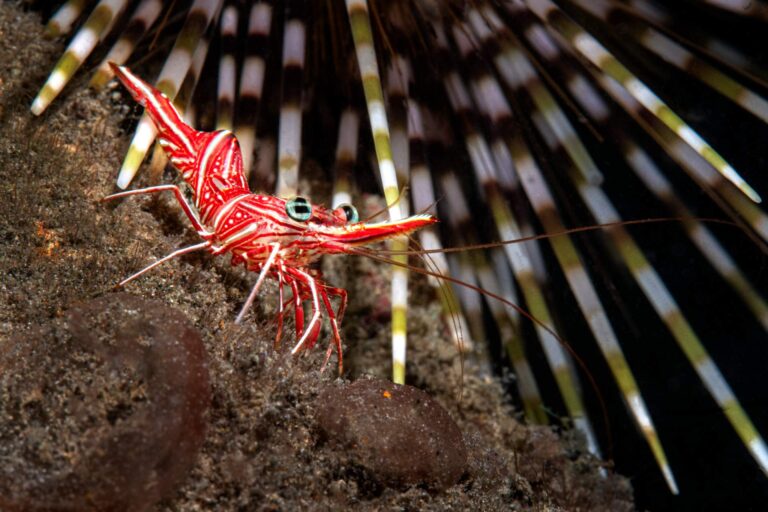
ARNE HODALIC is a highly experienced diver, but the macro pleasures of critter diving in north-western Bali in Indonesia was something altogether new to him. It’s all about the joy of collecting, says this new convert, who took the photographs
It started like most bad ideas: over coffee and casual conversation. After years of exploring coral reefs around the world, I thought I’d seen it all.
“It isn’t about dazzling colours or sprawling reefscapes; it’s actually quite disturbing,” my new acquaintances were saying. I was intrigued.

Fast-forward a month, and I was on the way to north-western Bali, with an overpacked suitcase of camera gear, ready to see what all the fuss was about.
At first glance, muck-diving seems to strip away the glamour of traditional dive-sites and replace it with a stage for the peculiar. Picture a seabed of dark volcanic sand, mucky silt and, yes, the occasional rusty can or two. Not exactly the stuff of postcards. Yet this unassuming backdrop is home to some of the ocean’s most fascinating creatures.

The term “muck-diving” was coined in the 1980s by diver Bob Halstead, and South-east Asia has since become its heartland. For photographers, it’s like exploring an antiques market – every dive promises rare, unusual finds.
These degraded environments make it easier to spot creatures that either don’t live on coral reefs or are much harder to find there. Without sprawling coral structures for cover, they’re more visible, and their everyday lives become easier to observe and photograph.

While muck-diving might not appeal to everyone at first glance, it has a devoted following among scuba divers and underwater photographers seeking a break from the usual suspects. This is a chance to dive into a world that’s completely different – and filled with truly special critters.
As the moment of my first muck-dive drew closer, diving in what sounded like someone’s forgotten backyard began to seem like a terrible idea. When I first descended onto the murky bottom, I wasn’t impressed. The seafloor looked barren – just silt, sand and a plastic cup here and there.

But then, as I hovered and waited, the scene began to change. A tiny movement here, a flash of colour there, and suddenly the ‘junkyard’ was alive.
With the help of my guide Rafi, who seemed to have a sixth sense for spotting the invisible, there it was: a frogfish frozen like a grumpy neighbour blending into the background, a ghost pipefish mimicking a drifting leaf, an octopus vanishing into the silt with uncanny ease.

This is their domain, and being a guest in it is both humbling and exhilarating. It’s not flashy, but it’s thrilling in its own way.
And because muck-diving is usually done in shallow, warm waters, you’re not racing against decompression limits or air consumption. There’s a freedom to these dives that allows you to focus fully on observing and taking photographs.
Patience is your greatest asset. The longer you linger, the more the seabed comes alive. Nudibranchs creep along like tiny jewels of colour. Crabs and shrimp scuttle industriously, building homes and scavenging for food.
And then there are the headline acts: bobbit worms, with their alien-like jaws, and blue-ringed octopuses, whose beauty hides a deadly secret.


Seasonal visitors add to the thrill. Dragon sea-moths drift across the sand like creatures from folklore. Mimic octopuses put on performances, morphing into other animals with almost comedic timing. And flying gurnards with their wing-like fins glide elegantly as if daring you not to watch. These aren’t just photo-opportunities; they’re stories you carry with you long after the dive.


It’s the kind of diving that changes you. It shifts your attention to the small, the subtle and the strange. It’s a practice in patience, where the rewards come to those who take the time to look closely. You come back wondering how many times you’ve overlooked something special because it wasn’t loud or obvious.
Down here, it’s the quiet things that leave the biggest impression – if you’re willing to pay attention and maybe squint a little.
5 BEST MUCK-DIVE SITES IN NORTH BALI
1. MUCK BAY
Who doesn’t love a good muck-dive? Muck Bay offers a different sight from the usual coral reefs but don’t let that fool you. It’s teeming with life – and what truly alien life it is!
DEPTH: 2-12m
COMMON DWELLERS: Nudibranchs, flying gurnards, shrimps, crabs, eels, seahorses, cuttlefish
SPECIAL GUESTS: Frogfish, mimic octopuses, ornate ghost pipefish

2. SECRET BAY
Exploring Secret Bay in Gilimanuk is a unique experience. The shallow bay offers muck-diving at its best, a vivid contrast to Menjagan or Pemuteran Reefs. A very popular twilight dive-site for underwater photographers and macro lovers, famous for small alien critters and the bobbit worm.
DEPTH: 2-12m
COMMON DWELLERS: Snake eels, olive sea snakes, frogfish, nudibranchs, shrimps, devilfish, ghost pipefish
SPECIAL GUESTS: Bobbit worms, banded sea snakes, dragonets, mimic octopuses, flying gurnards

3. PURI JATI
Another excellent muck-dive site with a rich variety of sea critters and different species of octopus, great for macro shots. The bottom consists of black volcanic sand, making it a perfect backdrop for high-contrasted close-ups. Because this is a shallow dive-site, we usually make the best of it and dive longer.
DEPTH: 2-18m
COMMON DWELLERS: Mimic octopuses, harlequin shrimps, snake eels, Ambon scorpionfish, dragonets, stargazers
SPECIAL GUESTS: Hairy frogfish, blue-ringed octopuses, coconut octopuses, Shaun the Sheep nudibranchs

4. MATAHARI
Matahari is a newly discovered macro dive-site in Pemuteran Bay. What sets it apart is that it’s the only dive-site just off the Pemuteran shore hosting the wonderful mimic octopus. If you’re especially lucky, you might even catch a glimpse of a dugong or two!
DEPTH: 4-20m
COMMON DWELLERS: Mimic octopuses, garden eels, pink skeleton shrimps
SPECIAL GUESTS: Dugongs, blue-spotted sting rays

5. NUDI BEACH
Nudi Beach is a great go-to for macro diving. Its white sandy slope with scattered coral patches is home to plenty of nudibranchs, including some rare finds that pop up with nearly every dive.
DEPTH: 5-25m
COMMON DWELLERS: Nudibranchs galore!
SPECIAL GUESTS: Seamoths, ghost pipefish, dancing shrimps, seahorses, blue-spotted sting rays

Easy Divers Bali
Easy Divers Bali has been a cornerstone of diving in north-west Bali since 1998. As a PADI 5* Eco Dive-Centre and Gold Green Fins member, it combines sustainability with top-notch service. Dive groups are kept small, so you always feel well looked after.
The team know their business, the equipment is in excellent condition and they’re all about safety. You can explore great muck sites or head to Menjangan Island for vertical coral walls in Bali’s only national park.
Whether you’re new to diving or have plenty of dives under your belt, the team says it will ensure that you make the best of your time in Pemuteran.
Also on Divernet: THE M-VALUE ON ISLANDS OF THE GODS, SPLITTING THE DIVES IN BALI, THE PARADISE ISLAND OF BALI, GOOD & BAD BEHAVIOUR IN BALI