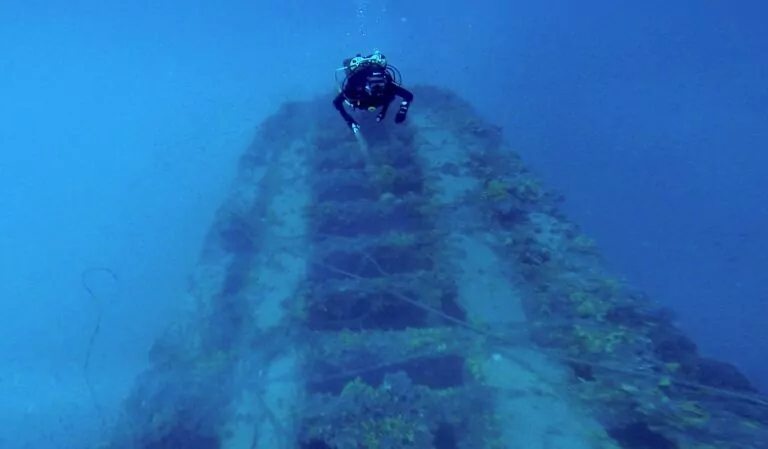
SELCUK KOLAY didn’t get to be a shipwreck-hunting ace without persistence and a measure of good luck, and he benefits from both in his search for a 19th-century Aegean steamer sunk by another ship from its own company
I had it in mind to write a book about the shipwrecks in Turkish waters in the Aegean Sea, so was trying to gather information from various sources about past ship losses – with the exception of those wrecks I had already located and documented.
Wrecks from the Age of Steam are my major field of interest so I was working in the archives, concentrating mainly on lost steamers.
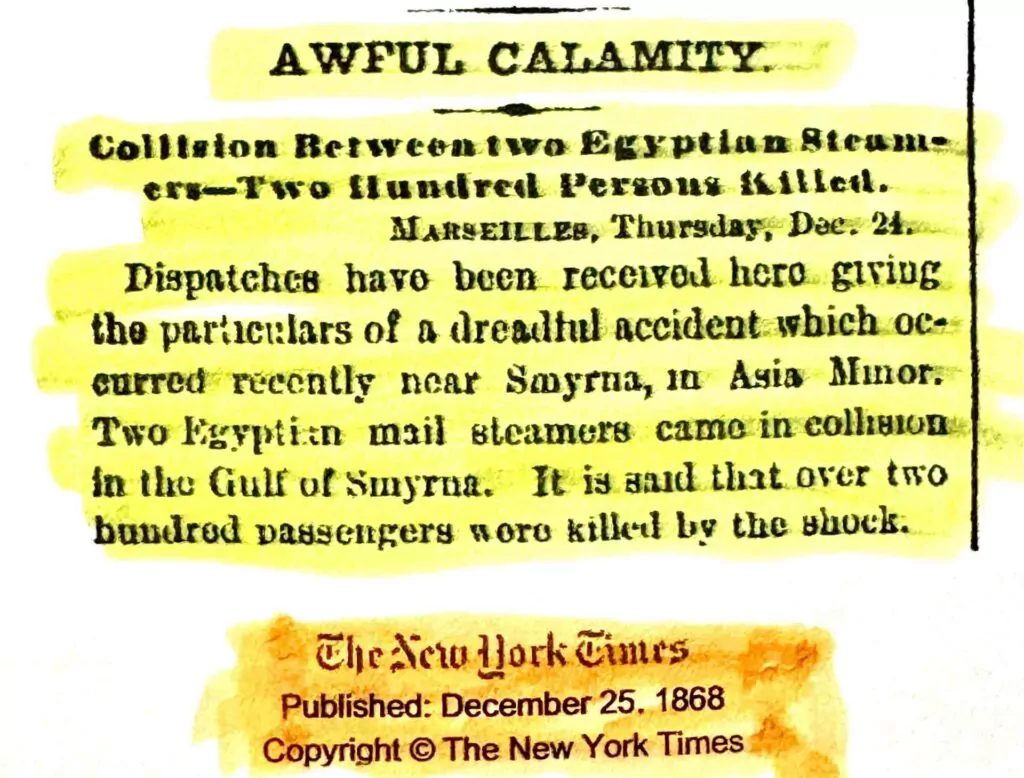
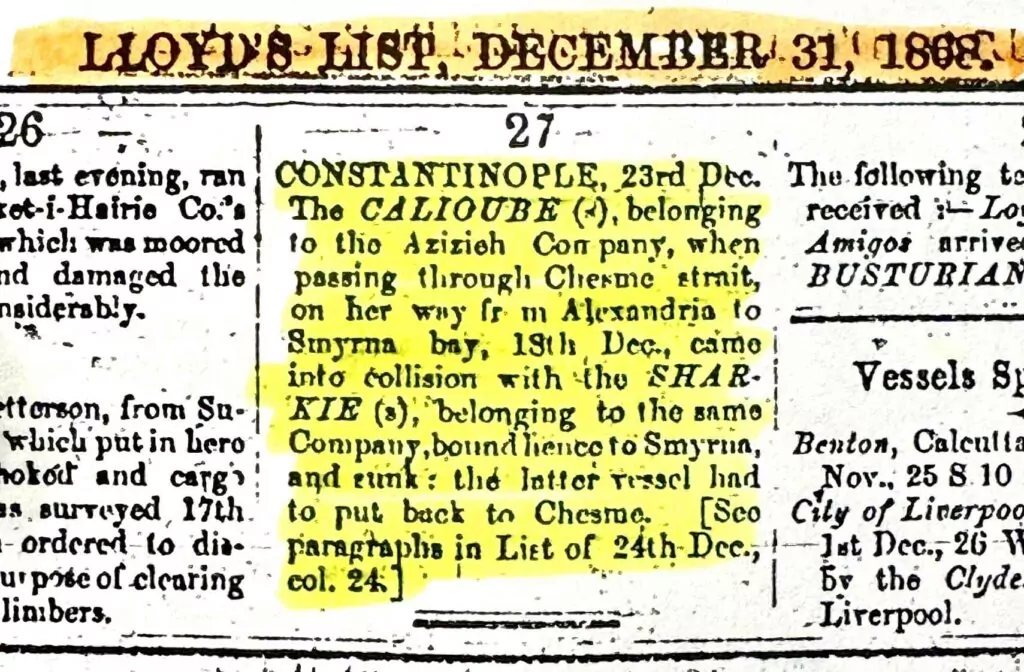
After a few weeks I was browsing through some old local newspapers published in Istanbul and Izmir (Smyrna) when I came across an interesting account. It concerned a collision near Izmir in which one of the ships involved had gone under with great loss of life back in late 1868.
This was the time when ships were making the transition from sail to steam, retaining their sails but using steam engines driving paddle-wheels or screws as the main source of propulsion.
Further studies in foreign archives of newspapers published around the same date revealed even more details about the accident and the sinking, based on survivor accounts.
Deadly encounter
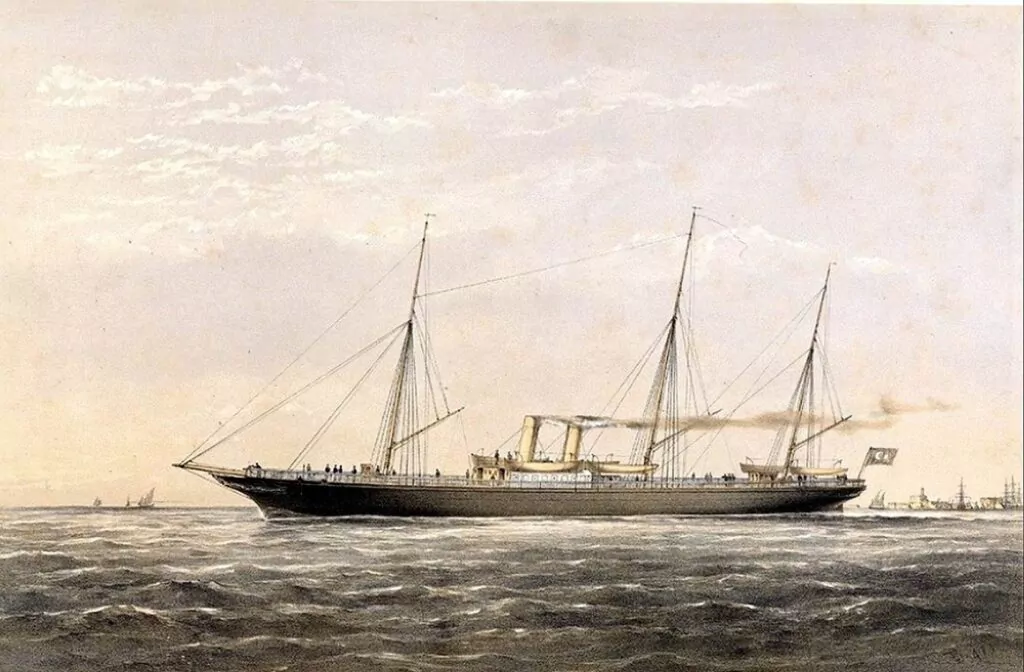
The 1,125-ton Kalioub had been built by Pile Spence & Co of Hartlepool in 1864. Though not one of the largest, this iron ship was one of the finest vessels of the Azizieh Company of Egypt, a country at that time under Ottoman rule.
The ship plied between Alexandria and Istanbul. She had left the former port under the command of Djezairli Mohammad with a crew of 80 hands and 85 passengers on the afternoon of 15 December, 1868.
The weather being kind, she made a rapid run round the coast of Syria and shortly after midnight of 17 December – some hours in advance of her usual time – reached the Cesme (Tschesme) Channel between the island of Chios and the Turkish mainland.
The night was very clear, with a light breeze and no sea on. At about 1am the Kalioub had cleared the passage and was rounding Cape Karaburun when the red port light of another steamer was seen well ahead of the port bow.
Kalioub’s navigation lights were burning brightly at the time and her portside red light must also have been seen by the approaching ship. As the latter was still a certain distance away, the Kalioub pressed on.
After a short while the two ships rapidly neared, and the stranger – which by this time had been recognised as another Azizieh Company steamer, Sharkie – suddenly steered to port and ran stem-on into the Kalioub before she could avoid the collision.
Survivor screams
Sharkie struck the Kalioub a little forward of midships on the port side, crashing through the coal-bunker and into the foremost boiler. Her bowsprit also knocked over the fore-funnel. Kalioub’s foremast was so shaken by the collision that, after a short while, it went over.
There had been passengers on Kalioub’s foredeck, and several must have been killed on the spot, while the screams of the survivors rose high above the noise of escaping steam and the conflicting shouts of the officers and crews of the two ships.
It was evident that the Kalioub was going down, so her captain implored Sharkie’s commander not to back out – yet he reversed his engines and steamed on, leaving Kalioub to her fate.
Captain Mohammad, especially, and most of his officers behaved admirably but the crew seemed to have shared in the general panic and much time was lost in lowering the boats into the water.
Five of the six boats carried by the ship were able to be lowered but again the scramble to get into them caused the loss of several lives.
It was now that the damaged foremast fell, striking and smashing a boat filled with a mixed group of crew and passengers, including the British engineer.
While they were struggling in the water – nearly 45 minutes after the collision – the steamer lurched over and went down, sucking with her the fragments of the boat and most of those it had contained. Another boat that was only a few metres away managed to fish out five of them – not including that British engineer.
Of the remaining people who went down with the ship, it is believed that none were saved. Captain Mohammad and the second officer were among the 50+ people lost.
The four boats with the survivors landed with some help from local Turkish people near Karaburun village in the early hours and were brought to Urla (Vourla) before being taken on to Izmir.
Commander’s cowardice
The heroism of Kalioub’s captain contrasted with the cowardice of the commander of the Sharkie who, had he remained by the sinking ship, might have saved every soul on board.
Instead, he steamed south to Cesme in the hours following the accident and ran on to the shore, claiming that he had hit rocks. After undergoing some repairs, the ship was refloated and sailed to Alexandria.
I found the story interesting enough to warrant completing by locating the wreck of the Kalioub, more than 150 years on from her sinking.
This was going to be a complicated search, because no time-frame had been provided. According to the newspaper records Kalioub had cleared the Cesme Passage at 1am and was rounding Cape Karaburun, which is in fact a huge 20-mile peninsula pointing north, running parallel to Chios with the sea in between divided between Turkish and Greek waters.
My only hope was that I would locate the wreck in Turkish waters, if it was there at all – and that meant scanning an area of approximately 130sq km!
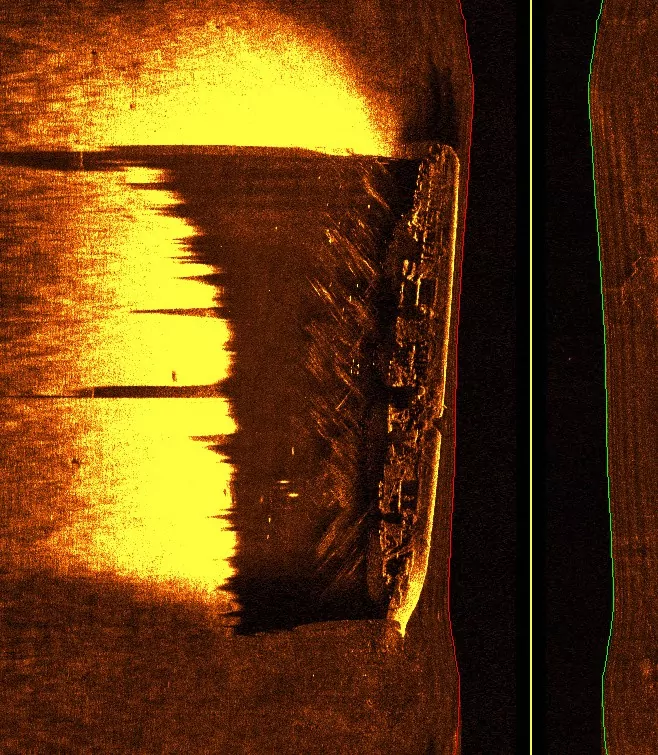
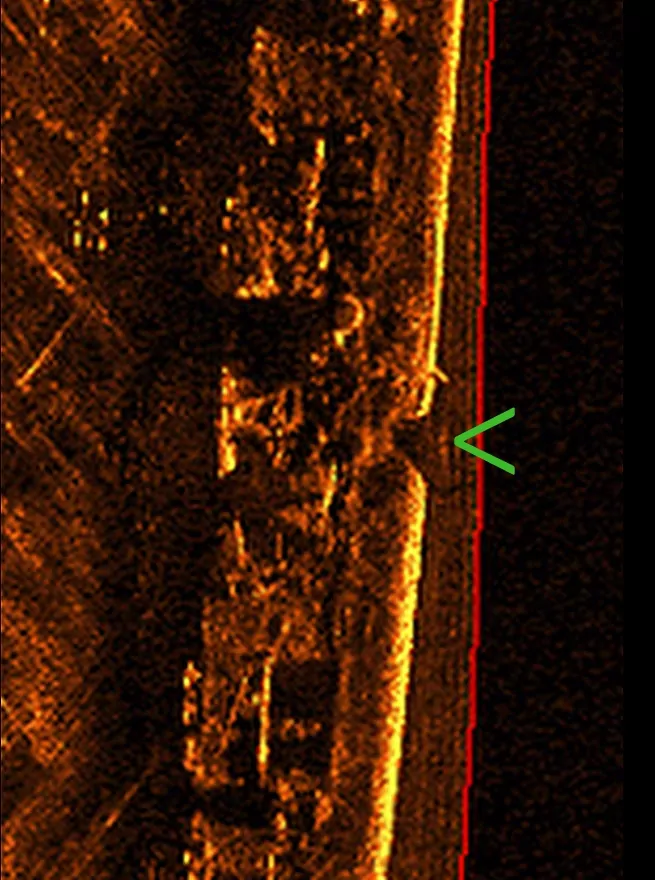
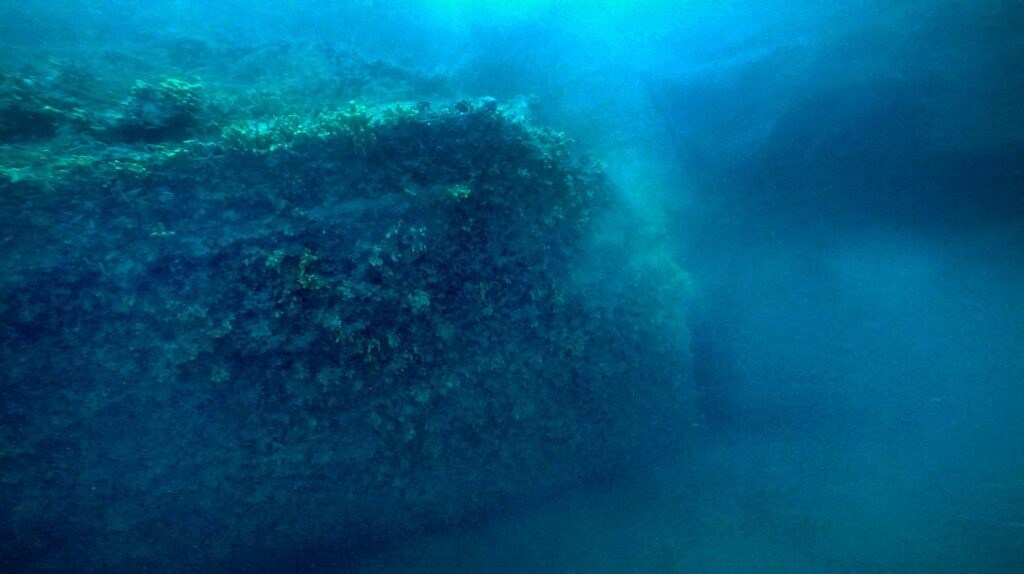
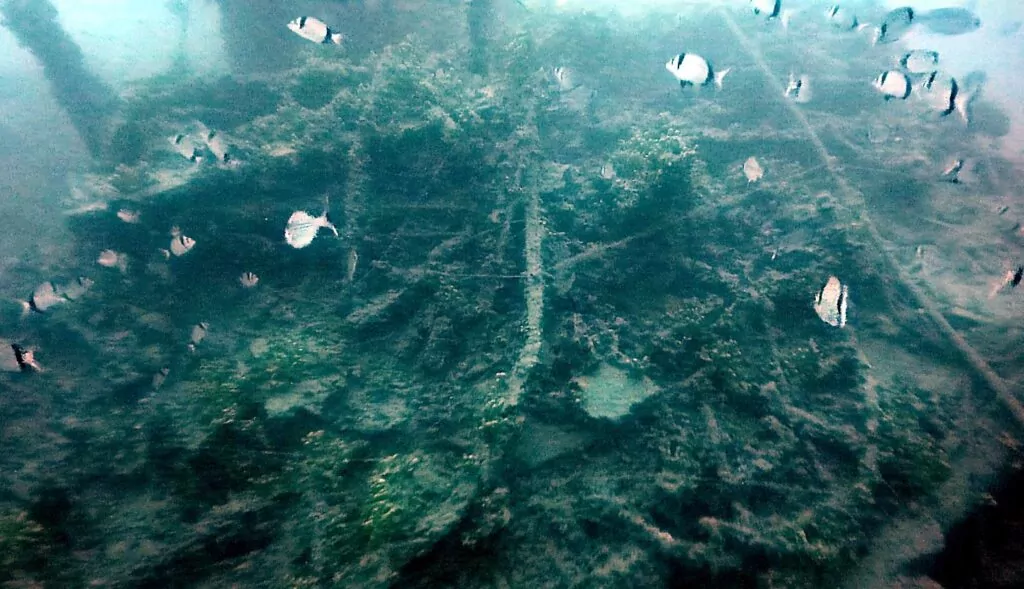
It took some six months before I saw the shape of a wreck on my side-scan sonar screen. It lay at a depth of about 80m. The dimensions seemed to match the specs I had gleaned from the archives but there had been no pictures or plans of the ship available.
The sonar picture alone would not be enough to verify the identity of the wreck, so my team and I would need to carry out some dives. However, we first needed to get hold of an image of the ship to compare with what we would see at the wreck-site.
The miracle
A few more months passed as I tried to find an image or plan of the Kalioub. Then a miracle occurred. I was visiting an auctioneer friend of mine in Istanbul when I suddenly noticed on the wall four framed lithographs of the steamships belonging to the Azizieh Company. One of them was the Kalioub – an elegant steamer with bowsprit, three masts and two funnels!
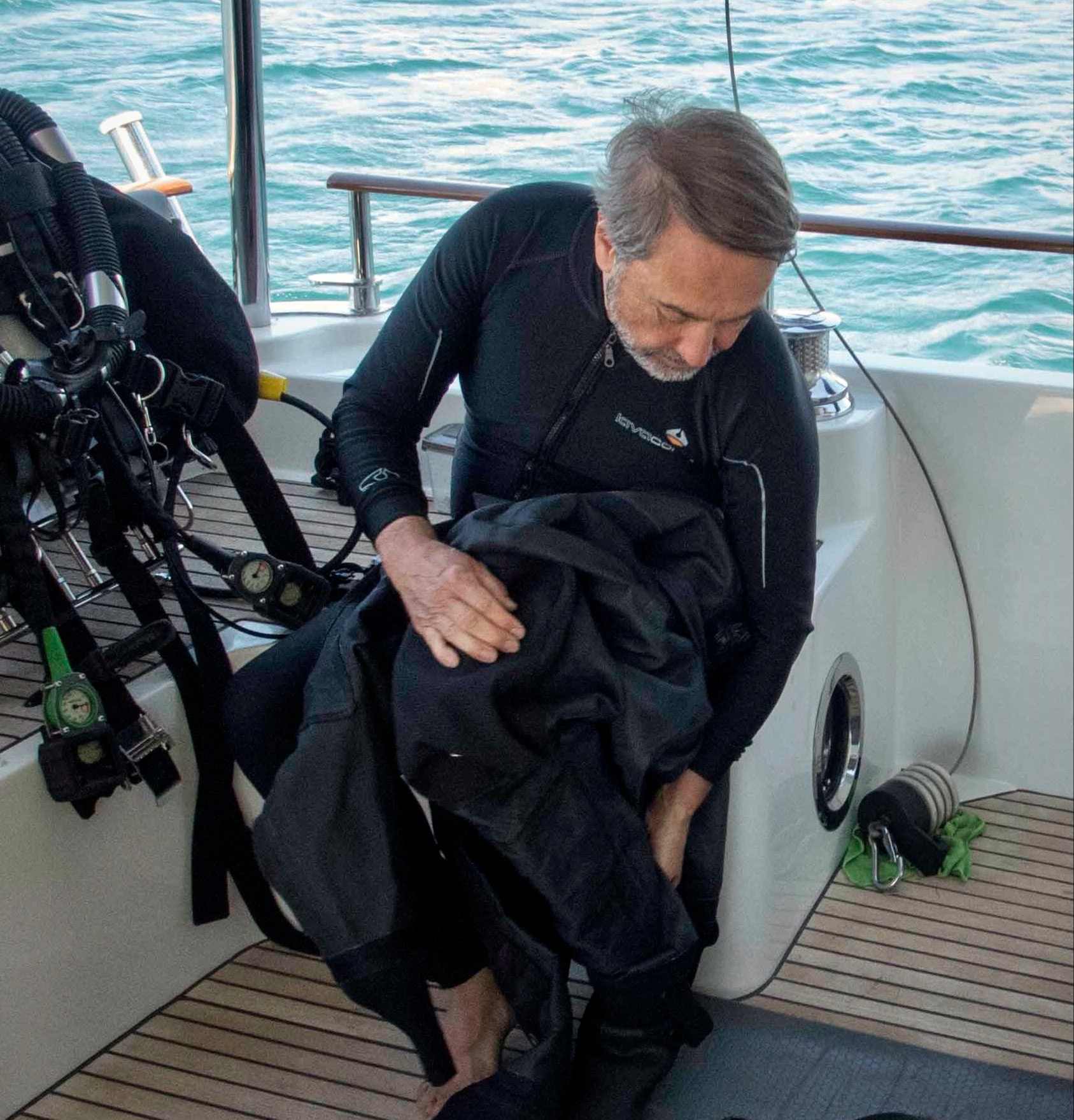
I took the first dive with my buddy Kaya Yarar on open circuit, using helium trimix 18/45 as our bottom mix. The visibility was tremendous – we could already see the wreck while at a depth of 50m!
The shotline had landed right beside the bowsprit and we started our tour along the port side towards the stern, staying about 3m above the shipwreck.
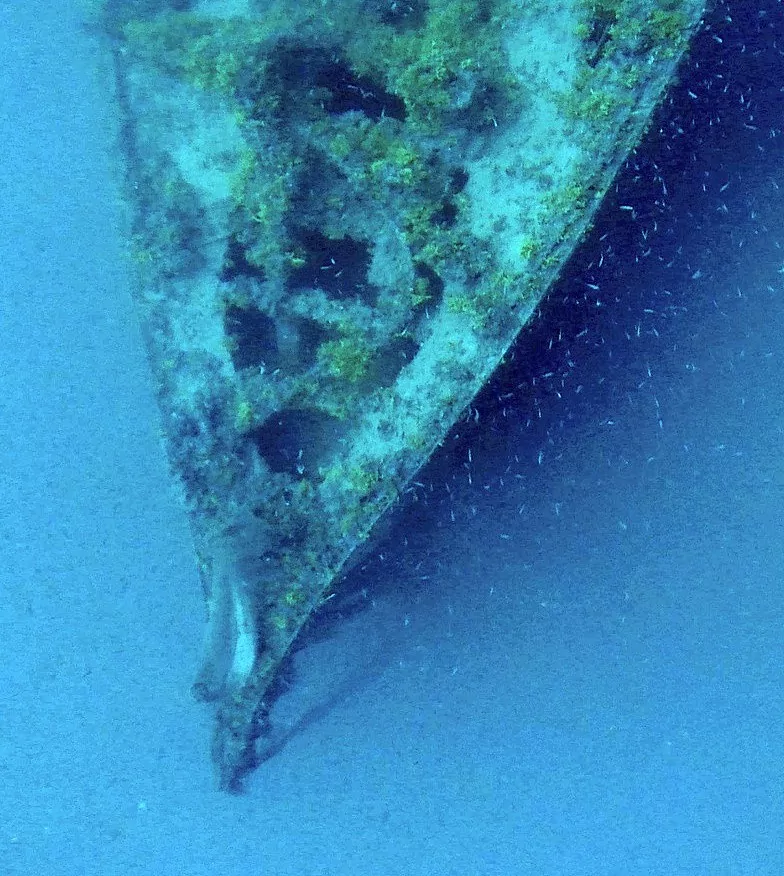
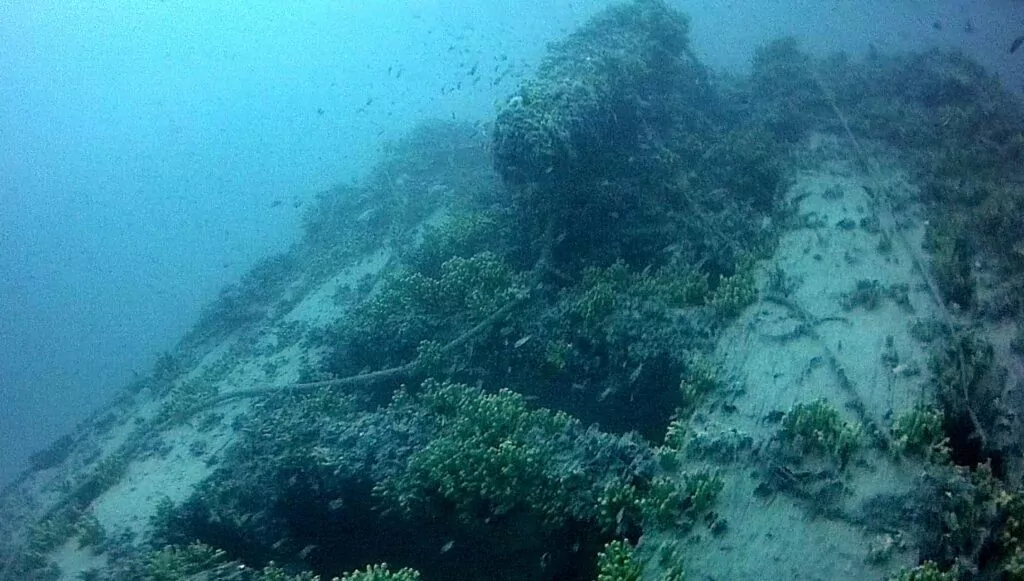
I was amazed by its condition. I had been expecting a mostly collapsed wreck but it was sitting upright pointing north-east, and its bow was in such sound condition that the ship looked as if it had gone down only a few years ago!
My goal was to see the collision damage and the funnels as other solid proofs of the ship’s identity. And yes, getting near to the midship section we could clearly see the huge collision damage and the fallen fore-funnel, still leaning against the bridge.
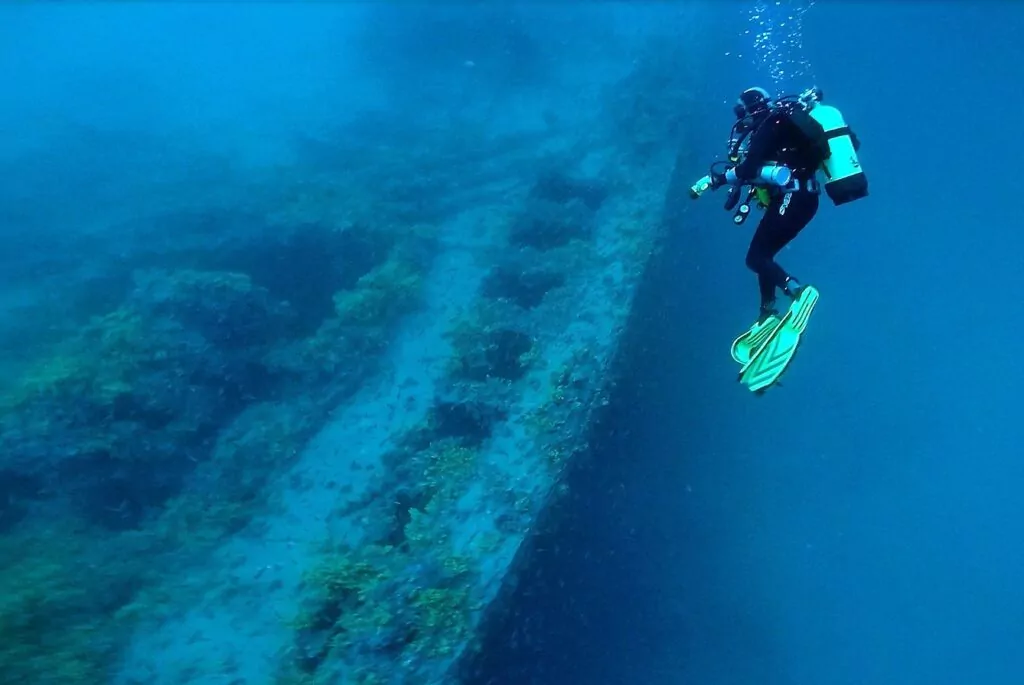
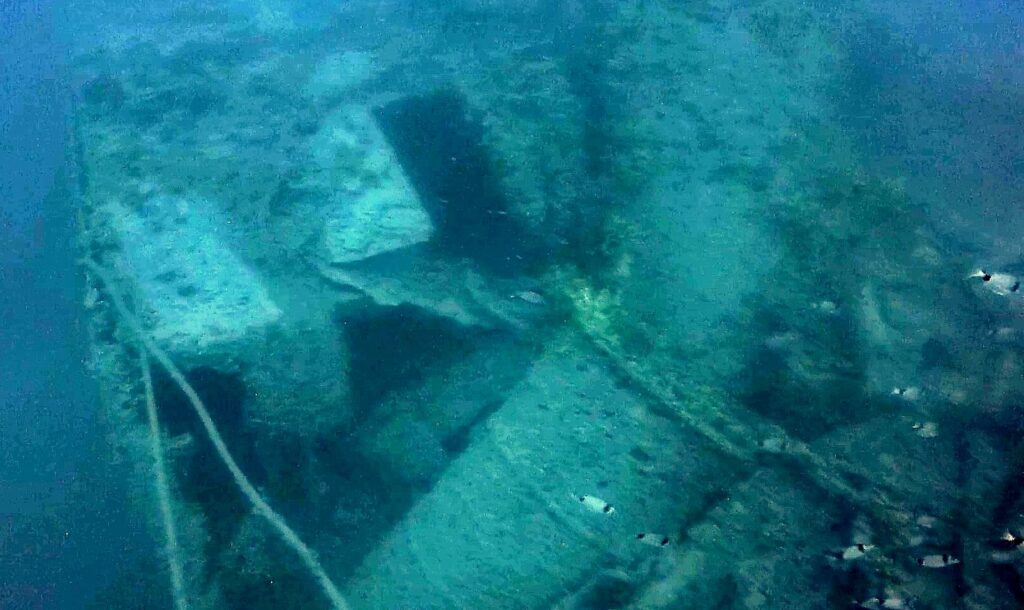
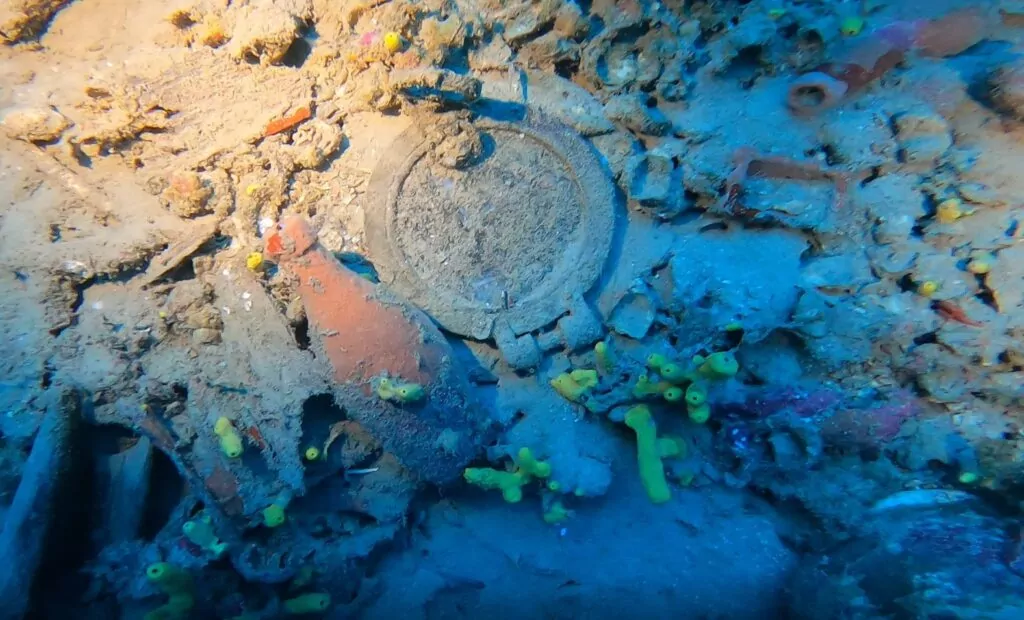
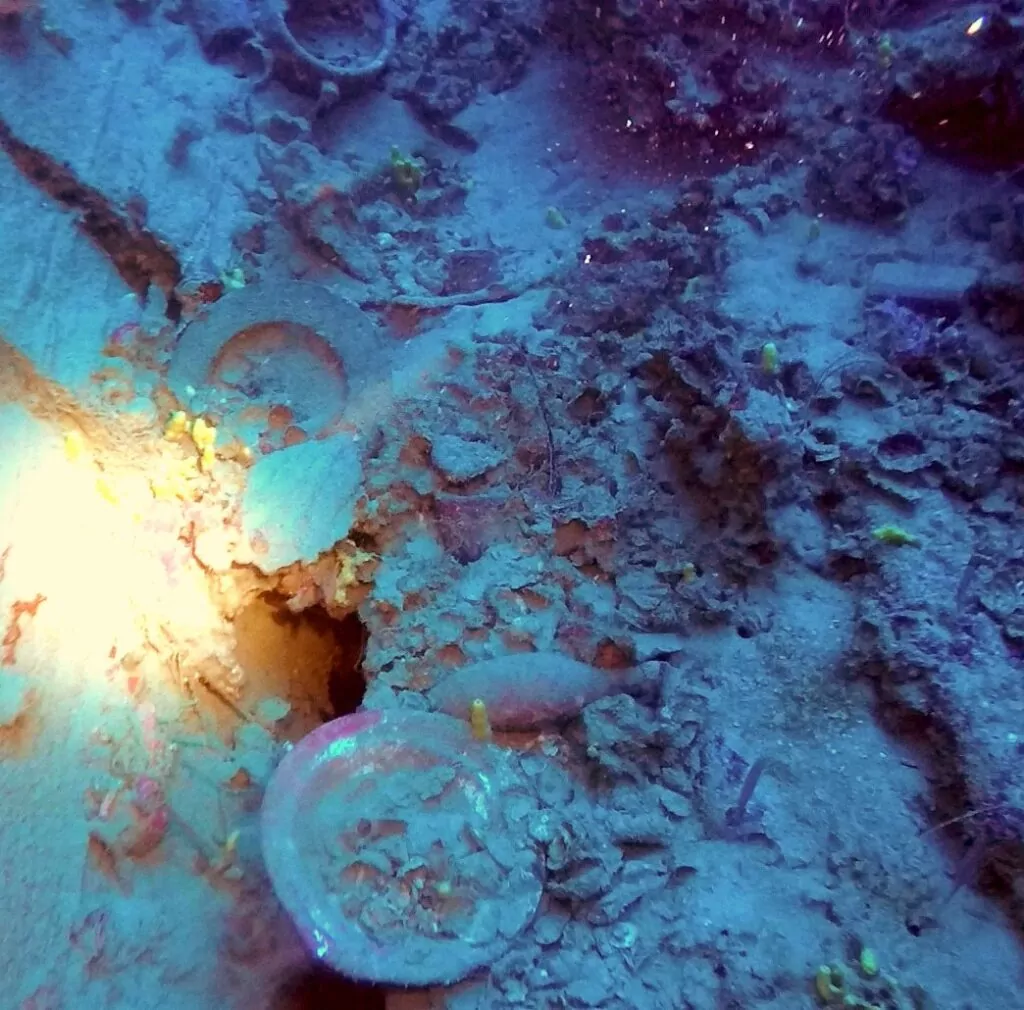
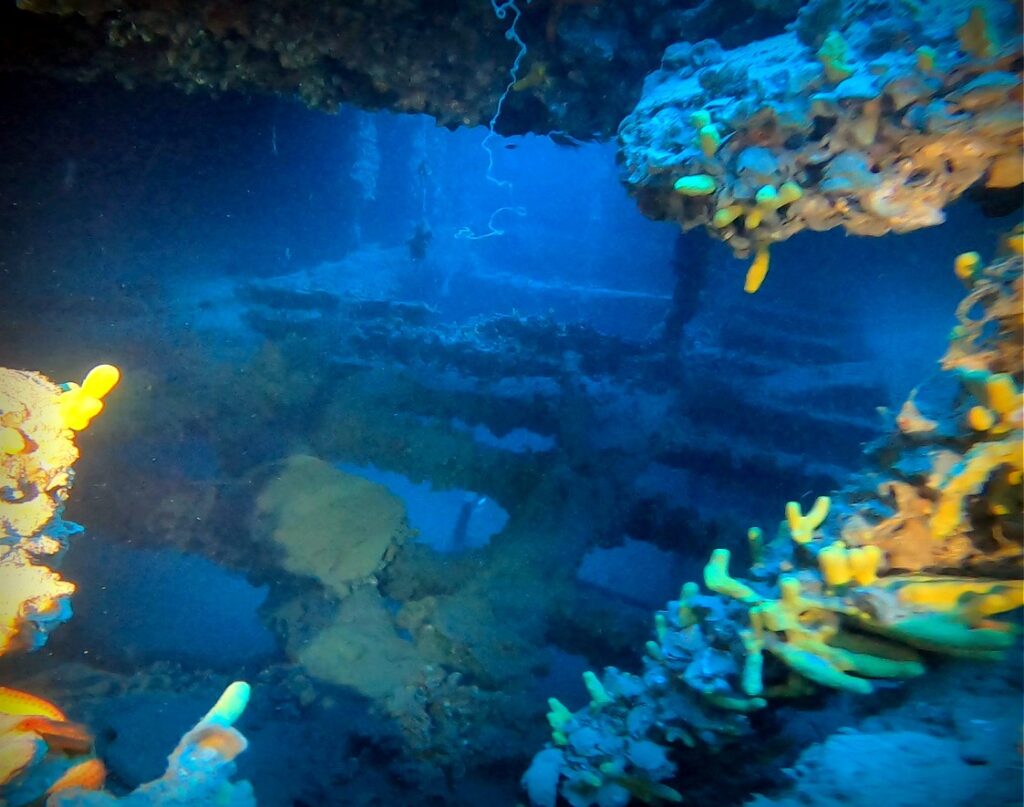
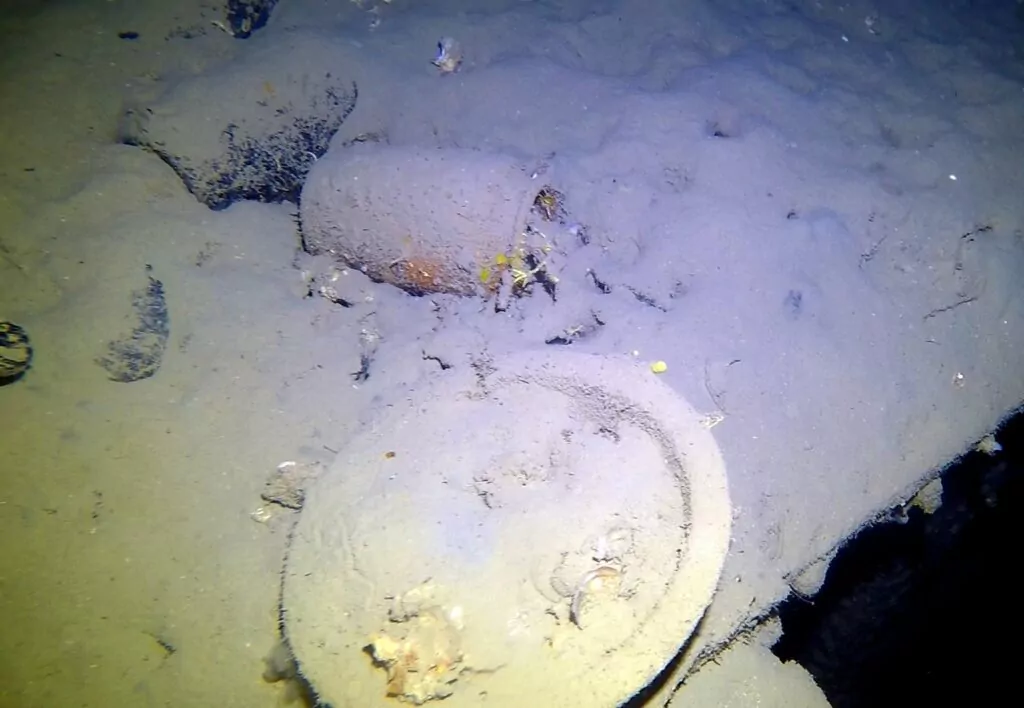
It was as if time had been frozen. I could visualise the moments after the collision, and wondered how the ship had managed to stay afloat for three-quarters of an hour after this awful accident, having sustained such major damage.
Swimming further back over the engine-room hatch and aft-hold hatches, we reached the remains of the steering-gear right at the stern and completed our tour of the wreck. I had seen everything I wanted to see on this single dive…
Rebreather dives
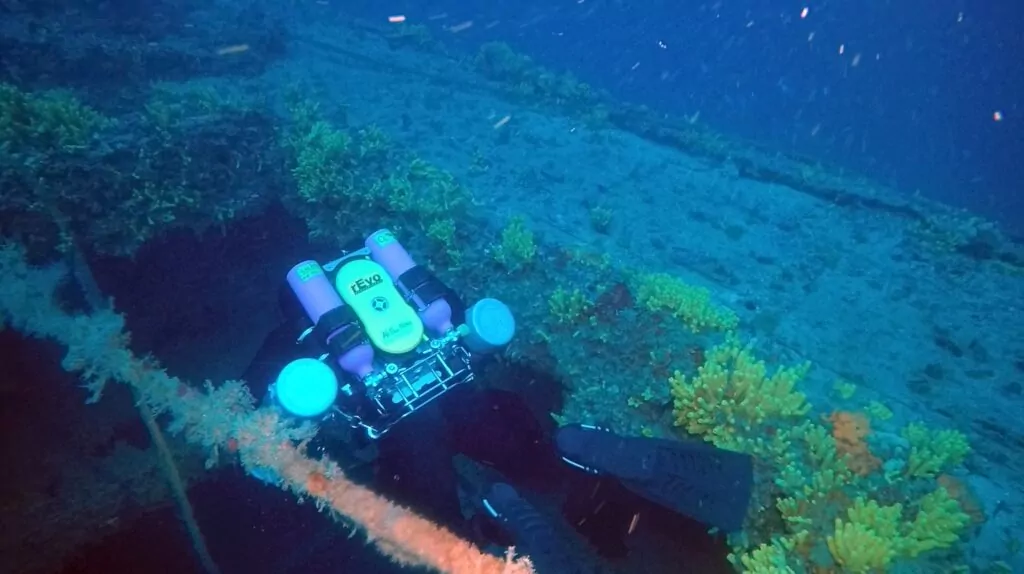
Further dives were carried out by my team-members Ali Ethem Keskin and Ali Hakan Egilmez for filming and measuring purposes to complete the verification of the wreck’s identity. They used rEvo closed-circuit rebreathers with an 18/45 helium trimix as diluent and EAN 50/50 as deco mixes.
Another lost and long-forgotten ship had been located and documented in Turkish waters – a ship with a short lease of life that came to a tragic end. A ship that once came from Hartlepool and ended up in the depths of the Aegean Sea.
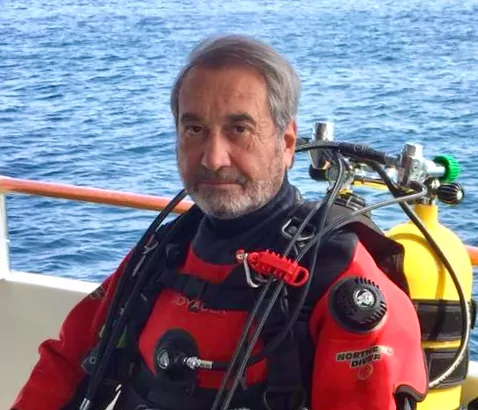
Selcuk Kolay is author of Echoes From The Deep: Wrecks Of The Dardanelles Campaign. Other articles by him on Divernet include: HMS Hythe: Deep dive on tragic Gallipoli wreck, How I found 125-year-old oil tanker still leaking, Nantaise days, Lost ships of the Battle of Oinousses